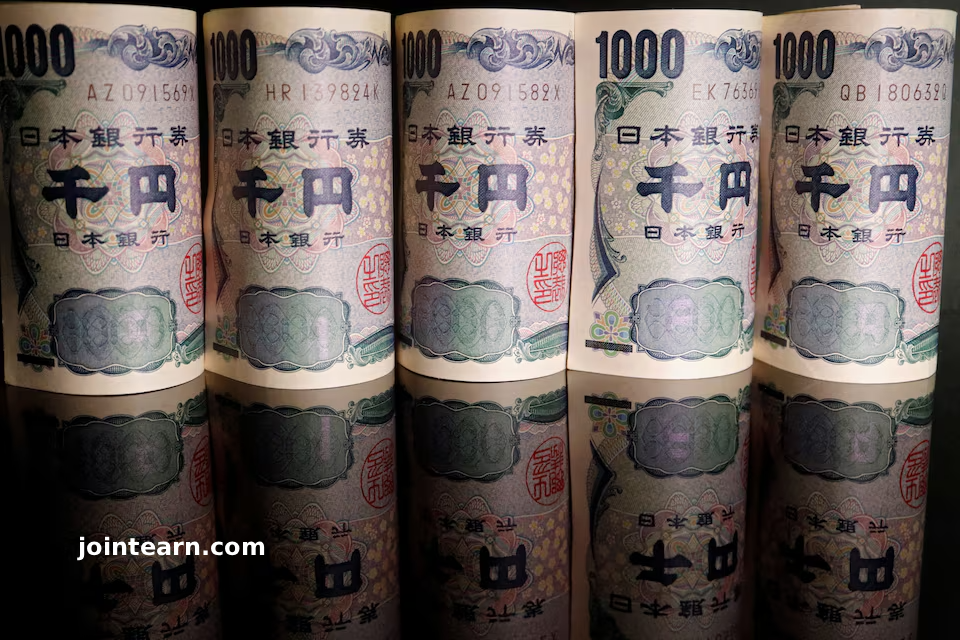
The Japanese yen is approaching 160 per U.S. dollar, reigniting concerns about potential market intervention as investors anticipate a snap election in Japan and speculate on additional stimulus measures. The phenomenon, dubbed the “Takaichi trade”, has turbocharged Japanese equities and government bonds, highlighting the interplay between politics, monetary policy, and currency markets.
The ‘Takaichi Trade’ and Market Dynamics
Investors are selling the yen and long-term Japanese government bonds (JGBs) amid expectations of low interest rates and further fiscal stimulus in an economy burdened with one of the highest debt-to-GDP ratios among developed nations.
The Nikkei 225 (.N225) surged past the 54,000 mark for the first time on Wednesday, following reports that Prime Minister Sanae Takaichi may call a general election in February 2026. Analysts say that a snap election could accelerate stimulus expectations, fueling both yen weakness and gains in Japanese equities.
While the yen’s weakness is at its lowest level since July 2024, traders remain cautious. Intervention by authorities is possible, but timing is tricky so close to an election, as any sudden moves could have unintended fiscal or political consequences.
Safe-Haven Flows into Gold and Silver
Precious metals have benefited from the market volatility and geopolitical tensions, continuing a strong start to 2026 after record returns last year:
- Gold has climbed to new peaks as investors seek safety amid currency fluctuations
- Silver has similarly surged, reflecting both safe-haven demand and industrial considerations
The rising interest in precious metals underscores the growing diversification strategy among investors, particularly amid uncertainty in currency and equity markets.
U.S. Economic Data and Fed Independence Concerns
The U.S. dollar has been affected by soft economic data and ongoing concerns about the Federal Reserve’s independence. Recent inflation figures indicated moderate price pressures, keeping rate cuts on the table for 2026, though no action is expected before Chair Jerome Powell’s term ends in May.
The tension between Powell and U.S. President Donald Trump has revived discussions of a “Sell USA” strategy, prompting investors to diversify holdings globally. Additionally, the U.S. Supreme Court is expected to issue rulings on Wednesday that could address the legality of Trump’s global tariffs, potentially impacting trade flows and market sentiment.
Focus on U.S. Bank Earnings
Market participants are also watching quarterly earnings reports from major U.S. banks, including:
- Citigroup (C.N)
- Bank of America (BAC.N)
- Wells Fargo (WFC.N)
Investors will pay attention to comments regarding Trump’s proposed 10% cap on credit card interest rates. JPMorgan Chase (JPM.N) previously warned that such a cap could hurt consumers and affect the broader market, adding another layer of uncertainty to U.S. equities.
Market Outlook
The “Takaichi trade” exemplifies how political events, central bank policies, and fiscal expectations influence currency and equity markets. Traders are closely monitoring:
- Yen movements and potential BOJ intervention
- Snap election developments in Japan
- Safe-haven flows into gold and silver
- U.S. Supreme Court rulings on tariffs
- U.S. bank earnings and credit policy announcements
This combination of domestic political dynamics in Japan and global macroeconomic uncertainty continues to shape market sentiment and trading strategies across Asia and beyond.


Leave a Reply