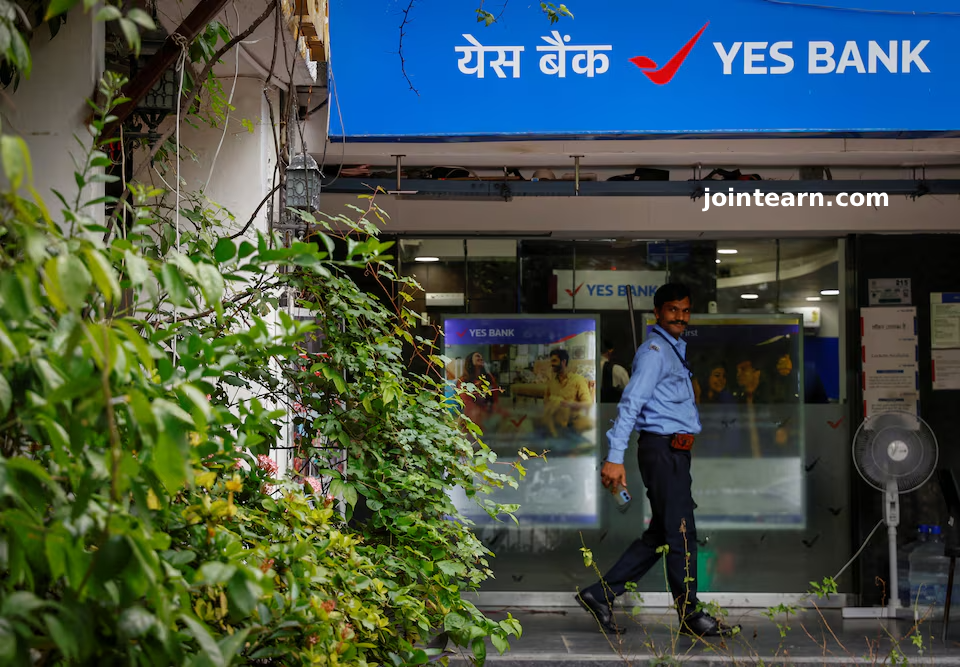
Mumbai, India – Indian private sector lender Yes Bank (YESB.NS) posted a sharp increase in its third-quarter profit on Saturday, driven by a substantial reduction in provisions for bad loans and steady growth in domestic lending. The Mumbai-based bank reported a standalone net profit of 9.52 billion Indian rupees ($105 million) for the three months ending December 31, a 55% increase compared with 6.12 billion rupees during the same period last year.
The growth in profits comes after Japanese financial giant Sumitomo Mitsui Banking Corporation (SMBC) acquired a 24% stake in Yes Bank last year, marking one of the largest overseas investments by a Japanese bank as they seek new growth opportunities following years of near-zero interest rates in Japan.
Lower Provisions Drive Profit Growth
Yes Bank’s profit surge was largely fueled by a 91% drop in provisions for bad loans and other contingencies, which fell to 2.2 billion rupees from higher levels in previous quarters. The bank had previously built buffers to strengthen its balance sheet, allowing it to absorb risks while stabilizing profitability.
Analysts note that the reduction in provisions highlights improved asset quality and risk management at Yes Bank, strengthening investor confidence in the lender’s financial health.
Loan and Deposit Growth Boost Net Interest Income
The bank’s net interest income (NII), a key indicator of core lending profitability, rose 10.8% to 24.65 billion rupees from 22.23 billion rupees in the prior year. Domestic loans grew 5.2%, supported by strong demand across retail, SME, and corporate segments. Deposits increased 5.5%, keeping pace with loan growth and supporting funding stability.
Yes Bank’s net interest margin (NIM), a critical measure of lending efficiency, improved to 2.6% from 2.5% in the previous quarter, benefiting from declining deposit costs following the Reserve Bank of India’s 125 basis point reduction in key interest rates since February 2025.
Stable Asset Quality
The bank maintained stable asset quality, with the gross non-performing asset (NPA) ratio at 1.5% at the end of December, compared with 1.6% at the end of September. Analysts highlight that low NPAs and prudent lending practices contribute to Yes Bank’s improved profitability and resilience in India’s competitive banking sector.
Strategic Outlook and Leadership
Following SMBC’s investment, Yes Bank is expected to release a strategic roadmap in the upcoming quarter, outlining growth priorities and operational initiatives. CEO Prashant Kumar, who has led the bank since 2020, noted that succession planning for his role is underway, with his current tenure set to end in April 2026.
“Our focus remains on sustainable growth, improving asset quality, and leveraging strategic partnerships to expand our domestic and international presence,” Kumar said during a press call.
Key Metrics – Yes Bank Q3 2026
| Metric | Q3 2026 | Q3 2025 | Change |
|---|---|---|---|
| Standalone Net Profit | ₹9.52B ($105M) | ₹6.12B | +55% YoY |
| Provisions for Bad Loans | ₹2.2B | Higher previous quarters | -91% |
| Net Interest Income | ₹24.65B | ₹22.23B | +10.8% YoY |
| Loan Growth | +5.2% | – | – |
| Deposit Growth | +5.5% | – | – |
| Net Interest Margin (NIM) | 2.6% | 2.5% | +0.1 pp |
| Gross NPA Ratio | 1.5% | 1.6% | Improved |


Leave a Reply