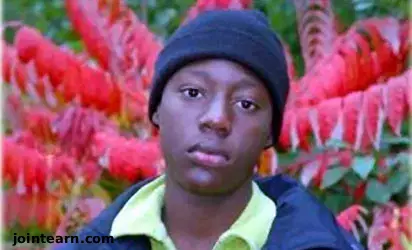
On Christmas Day, 2009, Umar Farouk Abdulmutallab, a Nigerian man who would become infamous as the “Christmas Bomber,” attempted to detonate explosives hidden in his underwear aboard Northwest Airlines Flight 253, en route to Detroit, USA. The plot failed, but the repercussions of the attempt were felt globally, sparking a diplomatic crisis between Nigeria and the United States.
At a recent event hosted by Saptco Communication Limited at the Nigerian Civil Aviation Authority (NCAA) Annex in Lagos, Dr. Harold Demuren, the former Director-General of the NCAA, shared insights into the incident and how Nigeria worked to protect its reputation in the aftermath.
Background: A Nation Under Scrutiny
Dr. Demuren reflected on Nigeria’s status in the international community following the bombing attempt. At the time, Nigeria was placed on a “country-of-interest” watchlist due to the incident. “But we removed Nigeria’s name from that list,” he noted, emphasizing that transparency and honesty were key in overcoming the country’s negative image. “The facts were there for everyone to see, so we had to be honest with them,” he said.
How It Began: A Rapid Response
That fateful night, Sam Adurogboye, the then General Manager of Public Affairs at the NCAA, quickly assembled the media, including major international outlets like CNN and Sky News. As Dr. Demuren recalled, “We immediately made a statement to the world, clarifying that the incident did not occur in Nigeria. We explained the facts as we knew them and outlined our actions.”
Dr. Demuren stressed that at the time, Nigeria lacked the technology to detect powder-based explosives, though it had machines capable of detecting metals, such as guns. He added, “It wasn’t a crime not to have such technology because we weren’t killing one another in Africa.”
However, the timing was particularly disastrous for Nigeria, coming right after the country had achieved Category 1 status from the United States Federal Aviation Administration (FAA)—allowing Nigerian airlines to operate directly to the U.S. “And suddenly, this happened,” Dr. Demuren lamented. The diplomatic fallout was swift. “The U.S. halted all communications with us, and the world was left with the impression that Nigeria was involved in a terrorist plot against America.”
A Nightmare Unfolds: The Timeline of Events
On the day of the incident, Dr. Demuren received an urgent call from then-Minister of Aviation, Babatunde Omotoba, who informed him of the crisis. “When I turned on the television, I saw the anchors saying, ‘Nigeria wants to kill America.’ I shouted, ‘What is this?’” he recalled.
Dr. Demuren quickly mobilized key figures, including Richard Aisuebeogun, the Managing Director of the Federal Airports Authority of Nigeria (FAAN), the Airport Commandant, police, and other security agencies. The emergency team met through the day and night to address the situation.
By 10 p.m., the press had begun to ask questions, and the NCAA was ready to set the record straight. “We told the world that Umar Abdulmutallab came to Nigeria from Ghana. He had bought his ticket in Ghana, not Nigeria,” Dr. Demuren explained.
The Journey: How Abdulmutallab Evaded Detection
Dr. Demuren went on to explain how Abdulmutallab’s travel through Nigeria was part of a strategic detour. “He bought two tickets, one from Lagos to Amsterdam to Detroit, and another from Accra to Lagos and back to Accra. No one suspected anything. He bought these tickets with cash, avoiding any red flags from credit card systems,” he said.
Abdulmutallab’s actions in Accra raised initial suspicions when he boarded the KLM flight without luggage. The KLM staff, however, did not know his background and allowed him to proceed. Dr. Demuren recounted that it was only after the bombing attempt that the KLM staff recalled their earlier concerns.
On the day of the attack, Abdulmutallab managed to board his flight without raising alarms. According to Dr. Demuren, “We later saw the footage from the CCTV cameras, which showed Abdulmutallab entering the airport, checking in, and passing through security without incident.”
The Aftermath: How Nigeria Protected Its Reputation
As the crisis unfolded, Nigeria faced intense international pressure. “We had to provide the U.S. authorities with a clear picture of the events. Our involvement was minimal,” said Dr. Demuren. He revealed that the NCAA’s transparency and cooperation with security agencies ultimately helped exonerate Nigeria.
“The KLM staff confirmed that Abdulmutallab was cleared to travel by the U.S. authorities before he boarded the Amsterdam-bound flight. KLM confirmed this to us,” Dr. Demuren shared. “Nigeria had no direct involvement in the attack. Abdulmutallab had no business with Nigeria except as a transit point.”
Despite the difficult situation, Dr. Demuren’s team was able to provide the crucial information that helped clarify the matter. The U.S. eventually acknowledged the failure in their own security processes. “It was a systematic failure,” Dr. Demuren recalled, referencing the later statement from former U.S. President Barack Obama that highlighted lapses in the American security apparatus that allowed Abdulmutallab to board the flight.
The Diplomatic Fallout: A National Crisis
While the initial global reaction painted Nigeria as complicit in the attack, Dr. Demuren and his team’s transparency eventually turned the tide. However, the incident had lasting consequences for Nigeria. Dr. Demuren shared how, after the incident, he and the Minister of Aviation were summoned to a meeting with then-Acting President Goodluck Jonathan. “I was impressed by the support from Nigerian security agencies. The National Security Advisor, the Air Force, and others all stood by our statement. It was a professional effort,” he said.
The press conference that followed, which defended Nigeria’s position, was controversial at the time but proved to be a turning point. It was during this moment that former President Obama acknowledged the systemic failure in U.S. security procedures.
Conclusion: A System of Accountability
Reflecting on the incident 16 years later, Dr. Demuren expressed gratitude for the professionalism of the Nigerian security agencies and the eventual resolution of the crisis. Despite the challenges, he believes the event showcased the importance of transparency and collaboration in addressing international concerns.
“Nigeria was not to blame. Abdulmutallab’s actions were his own, and his attempt to travel through Nigeria was a mere detour. Our security forces did their best under difficult circumstances, and we did what was necessary to protect our nation’s reputation,” Dr. Demuren concluded.


Leave a Reply