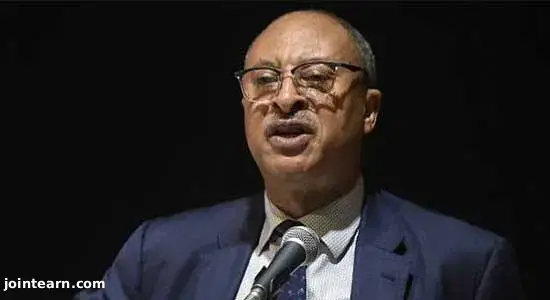
Professor Pat Utomi, a renowned political economist, recently shared his thoughts on Nigeria’s decline, its missed potential, and the path forward in an interview. With profound insight, he highlighted the systemic issues, the role of leadership, and how a new approach to governance could steer the country back on course.
Assessment of Nigeria’s Current State and Direction
Reflecting on Nigeria’s current situation, Utomi expressed disappointment over the country’s steady decline. He began by referencing the optimism of the past, particularly the era of Tony Uranta, a Nigerian activist and advocate for progress. “In 1977, when we were young and full of hope, Nigeria was at the forefront of African empowerment,” Utomi recalled. “We thought we would change the world. Nigeria was seen as a beacon of hope for the dignity of the black man. But now, Africans themselves have lost faith in Nigeria. So, what went wrong?”
Utomi pointed out that the nation’s fall from grace could be traced back to various missteps, but the failure to critically analyze these issues has exacerbated the crisis. He recalled a personal experience with the late General Joseph Garba, Nigeria’s former foreign minister, when he was a student leader at the University of Nigeria. “In those days, foreign policy was the priority. We engaged with world leaders about our role in Africa. Today, Nigeria’s influence on the global stage has diminished significantly. Thirty years ago, no major power would act in Africa without first considering Nigeria’s response. But today, they don’t even think twice,” Utomi explained.
The Root of the Problem: A Deficient Political Class
When asked about the political class’s role in Nigeria’s decline, Utomi was forthright. He noted that the quality of leadership has deteriorated over the years, leading to a disconnect between the country’s potential and its reality. “In the past, we had leaders who were thoughtful and deeply engaged with the world. I remember having detailed debates with General Garba in 1975 on Nigeria’s foreign policy,” he said. “Today, such intellectual rigor and public discourse are lacking.”
Utomi emphasized the urgent need for a new kind of political thinking in the country, one that prioritizes the nation’s welfare over personal interests. He likened the current leadership to the situation in Liberia, where, in the 1980s, politicians and diplomats chose personal comfort over speaking out against the country’s slide into chaos. “In the end, they lost everything—cars, homes, and even their lives,” Utomi remarked. “Nigeria must learn from these failures in other African nations and build a leadership class that is unafraid to speak up and take action for the greater good.”
A New Way of Thinking: Raising Conscious Citizens
To bring about change, Utomi advocates for a shift in the way Nigerians think about their nation. He referenced Carlo Cipolla’s work on human behavior, particularly his ideas on the prevalence of “stupidity” and how societies often fail due to poor decision-making. Utomi stressed the importance of creating a class of citizens who are engaged, informed, and unafraid to challenge the status quo.
“We need to raise citizens who care deeply about their country and are willing to call out the political class when it goes astray,” he explained. “We’ve allowed politicians to squander our resources for personal gain. It’s time to focus on producing responsible citizens who will demand change, even if it means taking on the political elite.”
He also highlighted the need to cultivate humility in the leadership. Citing Singapore as an example, Utomi contrasted the modesty of Singapore’s leaders with the arrogance and greed often exhibited by Nigerian politicians. “In Singapore, ministers ride buses, while in Nigeria, public officials drive the most expensive cars while the roads remain in disrepair,” he said. “The difference lies in the mindset of the leaders. In Singapore, the leaders think of the country first, themselves second. In Nigeria, it’s the opposite.”
Hope for the Future: Leadership as a Catalyst for Change
Despite the challenges, Utomi remains hopeful about Nigeria’s future. “The Nigerian people are incredibly resilient. They are among the easiest people to lead if you provide good examples,” he said. He referenced the chaotic traffic in Lagos as an analogy: “When you show good leadership, Nigerians are quick to adjust. The problem is that we have lacked leaders who are willing to show the right example.”
He believes that Nigeria’s potential remains intact, and with the right leadership, the country can turn things around. “What we need now is a few leaders who are willing to do the right thing,” Utomi said. “If they lead by example, the people will follow.”
The key to Nigeria’s recovery, he added, is a collective recognition of the country’s problems. “We must accept that we’ve all contributed to the mess we’re in. But once we acknowledge this, we can begin to rebuild. We need leaders who are ready to serve the nation, not just their personal ambitions.”
Conclusion: A Call to Action
For Utomi, the path to Nigeria’s revival lies in a fundamental change of mindset. From the political class to ordinary citizens, everyone must rethink what it means to be a part of the Nigerian project. The focus must shift from short-term gains to long-term development. As he puts it, “We are at a crossroads, but we can still turn things around—if we embrace new thinking, responsible leadership, and a commitment to the greater good.”


Leave a Reply