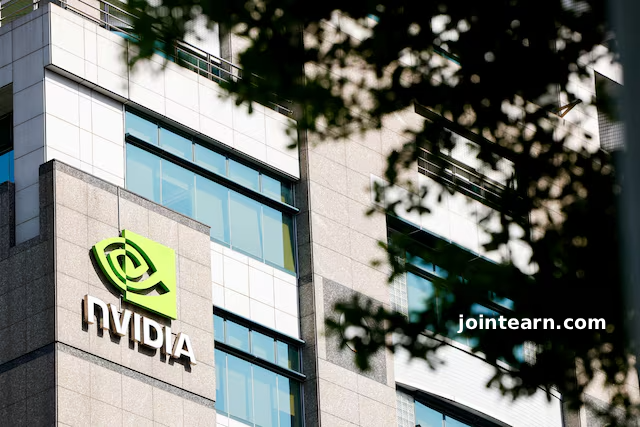
Nvidia Corporation (NASDAQ: NVDA), the world’s leading chipmaker, has once again captured the attention of investors and analysts alike, with its strong third-quarter earnings report and an upbeat forecast for the fourth quarter of fiscal 2025. In a market closely watching the rapid expansion of artificial intelligence (AI) technologies, Nvidia’s performance has temporarily calmed fears of an AI-driven market bubble.
Nvidia’s CEO Addresses AI Bubble Concerns
During a call with analysts, Nvidia CEO Jensen Huang directly addressed widespread concerns about the so-called AI bubble. He emphasized that the company’s growth is driven by real demand from cloud companies, developers, and enterprises rather than speculative hype.
“There’s been a lot of talk about an AI bubble. From our vantage point, we see something very different,” Huang said. “We’re everywhere—from cloud to on-premise systems, robotic systems, edge devices, and PCs. One architecture. Things just work. It’s incredible.”
Huang highlighted that Nvidia has secured $500 billion in advanced chip bookings through 2026, reinforcing the company’s long-term growth prospects.
Strong Earnings and Forecast Spark Investor Optimism
Following the announcement, Nvidia’s stock rose 5% in after-hours trading, potentially adding $220 billion to its market value. This rebound comes after shares had fallen nearly 8% in November, reflecting investor jitters despite the company’s 1,200% surge over the past three years.
Nvidia also reported that 61% of its revenue came from just four major customers, reflecting both strong partnerships and growing concerns over revenue concentration. Analysts, however, were buoyed by the company’s $65 billion fiscal fourth-quarter sales forecast, surpassing the average estimate of $61.66 billion. Nvidia also projected an adjusted gross margin of 75%, maintaining expectations for mid-70% margins in fiscal 2027.
Data Center Segment Drives Record Growth
Nvidia’s data center business—a key revenue driver—experienced impressive growth in the third quarter, reaching $51.2 billion, exceeding analyst expectations of $48.62 billion. Overall, the company posted a 62% rise in quarterly sales, marking the first acceleration in seven quarters.
The strong performance of Nvidia has also had a ripple effect across the tech sector, boosting stocks of rivals like AMD, as well as tech giants such as Alphabet and Microsoft, demonstrating Nvidia’s influence as an AI market bellwether.
Analysts Caution on Sustainability of AI Investment
Despite the robust results, some analysts caution that these earnings may not fully alleviate concerns about the sustainability of AI infrastructure investments. Ruben Roy, an analyst at Stifel, noted that the growth in AI infrastructure spending might not be sustainable over the long term.
Additionally, Nvidia has increased its financial involvement with AI firms, including a $100 billion investment commitment to OpenAI, raising concerns about a circular AI economy where Nvidia invests in companies that are also its customers. This, combined with high concentration of sales among a few clients, has led some investors to question long-term growth stability.
Global Expansion and Potential Challenges
Restricted from selling certain chips in China due to U.S. export regulations, Nvidia is expanding its market reach in the Middle East. Recently, the U.S. Commerce Department approved the export of up to 35,000 Nvidia Blackwell chips to companies in Saudi Arabia and the UAE, valued at over $1 billion.
Nevertheless, analysts warn that physical and logistical bottlenecks—such as power, land, and grid access—may limit how quickly hyperscalers can deploy these AI solutions, potentially affecting revenue growth through 2026 and beyond.
CEO Highlights Complexity of AI Growth
When asked about potential constraints on Nvidia’s growth, Huang emphasized the complexity of scaling AI infrastructure. He highlighted the need for careful planning across supply chains, financing, and infrastructure, without pinpointing a single limiting factor.
This cautious optimism underlines the challenges and opportunities in the rapidly evolving AI landscape, where demand for advanced GPUs remains high but operational hurdles are equally significant.
Conclusion
Nvidia’s stellar Q3 earnings and robust Q4 forecast have reassured investors, at least temporarily, about the resilience of AI-driven growth. While concerns about revenue concentration and the sustainability of AI infrastructure investments persist, the chipmaker’s dominant position in cloud computing, gaming, and AI technology continues to position it as a pivotal player in the global tech ecosystem.


Leave a Reply