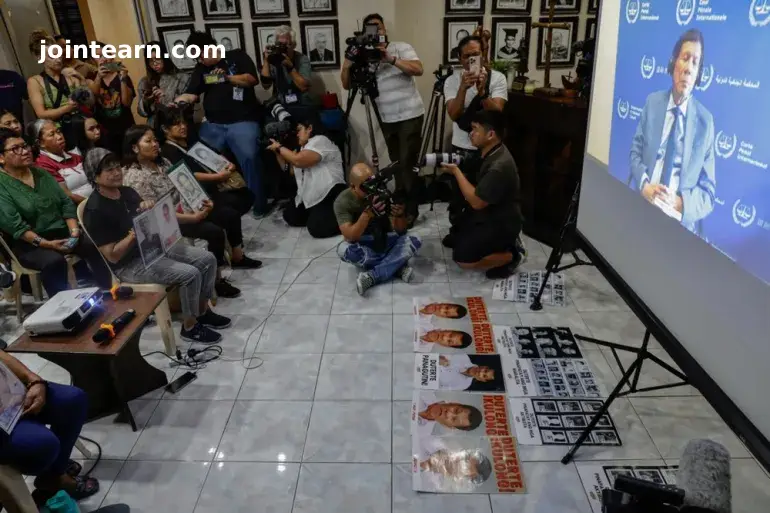
The International Criminal Court (ICC) Appeals Chamber in The Hague has rejected former Philippine President Rodrigo Duterte’s request for provisional release, citing concerns that he could flee justice or interfere with trial proceedings. The decision comes amid ongoing proceedings against Duterte for alleged crimes against humanity committed during his tenure as president and former mayor of Davao City.
Appeals Chamber Rejects Duterte’s Arguments
In a ruling issued on Friday, the ICC Appeals Chamber denied all three grounds cited by Duterte’s defense for release. Judge Luz del Carmen Ibanez Carranza, president of the Appeals Chamber, emphasized that the risk of flight and potential influence over witnesses or evidence justified continued detention.
As a former head of state and currently a local political figure, Duterte could still exert political pressure to evade trial, the court added.
Reactions from Victims’ Advocates and Duterte Family
The National Union of Peoples’ Lawyers (NUPL), representing families of the victims of Duterte’s controversial war on drugs, welcomed the decision. The NUPL emphasized that maintaining Duterte in detention is critical to ensuring that victims and witnesses feel safe to testify, preventing intimidation or interference in the legal process.
Meanwhile, the Duterte family stated that they “accept the decision with peaceful hearts” and will continue to support the former president through ongoing legal proceedings. Vice President Sara Duterte, his daughter, confirmed that the family will continue daily engagement with Duterte and his defense team.
Background: ICC Charges Against Duterte
The ICC investigation centers on the period from November 1, 2011, when Duterte was mayor of Davao City, through March 16, 2019, during his presidency, and before the Philippines’ withdrawal from the ICC. Prosecutors allege Duterte ordered and authorized violent acts, including extrajudicial killings, as part of the so-called war on drugs.
Death toll estimates vary:
- Philippine police: over 6,000 deaths
- Human rights groups: up to 30,000 deaths
The charges include crimes against humanity, specifically targeting alleged drug users and dealers, with widespread reports of unlawful killings.
Duterte’s Health and Legal Challenges
Duterte’s defense argued for release on health grounds, citing “infirmity and debilitated cognitive faculties,” claiming he could not effectively assist his lawyers. A pre-trial hearing in September was postponed pending a full medical assessment.
Family members visiting Duterte have contested these claims, stating that he is engaged and in good condition. However, Vice President Sara Duterte previously suggested supporters could stage a “jailbreak” to free him, drawing widespread criticism.
Last month, the ICC rejected Duterte’s challenge to the court’s jurisdiction in the case, reinforcing the tribunal’s authority to proceed.
ICC Proceedings and Historical Context
The ICC opened a preliminary investigation in February 2018 into Duterte’s war on drugs. In an attempt to evade accountability, Duterte announced the Philippines’ withdrawal from the ICC in March 2018, though the court maintains jurisdiction over alleged crimes committed while the country was still a member.
ICC prosecutors emphasize that Duterte’s detention is crucial to prevent obstruction of justice, protect witnesses, and ensure a fair trial. Human rights lawyers representing victims expressed confidence in the Appeals Chamber’s decision, noting the strong evidence supporting continued detention.
Conclusion
The ICC’s ruling marks a significant development in holding former heads of state accountable for alleged human rights abuses. As the trial proceeds, attention remains on the Philippines and international observers regarding the legal and political ramifications of Duterte’s prosecution.


Leave a Reply