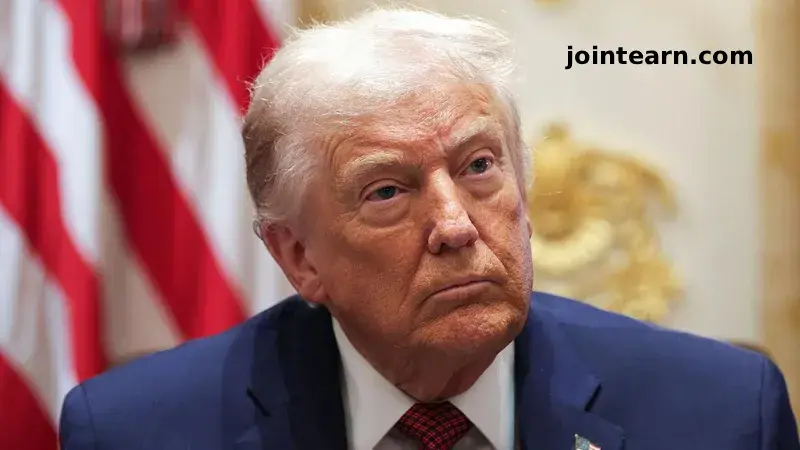
US President Donald Trump has announced a total and complete blockade of all sanctioned oil tankers entering or leaving Venezuela, escalating tensions in the region. The announcement, made via Truth Social, follows ongoing disputes between the US and Venezuelan leader Nicolás Maduro, whose government the US has designated as a foreign terrorist organization.
Trump accused Maduro’s regime of stealing US assets, financing drug trafficking, human trafficking, terrorism, murder, and kidnapping, and using Venezuelan oil to support illicit activities.
Details of the Oil Tanker Blockade
Trump stated that Venezuela is “completely surrounded by the largest armada ever assembled in the history of South America,” warning that the US naval presence “will only get bigger” and “be like nothing they have ever seen before.”
The blockade comes just a week after the US seized an oil tanker off the Venezuelan coast. The vessel, named the Skipper, was reportedly involved in “illicit oil shipping” and has been taken to an American port, according to the White House. Venezuela condemned the seizure, accusing the US of “kidnapping the crew” and stealing the ship.
Venezuela’s Oil and Strategic Importance
Venezuela holds some of the largest proven oil reserves in the world, making it a critical focus of US foreign policy. For years, both the Trump and Biden administrations have applied stringent sanctions to pressure Maduro to step down. In recent months, sanctions have expanded to include six additional ships carrying Venezuelan oil, as well as relatives and businesses linked to the Maduro regime.
The Trump administration has also conducted military operations targeting drug shipments, claiming that boats carrying fentanyl and other illegal drugs were intercepted. Since September, US military strikes on such vessels have reportedly resulted in at least 90 deaths.
International Tensions and Military Build-Up
In preparation for the tanker blockade and enforcement operations, the US has moved warships into the Caribbean Sea, including positioning the USS Gerald Ford, the world’s largest aircraft carrier, within striking distance of Venezuela. Thousands of US troops have also been deployed in the region.
The blockade has sparked warnings from some US lawmakers. Congressman Joaquin Castro (D-Texas) described the naval blockade as “unquestionably an act of war,” noting that Congress will vote on a resolution to direct the president to end hostilities with Venezuela.
Venezuela’s Response
The Venezuelan government has denounced Trump’s actions as a “grotesque threat” and accused the US of attempting to steal its natural resources. Maduro’s administration has consistently rejected foreign interference and maintains that Venezuela’s oil is a sovereign asset, vital to the nation’s economy and people.
Background on US-Venezuela Relations
US opposition to Maduro’s government stretches back years, with sanctions and diplomatic pressure aimed at removing him from power. Both the Trump and Biden administrations have accused the Venezuelan government of corruption, drug trafficking, and undermining democratic institutions.
The recent seizure of the Skipper, combined with the new naval blockade, represents a significant escalation in US-Venezuela tensions, raising concerns among international observers about potential military conflict in the region.


Leave a Reply