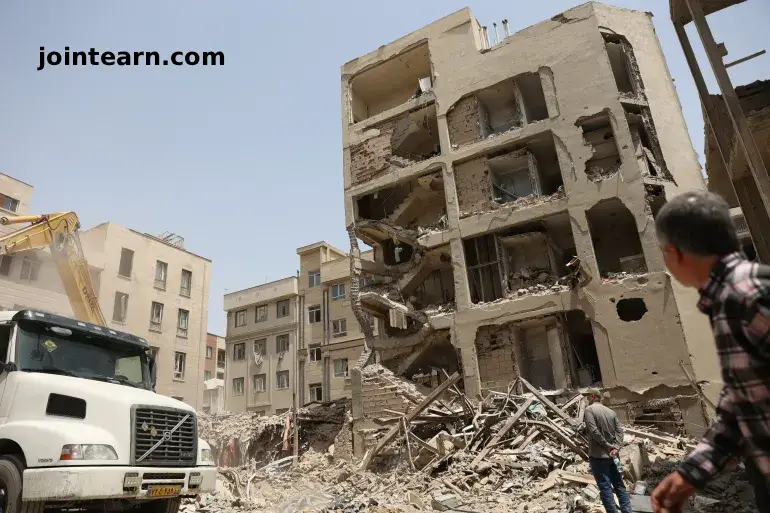
Iran has refused to allow inspections of its nuclear facilities that were bombed during US military strikes in June 2025, stating that the International Atomic Energy Agency (IAEA) must first define clear “post-war conditions” for access to sites affected by military action.
Mohammad Eslami, head of Iran’s Atomic Energy Organisation, told reporters in Tehran following a cabinet meeting that inspections would not proceed until the IAEA establishes an official framework for post-war oversight, according to Iran’s semi-official Tasnim news agency.
“If there are established procedures for the post-war situation, the agency should announce them so that we can act accordingly,” Eslami said. He added that Tehran had formally communicated its position to the IAEA, insisting that rules be “defined and codified” for nuclear facilities under international safeguards that are subject to military attack.
Background: US Strikes on Iranian Nuclear Sites
During a 12-day war with Israel in June, the US bombed three major Iranian nuclear facilities—Fordo, Natanz, and Isfahan—using bunker-buster munitions. According to Iran’s Ministry of Health, more than 430 people were killed, with thousands wounded.
The strikes followed Israel’s surprise attack on Iran, which targeted civilian and military personnel, including nuclear scientists and senior commanders, as well as key nuclear program-related infrastructure. Tehran has consistently denied seeking a nuclear weapon, while Israel is widely believed to possess an undeclared nuclear arsenal.
Following the attacks, Iran expelled IAEA inspectors, accusing the agency of failing to condemn the military strikes.
Iran’s Position on IAEA Inspections
Eslami emphasized that Iran will not allow inspections under political or psychological pressure before the IAEA clarifies the post-war conditions.
“But if such attacks are not permitted, they must be condemned—and once condemned, the post-war conditions must be clarified,” he said.
He also warned that if the IAEA supports or tolerates military action against safeguarded nuclear sites, it should state its position explicitly.
The stance reflects Tehran’s insistence that inspections follow internationally recognized legal and safety frameworks, especially after facilities covered by safeguards were attacked.
Legal Dispute Over Nuclear Deal and UNSC Resolution
Eslami also criticized a recent UN Security Council (UNSC) meeting on nuclear non-proliferation, describing statements made there as unprofessional and lacking legal authority.
Iran disputes the legal status of Resolution 2231, which endorsed the Joint Comprehensive Plan of Action (JCPOA), or Iran nuclear deal. Iran’s ambassador to the UN, Amir-Saeid Iravani, declared that Resolution 2231 expired on October 18, 2025, and no longer has legal effect.
This position was supported by Russia and China, while the US maintained that negotiations remain possible only through direct and meaningful dialogue. US representative Morgan Ortagus emphasized:
“Foremost, there can be no enrichment inside of Iran.”
Before the June escalation, Iran and the US had conducted five rounds of indirect nuclear negotiations, mediated by Oman, without reaching a breakthrough.
Iran’s Call for Responsible International Action
Iran continues to advocate principled diplomacy while placing responsibility on France, the United Kingdom, and the US to restore trust in the negotiation process. Tehran insists that post-war inspection frameworks be clearly defined before allowing any IAEA access to damaged nuclear sites.
Eslami’s remarks highlight the growing tension between Iran and the international community regarding nuclear oversight, post-conflict accountability, and the legal frameworks governing attacks on safeguarded nuclear facilities.


Leave a Reply