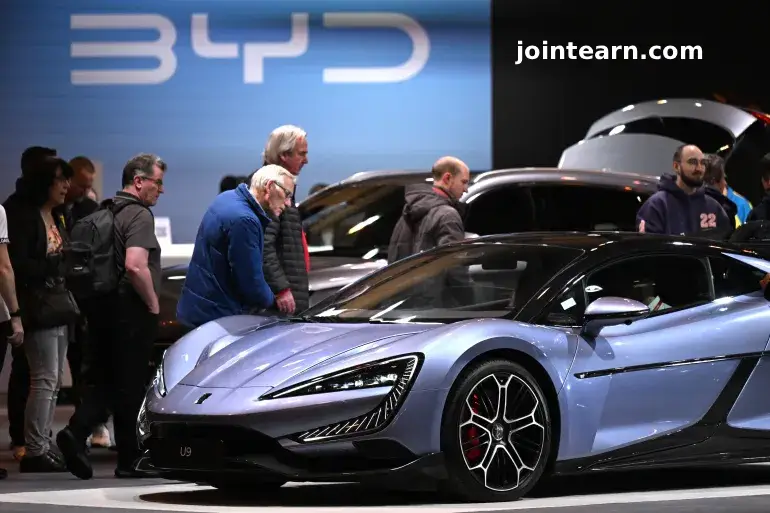
Tesla has lost its position as the world’s top-selling electric vehicle (EV) manufacturer to Chinese automaker BYD, marking a significant shift in the global EV market. In 2025, Tesla sold 1.64 million vehicles, compared with BYD’s 2.26 million units, representing a 9 percent year-on-year decline for the California-based company.
The loss of Tesla’s leadership comes amid multiple challenges, including public backlash against CEO Elon Musk’s political ventures, the termination of US federal tax incentives for EV buyers, and intensifying competition from Chinese manufacturers.
Decline in Tesla Sales
Tesla’s fourth-quarter sales totaled 418,227 vehicles, falling short of the 440,000-unit target estimated by analysts polled by FactSet. The company, which had long dominated the EV sector and outpaced traditional automakers, now faces growing competition as China’s EV market continues to surge, fueled by affordable models and government support.
Tesla’s Model 3 and Model Y vehicles, aimed at providing more cost-effective options, were introduced to compete directly with lower-priced Chinese EVs in Europe and Asia. Despite these efforts, Tesla was unable to reclaim its top position, signaling a broader shift in global EV market leadership toward China.
Impact of Elon Musk’s Political Controversies
Tesla’s sales decline has been compounded by Elon Musk’s controversial political involvement, including his public support for former US President Donald Trump in 2024 and leadership of the so-called “government efficiency” panel (DOGE). The initiative, associated with layoffs of federal workers, sparked protests at Tesla facilities and contributed to public backlash, negatively impacting the company’s image and sales.
Musk resigned from DOGE in May 2025, a move widely interpreted as an effort to reassure investors and refocus on Tesla’s core business.
Expiration of US Electric Vehicle Tax Credits
Tesla also suffered from the expiration of the $7,500 federal tax credit for EV buyers, which phased out at the end of September under the Trump administration. The elimination of incentives reduced affordability for consumers and slowed EV adoption in the United States, further affecting Tesla’s sales performance.
Despite these challenges, investor sentiment toward Tesla remains largely positive. Musk continues to pursue ambitious projects, including driverless robotaxi services and humanoid robots for home use, maintaining optimism about Tesla’s long-term growth potential. Tesla stock closed 2025 up approximately 11 percent, reflecting confidence in the company’s technological innovations.
Musk’s Wealth and Compensation
Musk remains the world’s wealthiest individual entering 2026. A planned SpaceX public offering later this year could make him the first trillionaire globally. Additionally, Tesla’s board awarded Musk a potential $1 trillion pay package tied to performance targets, following a Delaware Supreme Court ruling in December that reversed a previous lower court decision, awarding him $55 billion in previously paused compensation.
Ongoing Challenges
While Tesla continues to innovate, the company faces regulatory and legal hurdles. In California, a judge recently ruled that Tesla misled customers about the safety of its driverless taxis, putting the company at risk of temporarily losing its license to sell vehicles in the state.
The combination of political controversy, rising competition from Chinese EV makers like BYD, and the loss of US tax incentives highlights the increasingly competitive global EV market, underscoring the need for Tesla to adapt quickly to maintain its market share.


Leave a Reply