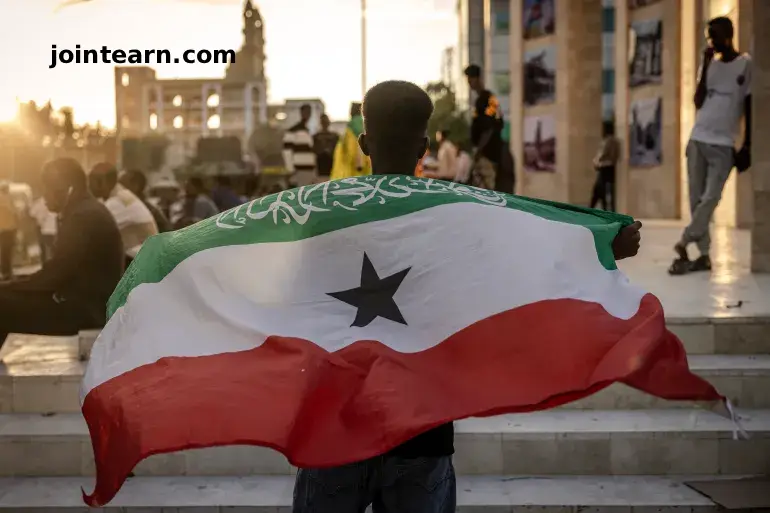
Israel’s Foreign Minister Gideon Saar made a historic visit to Somaliland, marking the first high-level diplomatic trip since Israel became the first country in the world to recognize the breakaway region’s independence last month. The move has sparked strong regional reactions, raising concerns over Somalia’s sovereignty and geopolitical stability in the Horn of Africa.
Saar’s Visit to Hargeisa: Diplomatic Milestone
Saar arrived in the Somaliland capital Hargeisa on Tuesday and was welcomed by government officials at the airport, according to the Somaliland presidency. He later met President Abdirahman Mohamed Abdullahi, with footage showing the leaders together at the presidential palace, signaling deepening diplomatic ties.
Israel’s recognition of Somaliland on December 26, 2025, followed its earlier diplomatic breakthrough with Taiwan in 2020, positioning Israel as a proactive player in the region’s geopolitics.
Somalia Condemns Israel’s Recognition
Somalia’s federal government, which considers Somaliland an integral part of its territory, strongly condemned the visit. The Somali Foreign Ministry described Saar’s presence as an “unauthorized incursion” and “illegal”, stating that any engagement on Somali soil without Mogadishu’s consent is null and void.
President Hassan Sheikh Mohamud warned that Israel’s recognition undermines Somali sovereignty and accused Somaliland of agreeing to conditions involving:
- Resettling Palestinians from Gaza
- Hosting Israeli military facilities
- Joining Israel’s Abraham Accords
Somaliland has denied all allegations of forced resettlement or hosting military bases, emphasizing that its engagement with Israel is “purely diplomatic” and respects international law.
Regional and International Backlash
Israel’s recognition has drawn broad regional opposition:
- The African Union (AU) convened an emergency session, calling for the immediate revocation of recognition.
- Over 20 countries, mainly from the Middle East and Africa, along with the Organization of Islamic Cooperation (OIC), rejected the move.
- Egypt’s Foreign Minister Badr Abdelaty called Israel’s recognition a “blatant violation” of Somalia’s sovereignty and warned it could threaten regional peace.
Meanwhile, the Yemeni Houthi leadership declared that any Israeli presence in Somaliland would be considered a “military target”, citing threats to regional security.
Somaliland’s Response and Strategic Outlook
Somaliland officials welcomed Saar’s visit as a “defining moment” in the deepening relations between the two democracies. Bashir Goth, Somaliland’s U.S. representative, stated:
“As two independent countries recognizing each other, nothing prevents us from security cooperation or pacts.”
President Abdullahi emphasized that Israel’s recognition opens the door for embassies and formal diplomatic missions, signaling Somaliland’s intent to solidify international relations despite opposition.
Somaliland declared independence in 1991 after Somalia descended into civil war. While Somalia has struggled to re-establish federal control, Somaliland has maintained stability, developed its own constitution, parliament, and currency, and now seeks broader international recognition.
Geopolitical Implications
The visit occurs amid rising tensions across the Red Sea region, where major players like Saudi Arabia, Egypt, Turkey, and the UAE are realigning their strategic interests. Coordination among regional powers shows growing opposition to unilateral moves affecting Somalia’s territorial integrity.
The unfolding scenario could reshape diplomatic and security dynamics in the Horn of Africa, as Israel deepens ties with Somaliland and regional actors position themselves in response.


Leave a Reply