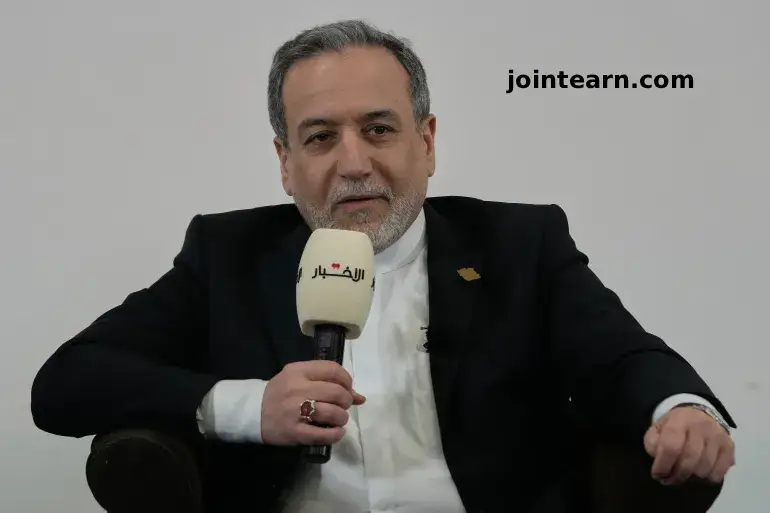
Tehran, Iran – January 14, 2026 – Iranian Foreign Minister Abbas Araghchi has denied reports that the government plans to execute antigovernment protesters, following statements by US President Donald Trump claiming he received assurances that killings of demonstrators had stopped.
Araghchi told Fox News:
“There is no plan for hanging at all. Hanging is out of the question.”
The remarks come amid rising international concern over protests that erupted across Iran in December over the falling value of the local currency, soaring living costs, and allegations of government misconduct.
Trump Softens Rhetoric on Iran
Earlier on Wednesday, Trump indicated that he had received a “very good statement” from Iran confirming that planned executions of protesters had been halted. Speaking after the partial US withdrawal from Al Udeid Air Base in Qatar, Trump said:
“We are going to watch what the process is. Very important sources on the other side have given assurances, and we’ll see how the crisis develops.”
Analysts suggest that this signals a potential de-escalation, though the risk of limited military action remains.
Sina Toossi, senior fellow at the Center for International Policy, told Al Jazeera:
“Trump’s claim appears to be a face-saving way to avoid military intervention. It does not entirely rule out a conflict but shows he may be seeking a controlled exit.”
Barbara Slavin of the Stimson Center echoed this view, noting that Trump may pursue limited strikes to demonstrate action while avoiding a protracted Middle East conflict.
Iran Prepares to Respond
Iranian authorities have issued strong warnings in response to any US military action. IRGC Commander Mohammad Pakpour stated:
“The IRGC is at the height of readiness to respond decisively to the miscalculation of the enemy.”
He also accused Trump and Israeli Prime Minister Benjamin Netanyahu of being “murderers of the youth of Iran.”
Araghchi emphasized that Iran is in full control after a crackdown on protests that began on January 8:
“After three days of terrorist operation, now there is a calm. We are in full control.”
Ongoing Protests and Unrest
The protests initially erupted in December due to economic hardships, quickly escalating into nationwide antigovernment demonstrations. Reports suggest:
- More than 100 security personnel killed according to state media
- Thousands of protesters killed according to opposition groups
- Near-total telecommunications blackout exceeding 144 hours
Amnesty International released a statement highlighting “mass unlawful killings committed on an unprecedented scale,” including lethal force against peaceful protesters and bystanders. Verified evidence reportedly shows gunshot wounds to the head and eyes and security forces targeting fleeing civilians.
International Concerns
The partial US withdrawal from Qatar’s Al Udeid Air Base reflects heightened caution amid fears of escalation. US media reported movements of aircraft carrier strike groups toward the Middle East, though Al Jazeera could not independently verify these claims.
Experts warn that a US-Iran conflict could rapidly destabilize the region, disrupt trade routes, and worsen humanitarian conditions for Iranian civilians.
Al Jazeera correspondent Tohid Asadi noted in Tehran:
“People across Iran feel the shadow of war. Anxiety is high due to the memory of the June conflict with the US and Israel, and it affects everyday life.”
Key Takeaways
- Iran denies plans for executions of protesters
- Trump signals softer rhetoric, though limited military options remain
- Protests continue, with disputed casualty figures and a telecommunications blackout
- Amnesty International warns of unlawful killings
- US and regional allies monitor escalation risks


Leave a Reply