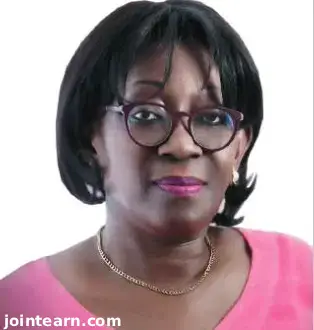
Earlier this year, I had the privilege of traveling to Freetown, Sierra Leone, to interview President Julius Maada Bio, his First Lady, and several of his cabinet members. The experience was eye-opening and deeply moving. I was impressed not just by the warm reception I received, but also by the depth and quality of the conversations I had with them. It felt especially fitting that they should be so articulate and well-informed, given that Sierra Leone is home to Fourah Bay College, the oldest Western-style university in sub-Saharan Africa, founded in 1827.
Since then, President Bio has ascended to a new and even more challenging role as Chairman of ECOWAS (Economic Community of West African States). Given the turmoil West Africa is currently facing—marked by a wave of military coups and instability—his new position will undoubtedly test his leadership in profound ways. The latest crisis unfolded just this past weekend in Benin Republic, where there was an attempt at a military coup, underscoring the ongoing volatility in the region.
Bio’s Decisive Leadership in the Face of Crisis
I reached out to Yusuf Keketoma Sandi Esq, the Press Secretary to President Bio, to inquire how the president is managing these challenges. Sandi shared a statement reflecting Bio’s leadership during the Benin coup attempt.
Sandi noted that, thanks to President Bio’s decisive actions, the coup attempt in Benin was successfully thwarted. As Chairman of ECOWAS, Bio played a critical role in mobilizing swift action, coordinating with other West African leaders, and ensuring that Benin’s democratic fabric remained intact. His leadership demonstrated a clear commitment to ECOWAS principles: democracy, peace, and stability.
The swift and united response from ECOWAS sent a powerful message to those attempting to seize power through unconstitutional means—that such actions would not be tolerated under Bio’s leadership. His visit to Guinea-Bissau shortly after its military coup in 2025 further exemplified his commitment to constitutional order. Bio’s resolute stance in both cases was instrumental in de-escalating tensions and reinforcing support for President Patrice Talon in Benin.
Sandi’s statement emphasized that the ECOWAS unity shown in these instances has been a beacon of hope for West Africa, where democratic governance remains fragile. The collaboration between West African nations to defend democracy underscores the growing importance of ECOWAS as a stabilizing force in the region.
Reflecting on Unity and Disintegration
As I digest the current state of politics and governance in West Africa, I can’t help but reflect on broader issues at play in my own country, Nigeria.
Just last week, I wrote about the strained Muslim-Christian relationships that have become increasingly fractured due to Christian genocide allegations. Every day, I hear voices—both online and offline—calling for Nigeria to break up, to separate into distinct countries. The idea of splitting into two nations, one for the North and one for the South, has gained traction, with many arguing that it might be the best solution to the ongoing tensions.
What I find particularly fascinating is that Southern Christians, particularly those in Yorubaland or Edo State, have little to no issue with Southern Muslims. Their concerns seem more rooted in tribal and regional distrust than in religious differences. This insight is crucial because it suggests that many of the grievances are not driven by religion at all but by political and ethnic tensions that have been amplified over time.
However, the discussions on this matter are often marked by hostility, and it is difficult, if not impossible, to have rational, respectful dialogues about the situation. Despite this, I strongly believe that we must begin these conversations in a calm and constructive manner. If we fail to address these issues openly, there will be little hope for reconciliation and long-term peace.
We may not have the answers today, but I wonder whether a day will come when the status quo in Nigeria changes, and these painful, yet necessary, conversations can take place in more civilized and official circles. Only then will we be able to rebuild trust and work toward a better future.


Leave a Reply