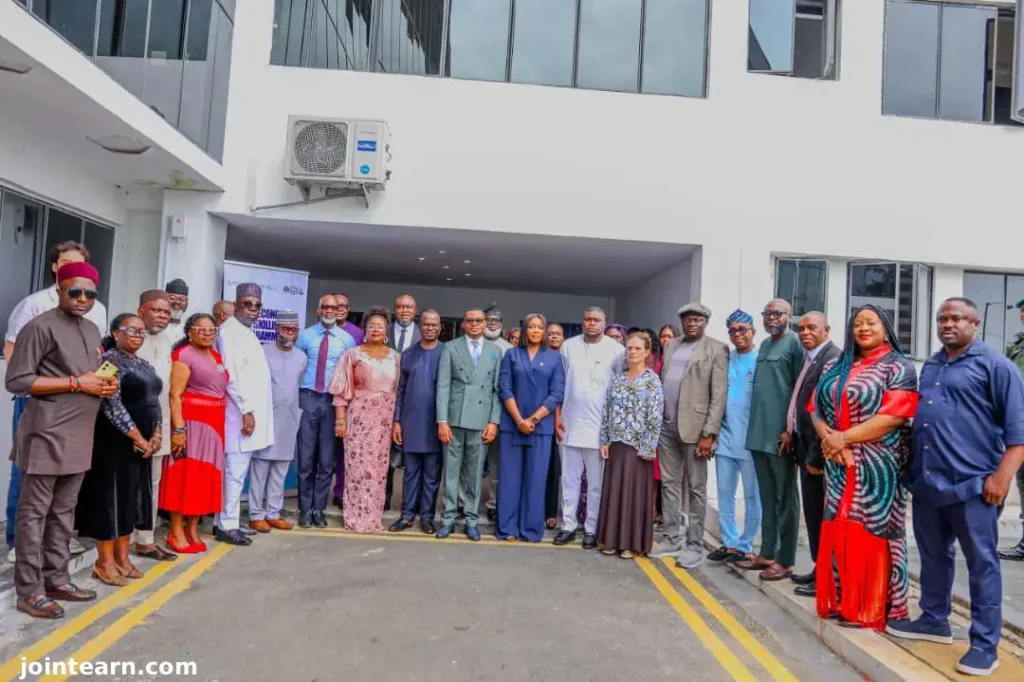
On Thursday, Governor Bassey Otu of Cross River State officially launched a groundbreaking World Bank-supported maritime upskilling programme aimed at equipping local citizens with advanced technical skills to participate in Nigeria’s rapidly growing blue economy. The event was held at the State Library Complex, in Calabar, marking a significant step in the state’s efforts to position itself as a leader in the maritime sector.
Represented by his Deputy, Dr. Peter Odey, Governor Otu highlighted the immense potential that Cross River holds, noting that the state is uniquely situated with one of Nigeria’s longest coastlines, which presents ample opportunities for growth in the maritime and marine industries.
The Governor emphasized that the upskilling programme would provide young people with the technical competencies needed to harness the state’s marine resources effectively. He described the initiative as an important step in transforming Cross River’s water-based assets into engines of economic development, job creation, and sustainability.
“This initiative reflects our administration’s unyielding commitment to transforming our water-based assets into engines of economic growth, job creation and sustainable development,” said Otu, stressing that Cross River must play a leading role in the burgeoning blue economy.
Nigeria’s Maritime Sector: A Growing Economic Contributor
Governor Otu referenced the growing importance of Nigeria’s maritime economy, which contributed ₦113.5 trillion to the country’s GDP in the third quarter of 2025. He also referred to projections from the Nigerian Maritime Administration and Safety Agency (NIMASA), which estimate that the nation’s blue economy could generate upwards of $296 billion in the coming years.
“With figures like these, we cannot afford to stand on the sidelines,” Otu said, emphasizing that Cross River must “lead from the front” in ensuring the blue economy reaches its full potential.
Strategic Investment in Maritime Infrastructure
Governor Otu also provided an update on the Bakassi Deep Seaport project, which has already secured a $3.5 billion investment. The project is pending presidential approval for the formal groundbreaking. Otu expressed confidence that this strategic investment would significantly boost the state’s maritime infrastructure, port operations, and logistics platforms, contributing immensely to Nigeria’s economic growth.
“We are ready and we will continue to work closely with the World Bank and the Federal Ministry of Marine and Blue Economy to ensure our waterways, ports, fisheries, and logistics platforms deliver maximum economic impact,” Otu affirmed.
Collaboration with the Federal Government and World Bank
The event saw significant participation from stakeholders in the maritime sector, including officials from the Federal Ministry of Marine and Blue Economy, World Bank, and University of Calabar. Prof. Busayo Fakinlede, Senior Special Adviser to the President on Marine and Blue Economy, commended Cross River for its consistent support of national efforts to develop a sustainable blue economy. He highlighted the state’s rich biodiversity and coastal heritage, which place it at the heart of Nigeria’s maritime ambitions.
“The initiative aligns perfectly with President Bola Tinubu’s priorities of food security, youth empowerment, economic diversification, and the responsible use of marine resources,” Fakinlede said. He also referred to Cross River as “the fish basket of the nation,” citing the state’s significant fisheries output.
World Bank Team Lead, Morales Yolanda, also spoke on the importance of developing the blue economy, particularly for coastal regions like Cross River. She noted that the World Bank is committed to providing the necessary funding, technical expertise, and strategic partnerships to ensure the success of the programme.
The Blue Economy and its Future Impact
Melodie Lebo, the Special Adviser to the Governor on Blue Economy, elaborated on the specific benefits of the programme, explaining that it will equip participants with 21st-century skills that meet international standards. She emphasized that the blue economy encompasses various sectors, including shipping, marine logistics, fisheries, port operations, aquaculture, and coastal tourism.
“This programme opens doors to job opportunities, internships, and collaborations with the World Bank,” Lebo said, highlighting that this is only the first phase of a multi-stage intervention designed to develop a skilled workforce for the maritime sector. She also noted that the certificates issued at the end of the training would be internationally recognized, aligning with global benchmarks.
Looking Ahead
The partnership between the state government, the World Bank, and the Federal Ministry of Marine and Blue Economy marks the beginning of a transformative pathway for marine and blue economy development in Cross River. As Governor Otu and his team push forward with these initiatives, Cross River is poised to become a central player in Nigeria’s burgeoning maritime economy.


Leave a Reply