The historic Red Sea port city of Aden, Yemen, is facing an unprecedented humanitarian and infrastructure crisis as hundreds of thousands of displaced people and migrants arrive seeking safety and work. Once known for its bustling harbors and vibrant culture, Aden is now overwhelmed by power shortages, water scarcity, and stretched public services.
Surge of Displaced Yemenis
The city has become a haven for Yemenis fleeing the capital, Sanaa, since it fell under the control of Iran-backed Houthi rebels. The conflict forced the Yemeni government to relocate to Aden in 2014. Yemen’s Minister of Social Affairs and Labour, Mohammed Saeed al-Zaouri, estimates that the city now hosts 755,000 registered migrants in addition to many unregistered individuals, bringing the total population to roughly 3.5 million, more than double the 1.5 million recorded two decades ago.
“This number is beyond Aden’s capacity,” Saeed al-Zaouri told AFP, highlighting the strain on essential resources.
Strain on Water and Electricity
Displaced families are sharing limited water supplies and enduring frequent electricity outages. Longtime residents and newcomers alike face challenges maintaining basic communications, as power cuts often disrupt phone and data networks.
Mohammed, a 37-year-old government employee, explained the impact:
“The displaced have to share with residents the limited supply of water and have put additional pressure on electricity services and the telecommunications network.”
The situation worsened in October when the city plunged into a five-day blackout due to fuel shortages — the third such outage in 2025.
Rising Costs and Tent Cities
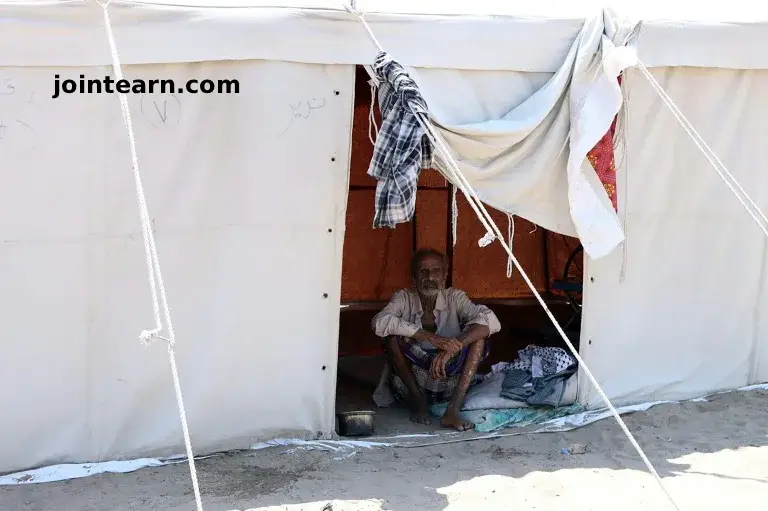
Aden’s rapid population growth has driven up rents, with most apartments starting at $106 per month, exceeding the earnings of many local residents like Mohammed, whose salary is approximately $80 per month. Unable to afford rent, thousands of displaced families are living in tent camps on the outskirts of the city, often lacking access to water, electricity, and basic furnishings.
One such family, led by Abdulrahman Mohyiddin, fled Hodeida in 2018 with eight children and now survives in a canvas tent, struggling for basic necessities.
Humanitarian Crisis
The Yemen conflict, ongoing since the Houthi takeover and the subsequent Saudi-led coalition intervention, has caused widespread death, malnutrition, and economic collapse. Although fighting has eased, Aden’s local economy has suffered dramatically since 2024 due to currency depreciation, halted oil exports, and funding restrictions.
UN data indicates that in 2025, 19.5 million people in Yemen—more than half the population—require humanitarian assistance, including 4.8 million internally displaced persons.
Farea al-Muslimi, a Yemen expert at Chatham House, warned that the city’s complete collapse of public services is likely imminent:
“The city overall is drowning in sewage, constant power cuts, and worse, poor governance.”
Daily Life in Crisis
Even relatively affluent areas, such as hotels hosting diplomatic missions, are struggling. Guards reported insufficient budgets for essentials, noting how even a police dog at the Coral Aden Hotel lacked proper food, symbolizing the city’s widespread exhaustion and deprivation.
Residents describe their daily existence as a battle for survival, sharing scarce resources and coping with ongoing disruptions in water, electricity, and basic services.


Leave a Reply