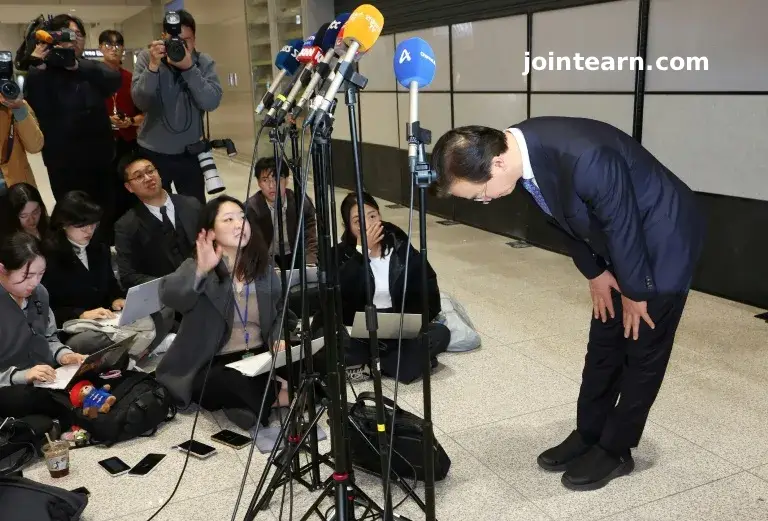
South Korea’s Oceans Minister, Chun Jae-soo, resigned on Thursday following allegations that he received illegal funds from the Unification Church, a controversial religious organization often linked to political influence and corruption scandals. The resignation underscores ongoing concerns about the church’s ties to South Korean politics and high-ranking officials.
Allegations Against Chun Jae-soo
Chun Jae-soo has been accused of receiving 30 million won ($20,500) in cash and two luxury watches from the Unification Church between 2018 and 2020. These allegations reportedly came from Yun Young-ho, the former head of the church’s global headquarters, during investigative questioning earlier this year.
Chun denied wrongdoing but stated:
“As a public official, resigning from the ministerial post… is the right behavior. I am stepping down to allow the government’s work to continue without faltering.”
President Lee Jae Myung accepted Chun’s resignation, emphasizing the importance of maintaining trust in government operations.
Broader Political Context
The Unification Church, founded in 1954 by Moon Sun-myung, has about three million followers worldwide. Over decades, the church built a global business empire spanning construction, media, education, and food industries. Its influence in South Korean politics has been increasingly scrutinized, especially following allegations of illegal donations connected to former first lady Kim Keon Hee.
Local media reports indicate that lawmakers from both the ruling Democratic Party and the conservative opposition may have received bribes or gifts from the church, prompting President Lee to order an official investigation into the group’s political ties.
Denials and Ongoing Investigations
Other officials implicated in the allegations, including Seoul’s Unification Minister Chung Dong-young, have denied receiving any bribes, calling the claims “groundless false rumors.”
President Lee stated:
“Just as individuals face sanctions for crimes, corporations and foundations should also be dissolved if they commit actions that violate the constitution and the law.”
Authorities are examining the church’s connections to politicians, reflecting broader concerns about the organization’s influence on governance and public policy in South Korea.
Global and Historical Context of the Unification Church
The Unification Church gained international notoriety in the 1970s and 1980s, hosting mass weddings and expanding into business and education. It has connections to high-profile events, including the 2018 Pyeongchang Winter Olympics, and has engaged diplomatically with North Korea, with former leaders visiting the regime in 1991.
The current church leader, Han Hak-ja, was arrested in September and is currently on trial for graft charges. Japan has also taken legal steps to dissolve its local chapter following the assassination of former Prime Minister Shinzo Abe, whose gunman cited grievances with the church as motivation.
Implications for South Korean Politics
Chun Jae-soo’s resignation highlights the ongoing tension between religious organizations and political authority in South Korea. The government’s investigation could result in further resignations, legal action, or institutional reforms, as authorities aim to curb undue influence from religious groups in politics.
Analysts note that the scandal may also affect public perception of both the ruling party and opposition, as lawmakers from multiple parties are implicated in alleged connections with the Unification Church.


Leave a Reply