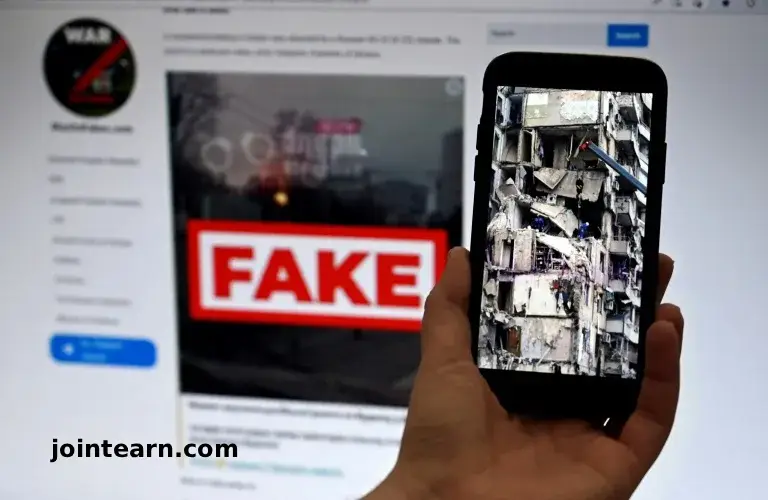
As fierce fighting continues for control of Pokrovsk, a key logistics hub in eastern Donetsk, pro-Russian social media accounts are waging a parallel information war using AI-generated videos designed to undermine Ukrainian morale. These videos depict Ukrainian soldiers surrendering, weeping, or abandoning their positions—even as the real battle rages on.
Russian AI Disinformation Campaign
Russia has sought to capture Pokrovsk for over a year, escalating its assault in recent weeks with a pincer-shaped offensive. Yet while the battlefield struggle continues, viral AI-generated content paints a false narrative of Ukrainian forces in disarray.
According to the Institute for Strategic Dialogue (ISD), dozens of videos circulated in November showing soldiers seemingly surrendering or crying on their way to the front. Pablo Maristany de las Casas, an ISD analyst, noted that these videos perpetuate a long-standing narrative that Ukrainian President Volodymyr Zelensky is sending unprepared citizens—including the elderly and youth—into combat.
Carole Grimaud, a researcher at France’s Aix-Marseille University, explained that the videos “instrumentalize uncertainty to sow doubt in public opinion,” adding that misinformation thrives wherever gaps in knowledge exist.
Detecting Fake Videos
The AI-generated videos often contain visual inconsistencies, such as soldiers walking effortlessly despite injuries, levitating stretchers, or disappearing and reappearing body parts. Some videos appear to use the likenesses of Russian online personalities, such as exiled YouTuber Alexei Gubanov, whose face was manipulated to portray a crying Ukrainian soldier.
“Obviously it’s not me,” Gubanov said in a video response. “Unfortunately, a lot of people believe this, and that plays into the hands of Russian propaganda.”
Some videos were reportedly created using OpenAI’s Sora video generation tool and were posted widely across platforms including TikTok, Instagram, Telegram, Facebook, X, and various European and Russian media sites. One video alone amassed millions of views and over 300,000 likes before accounts were removed.
The Impact on Morale and Public Perception
Experts say these AI-driven videos aim to erode Ukrainian morale while boosting Russian confidence. Ian Garner, a propaganda specialist at the Pilecki Institute, explained that these videos create relatability by showing “someone just like you,” a brother or father figure, supposedly surrendering or fleeing, thereby chipping away at the fighting spirit.
The European Digital Media Observatory (EDMO) has documented over 2,000 articles related to disinformation in the Ukraine war since 2022, noting that AI has significantly increased the scale and sophistication of misinformation campaigns.
AI chatbots have also been leveraged to spread pro-Kremlin narratives, with an October ISD study showing that almost one-fifth of chatbot responses cited Russian state-attributed sources.
Despite tech companies’ attempts to curb misuse, Maristany de las Casas said:
“The scale and impact of information warfare outpace the companies’ responses.”
Global Reach and Lingering Effects
The videos have appeared in multiple languages, including Greek, Romanian, Bulgarian, Czech, Polish, and French, reaching international audiences. While the direct effect on public opinion is difficult to quantify, repeated exposure to these videos may alter perceptions of the conflict, according to researchers.
As Ukraine continues to defend its eastern frontlines, the battle for public perception demonstrates that information warfare, amplified by AI, is now a critical component of modern conflict.


Leave a Reply