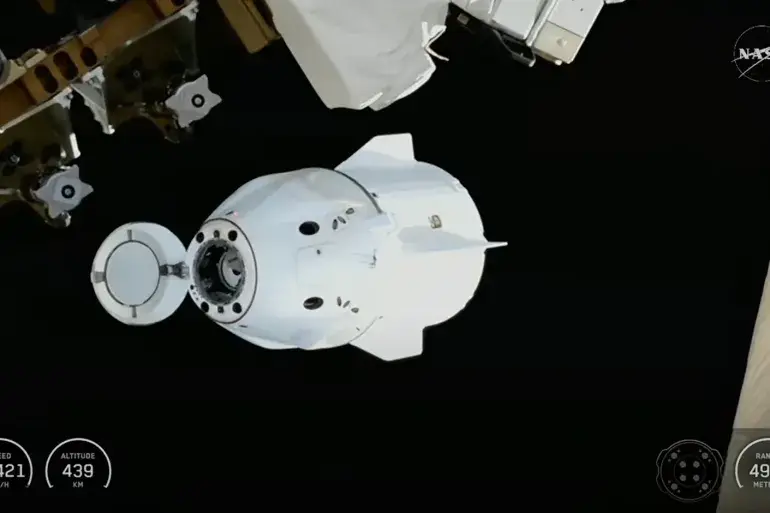
Four astronauts safely splashed down in the Pacific Ocean on January 15, 2026, marking the first-ever medical evacuation from the International Space Station (ISS). The unprecedented return was necessitated by a serious medical condition affecting one crew member, ending the mission earlier than planned.
SpaceX Dragon “Endeavour” Completes Historic Descent
The astronauts returned aboard the SpaceX Dragon capsule, nicknamed “Endeavour,” which undocked from the ISS on Wednesday evening. The capsule completed a 10.5-hour descent from orbit, landing off the coast of San Diego, California, at 12:41 a.m. local time (08:41 GMT) on Thursday.
NASA livestreamed the landing, showing the spacecraft safely entering the Pacific waters. Footage captured the four astronauts—American astronauts Mike Fincke and Zena Cardman, Russian cosmonaut Oleg Platonov, and Japanese astronaut Kimiya Yui—checking their Dragon pressure suits and preparing for departure from the orbital laboratory.
Mission Background: SpaceX Crew-11 and Expedition 74
The crew had spent 167 days aboard the ISS as part of SpaceX’s 11th crewed mission, also designated NASA’s Expedition 74, which began on December 8, 2025. During their time in orbit, they conducted long-duration scientific experiments and station maintenance operations, contributing to research on microgravity effects, human health, and space technology.
Originally, the mission was scheduled to continue until late February 2026. However, NASA announced on January 8 that the mission would end early due to a medical emergency affecting one of the crew members. Details were withheld to protect crew privacy, though NASA’s Chief Health and Medical Officer James Polk confirmed the incident was unrelated to ISS operations.
“Always we err on the side of the astronaut’s health and welfare, and in this particular case, we are doing the same,” Polk stated.
Astronauts Reflect on Early Return
Mike Fincke, a retired US Air Force colonel and Expedition 74 commander, said in an Instagram post that ending the mission early was the right decision to ensure proper medical evaluations on Earth. “This was a deliberate decision to allow the right medical evaluations to happen on the ground, where the full range of diagnostic capability exists. It’s the right call, even if it’s a bit bittersweet,” Fincke wrote.
The safe return of the crew underscores NASA and SpaceX’s preparedness for medical emergencies in space, highlighting the effectiveness of contingency planning and rapid-response procedures for astronauts in orbit.
Remaining Crew and Upcoming Missions
After the departure of SpaceX Crew-11, the ISS still hosts two Russian cosmonauts and one NASA astronaut to continue Expedition 74 operations. They will maintain station functions and ongoing experiments until the arrival of the next crew.
NASA’s next mission, SpaceX Crew-12, is scheduled for February 2026 and will deliver additional astronauts to continue ISS operations and relieve the current team.
Significance of the First-Ever Medical Evacuation
This historic medical evacuation demonstrates the growing capability to address health emergencies in space, a critical milestone as NASA and international partners prepare for longer-duration missions, including trips to the Moon and eventually Mars.
The event also highlights the collaboration between NASA, SpaceX, and international partners, ensuring that astronauts’ health and safety remain the top priority, even hundreds of kilometers above Earth.


Leave a Reply