Australia’s Prime Minister Anthony Albanese has formally apologized to the Jewish community in the wake of last week’s devastating Bondi Beach attack, which claimed 15 lives during a Hanukkah ceremony. Speaking on December 21, Albanese also urged lawmakers to implement stricter measures against hate speech and hardline violence, alongside reforms to the country’s gun legislation.
“As prime minister, I feel the weight of responsibility for an atrocity that happened whilst I’m prime minister, and I’m sorry for what the Jewish community and our nation as a whole has experienced,” Albanese said.
The Prime Minister pledged steps to protect Jewish Australians and their right to practice their faith, educate their children, and engage fully in society.
Attack Details and Investigation
Authorities continue to investigate the December 14 attack, which is being treated as an act of terrorism. The attack claimed the lives of victims ranging from a 10-year-old girl to a Holocaust survivor.
Police have identified the suspects as Sajid Akram, 50, and his son Naveed, 24, who are believed to have been inspired by ISIL (ISIS). Flags associated with the extremist group were found in the vehicle the suspects drove.
- Sajid Akram was shot dead by police during the incident.
- Naveed Akram remains hospitalized and faces 59 charges, including murder and terrorism-related offences.
Court filings indicate the suspects spent months meticulously planning the attack, including firearms training in the New South Wales countryside. They also recorded videos condemning “Zionists” and explaining their motivations for the attack.
“We’re not going to let the ISIS-inspired terrorists win. We won’t let them divide our society, and we’ll get through this together,” Albanese said.
Government Response: Hate and Gun Law Reforms
Albanese called for bipartisan support to criminalize hate preaching as an aggravated offence, emphasizing the need for urgency and national unity.
Despite Australia already having some of the world’s strictest gun laws, Albanese proposed reforms aimed at preventing similar tragedies in the future. Key measures include:
- Capping gun ownership to four firearms per individual (ten for exemptions such as farmers)
- Banning terrorist symbols in public
- Allowing authorities to prohibit protests for up to three months following incidents classified as terrorism
The government of New South Wales (NSW), where Bondi Beach is located, introduced these draft laws on Monday, with expectations for parliamentary approval later this week.
“We can’t pretend that the world is the same as it was before that terrorist incident,” said NSW Premier Chris Minns. “We need to make sure we take steps so that it never happens again.”
Public Reaction
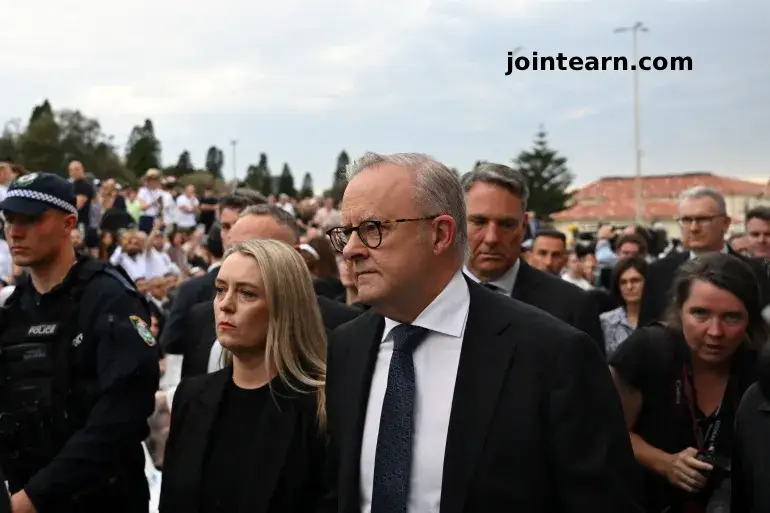
Communities across Australia have expressed grief and solidarity in the wake of the attack. Vigils and commemorations have highlighted both the devastation of the tragedy and the urgency for stronger protections for targeted communities.
The attack has also prompted a national conversation about the balance between security measures, civil liberties, and community safety, particularly in relation to preventing radicalization and extremist violence.
Outlook: Strengthening Security and Social Cohesion
The Bondi Beach attack underscores the continuing threat of ISIS-inspired terrorism and the challenges faced by democratic societies in safeguarding minority communities. Albanese’s call for tougher hate and gun laws aims to reinforce Australia’s national security framework while protecting vulnerable groups and maintaining public trust.
As legislative reforms move through NSW parliament and at the federal level, Australia faces a critical moment in balancing freedom, security, and societal resilience in the wake of its deadliest mass shooting in decades.


Leave a Reply