Japan is preparing to restart the world’s largest nuclear power plant, Kashiwazaki-Kariwa, marking a major shift in its energy policy 15 years after the catastrophic Fukushima Daiichi disaster led to the shutdown of the country’s nuclear reactors.
The Niigata prefectural government approved the partial restart on December 22, 2025, following a vote of confidence for Governor Hideyo Hanazumi, who supports the reopening. The decision allows the plant to resume operations despite public opposition and lingering safety concerns stemming from the 2011 triple meltdown at Fukushima.
Context: Japan’s Nuclear Energy Shift
After the Fukushima disaster, 54 nuclear reactors were shut down, shaking public trust in nuclear energy and halting Japan’s nuclear program. However, rising environmental and economic pressures, particularly the cost of imported fossil fuels, have prompted the government to reverse course.
Prime Minister Sanae Takaichi, who took office two months ago, has backed the restart of select nuclear facilities to enhance energy security, reduce reliance on liquefied natural gas (LNG) and coal imports, and help Japan meet its climate change goals. Last year, Japan spent approximately 10.7 trillion yen ($68bn) on imported fossil fuels—around one-tenth of the country’s total import costs.
Kashiwazaki-Kariwa: The World’s Largest Nuclear Plant
Kashiwazaki-Kariwa, operated by Tokyo Electric Power Co (TEPCO)—the same company behind Fukushima—is poised to become the latest nuclear facility to reopen. Fourteen of Japan’s 33 operable nuclear plants have already restarted under the new policy.
TEPCO plans to reactivate the first of seven reactors at Kashiwazaki-Kariwa on January 20, 2026, according to Japanese public broadcaster NHK. The first reactor alone could increase electricity supply to the Tokyo area by 2 percent, providing relief to an energy market heavily dependent on fossil fuel imports.
Public Opposition and Protest
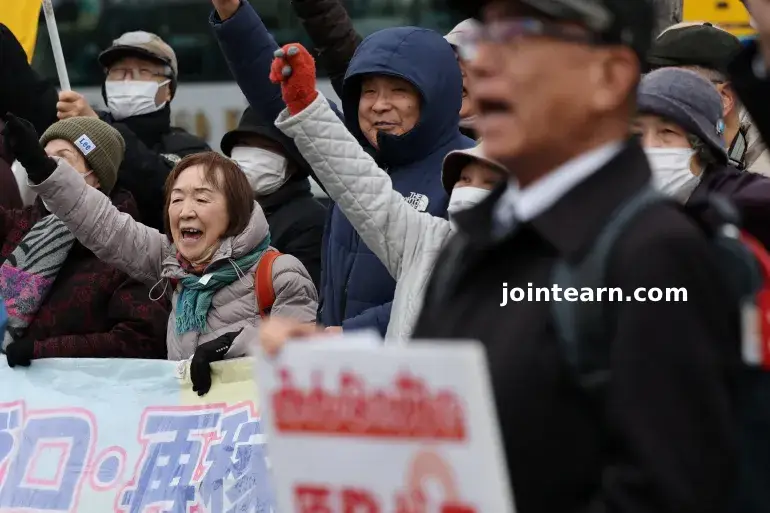
Despite government approval, local residents and Fukushima survivors remain deeply concerned. Approximately 300 protesters gathered outside the Niigata prefectural government office, holding banners reading “No Nukes”, “We oppose the restart of Kashiwazaki-Kariwa”, and “Support Fukushima”.
Ayako Oga, a 52-year-old farmer and anti-nuclear activist, fled the Fukushima area in 2011 and now resides in Niigata. She described ongoing trauma and fear of future accidents, emphasizing that many evacuees continue to struggle with post-traumatic stress symptoms linked to the Fukushima disaster.
“We know firsthand the risk of a nuclear accident and cannot dismiss it,” Oga said during the protests.
Energy Security and Climate Considerations
The restart aligns with Japan’s broader energy strategy, balancing environmental goals with economic realities. Nuclear power allows Japan to reduce greenhouse gas emissions while ensuring a stable energy supply. Takaichi has emphasized that reopening nuclear plants is essential to reduce reliance on imported fossil fuels, which contribute both to global climate change and Japan’s substantial trade deficit.
Challenges Ahead
The restart of Kashiwazaki-Kariwa is symbolic of Japan’s energy transition and ongoing debate over nuclear safety versus energy independence. While the government and TEPCO emphasize the plant’s role in lowering electricity costs and supporting climate objectives, protests reflect the long-standing mistrust among citizens affected by Fukushima.
Safety evaluations, emergency protocols, and continued community engagement will be critical to navigating public concerns as Japan resumes nuclear operations in a post-Fukushima era.


Leave a Reply