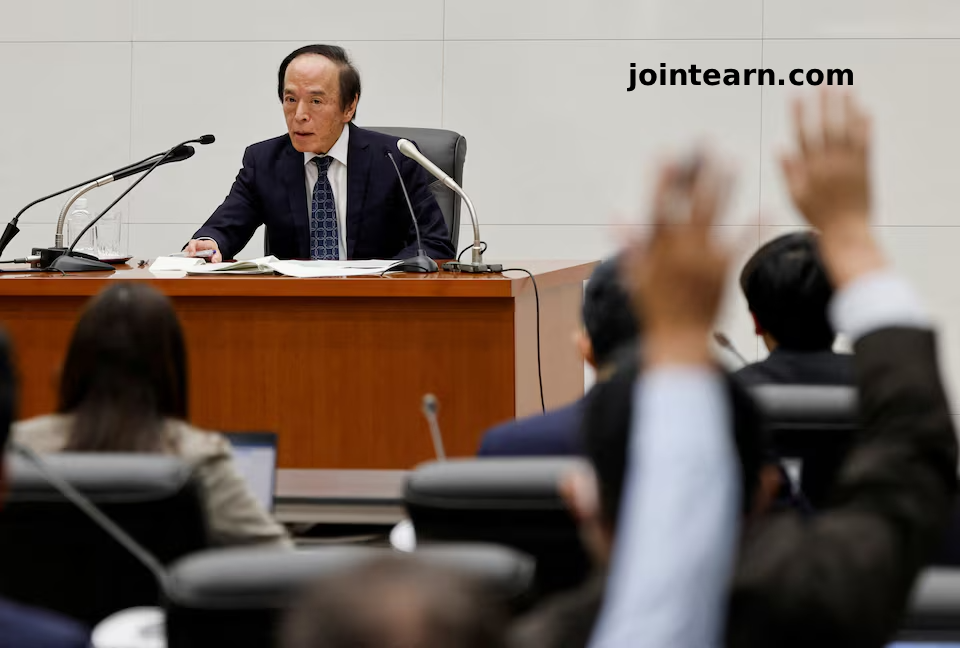
Tokyo, December 23, 2025 – The Bank of Japan (BOJ) sent subtle but clear signals that it could resume interest rate hikes sooner than markets anticipate, following its decision to raise rates to the highest level in 30 years. While Governor Kazuo Ueda offered vague guidance on timing, analysts and insiders suggest the central bank is poised to continue its tightening cycle, potentially starting as early as mid-2026.
BOJ’s Latest Move and Market Reaction
Last week, the BOJ increased its policy rate, pushing Japanese government bond yields to multi-decade highs. The yen weakened by 1.4% against the dollar, prompting warnings from Japan’s finance minister that Tokyo was ready to intervene to stabilize the currency.
Governor Ueda emphasized that while the BOJ’s policy rate has room to rise, the timing of subsequent hikes remains flexible, reflecting the bank’s strategic ambiguity. This approach allows the BOJ to respond quickly to inflation trends and currency fluctuations without committing to a rigid schedule.
Hawkish Signals Behind Ueda’s Ambiguity
Despite his cautious words, multiple hawkish indicators suggest further tightening:
- Inflation momentum: Surveys indicate inflation is becoming more entrenched in the Japanese economy, potentially justifying earlier hikes if the trend accelerates.
- Rate-hike pace: Former BOJ board member Makoto Sakurai projects three more rate increases next year, possibly starting around June or July 2026, bringing the policy rate to approximately 1.5%.
- Neutral rate guidance: Ueda noted that the BOJ policy rate remains below the bottom of the neutral range (1.0%-2.5%), implying more room for tightening.
- Economic resilience: Japan’s economy is withstanding higher borrowing costs without signs of financial stress, reinforcing the BOJ’s confidence to continue rate increases.
Weak Yen and Inflation Pressure
The yen’s weakness remains a central factor in BOJ decision-making. Recent declines have increased import costs, feeding inflation and heightening pressure for further rate hikes. Analysts note that if the yen continues to fall, the BOJ could move faster than currently expected.
Former BOJ executive Akira Otani expects another hike in July, but acknowledges that currency movements could accelerate or delay the timing. Similarly, labor shortages and government stimulus spending could further increase inflationary pressures.
Market Expectations vs BOJ Reality
While currency markets currently anticipate the next hike in the second half of 2026, some analysts, including those at JP Morgan, expect the first hike as early as April, followed by another in October. The uncertainty underscores the BOJ’s deliberate ambiguity, designed to maintain flexibility in response to economic and market conditions.
Upcoming Policy Meeting
Investors will look closely to the January 22-23 BOJ policy meeting, where updated growth and inflation forecasts will be released. An upward revision in inflation expectations could solidify the case for more aggressive tightening, potentially reshaping expectations for Japan’s terminal rate and influencing global bond and currency markets.
Key Takeaways
- BOJ raised rates to the highest level in 30 years, signaling further hikes ahead.
- Governor Ueda’s cautious commentary masks a firmly hawkish stance.
- Weak yen, labor shortages, and stimulus-driven demand may accelerate the pace of rate hikes.
- Markets currently underestimate the likelihood of an early 2026 hike.
- Updated forecasts in January will provide clarity on Japan’s inflation trajectory and monetary policy path.


Leave a Reply