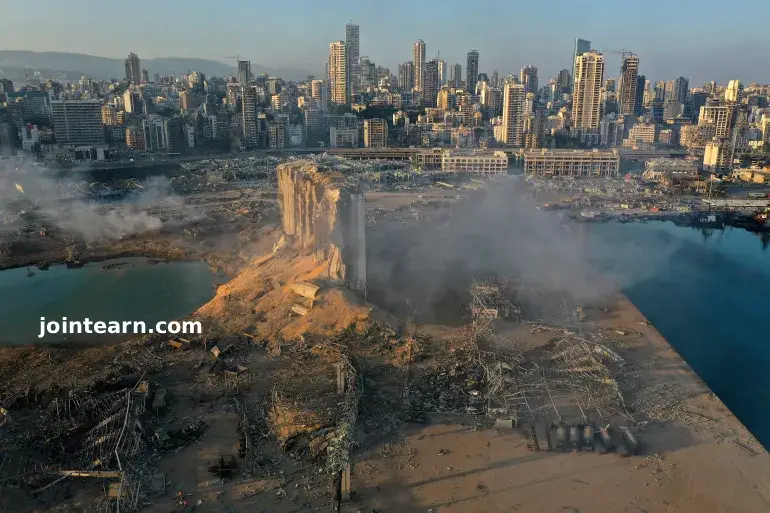
A Bulgarian court has rejected Lebanon’s request to extradite Igor Grechushkin, the Russian-Cypriot shipowner linked to the 2020 Beirut port explosion, marking a significant setback for Lebanese authorities seeking accountability for one of the deadliest non-nuclear blasts in history.
Grechushkin, 48, is the former owner of the ship Rhosus, allegedly carrying nearly 3,000 tonnes of ammonium nitrate that detonated at Beirut port on August 4, 2020, killing at least 218 people, injuring over 6,500, and displacing tens of thousands.
The explosion generated a 3.3-magnitude seismic event felt in neighboring countries including Syria, Israel, and Cyprus, causing property damage estimated at $15 billion and further aggravating Lebanon’s ongoing economic crisis.
Court Decision and Legal Proceedings
Grechushkin was detained in Bulgaria in September 2025 on an Interpol notice issued at Lebanon’s request. He has been held pending extradition proceedings.
According to Grechushkin’s lawyer, Ekaterina Dimitrova, the Sofia City Court ruled that Lebanon had not provided “sufficient evidence to ensure that the death penalty will not be imposed on him or, if imposed, will not be carried out.” The court hearing was closed to the media.
The ruling can be appealed within seven days at the Sofia Court of Appeal, whose decision will be final. Meanwhile, Grechushkin remains in custody pending the outcome of the appeal.
Angel Kanev, the supervising prosecutor, stated his intention to challenge the decision, arguing that Lebanon’s justice authorities, including the Supreme Court and prosecutor general, had provided the necessary assurances regarding Grechushkin’s treatment.
“Given that they have been given by such an authority … I believe that the grounds for extradition exist,” Kanev said.
The Beirut Port Explosion: Background and Investigation
The Beirut port explosion occurred when a fire ignited a warehouse storing ammonium nitrate, which had been held there for years without adequate safety measures despite repeated warnings to officials. The blast devastated the surrounding area, destroyed thousands of homes, and left large sections of Beirut in ruins.
More than five years after the disaster, no senior officials have been held accountable. Families of the victims accuse Lebanese political leaders of obstructing the investigation to shield high-ranking figures from prosecution.
- The initial investigative judge, who charged top officials, was removed.
- His successor, Judge Tarek Bitar, resumed the investigation and has questioned several current and former politicians, but no preliminary indictments have yet been issued.
- Many charged officials have refused to appear for questioning and denied wrongdoing, slowing the investigative process.
Humanitarian and Economic Impact
The blast displaced approximately 300,000 people, destroyed thousands of buildings, and inflicted an estimated $15 billion in property damage. The disaster compounded Lebanon’s severe economic crisis, which continues to affect millions of citizens struggling with unemployment, inflation, and basic needs shortages.
In early December 2025, Pope Leo XIV visited Beirut, offering prayers at the blast site and lighting a lamp at a monument dedicated to the victims, underscoring the international attention the tragedy continues to receive.
International Significance
The Bulgarian court’s decision highlights the challenges of international extradition, especially when potential death penalty concerns are involved. It also underscores the slow progress of Lebanon’s domestic investigation into the blast, leaving victims and families frustrated with the lack of accountability.
Legal experts warn that without full cooperation from other countries, holding foreign nationals responsible in high-profile cases like the Beirut port explosion remains extremely complex.


Leave a Reply