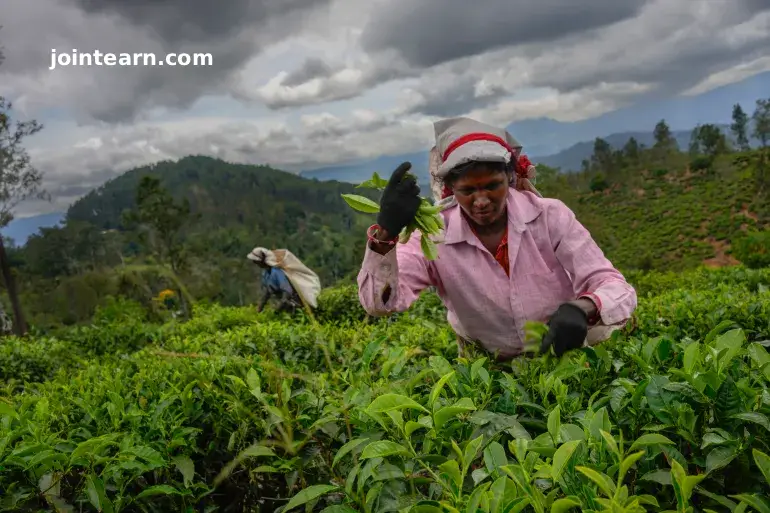
Colombo, Sri Lanka — December 10, 2025
Sri Lanka’s tea plantations—a cornerstone of the nation’s economy and the second-largest source of export revenue after apparel—have suffered catastrophic damage following Cyclone Ditwah, the worst cyclone to hit the Indian Ocean island in a century. The storm uprooted fully grown tea crops, destroyed infrastructure, and displaced thousands of plantation workers, leaving many without homes or livelihoods.
Cyclone Ditwah: Scale of the Disaster
Cyclone Ditwah swept across Sri Lanka last week, killing at least 635 people and affecting more than two million residents, approximately 10% of the population. In response, President Anura Kumara Dissanayake declared a state of emergency, designating 22 of the island’s 25 districts as disaster zones.
The central highlands, including the districts of Nuwara Eliya, Badulla, and Uva, which are the country’s key tea-growing regions, were the hardest hit. Preliminary data indicates at least 471 deaths occurred in these areas, in addition to widespread destruction of plantations, roads, and essential infrastructure.
Sundaram Muttupillai, 46, a tea estate worker from Thalawakelle, described the devastation:
“It is all gone. Roads are impassable. We do not have the essentials, nor any hope of overcoming the cyclone’s impact.”
Economic Impact on the Tea Industry
Tea is a globally renowned export for Sri Lanka, ranking as the fourth-largest tea exporter by value, with an annual revenue of approximately $1.3 billion, projected to reach $1.5 billion in 2025. However, the cyclone has inflicted massive losses:
- Floods and landslides uprooted fully grown tea plantations.
- Transportation networks, including roads and railways, have been severely disrupted.
- Delivery of essential agricultural inputs, such as fertilizers, has been delayed.
Preliminary estimates from a presidential recovery committee suggest tea production could decline by up to 35%, significantly impacting both domestic employment and foreign exchange earnings.
Prabath Chandrakeerthi, Sri Lanka’s commissioner general of essential services, estimated the total economic loss from Cyclone Ditwah at $6 billion, nearly 3.5% of the country’s GDP.
Humanitarian Toll on Plantation Workers
Thousands of tea plantation workers have been rendered homeless and forced into government shelters. Senthilnathan Palansamy, 34, from Badulla, expressed the fears shared by many:
“The plantations are unsafe. There will not be any work for several months. We will have to snap out of plantation lives and work somewhere else.”
Workers face an uncertain future as the destruction has left entire hamlets buried under soil, and access to basic necessities remains limited.
Broader Economic Vulnerabilities
Sri Lanka’s economy is already fragile after the 2023 financial crisis, which required a $2.9 billion IMF bailout. Public debt stands at nearly $100 billion, or 99.5% of GDP, leaving little room to absorb such shocks. Analysts warn that Cyclone Ditwah will exacerbate vulnerabilities, particularly in export-dependent sectors like tea.
Dhananath Fernando, CEO of the Advocata Institute, likened the impact of Ditwah to the 2004 tsunami, emphasizing potential sharp increases in consumer prices and reduced domestic consumption:
“The cyclone has dealt a heavy blow, and this shock will significantly reduce overall growth, not just our export capacity, but also local consumption.”
Experts warn that tea plantation workers may be forced to shift to other professions, threatening the long-term stability of Sri Lanka’s agricultural economy.
Challenges for Rebuilding and Recovery
Tea exporters, including the Tea Exporters Association of Sri Lanka (TEASL), had projected $1.5 billion in 2025 export earnings, up from $1.43 billion in 2024. However, these targets are now in jeopardy due to the extensive damage to the tea-growing highlands.
Omar Rajarathnam, executive director of Factum, emphasized the importance of factoring extreme weather and climate risks into future industry planning:
“Projections should include multiple scenarios and mitigation methods to ensure resilience against disasters like Cyclone Ditwah.”
Life After the Cyclone
As the country begins recovery, many tea plantation workers focus simply on survival. Sharmila, a tea plucker in Badulla, summed up the grim reality:
“The tea plantations are now like wastelands. The crops are devastated, homes destroyed, and we have lost so many people. I don’t know whether we would ever recover.”
The path to recovery will be long, requiring significant time, resources, and government support, as well as international assistance to rebuild the plantations that form the backbone of Sri Lanka’s economy.


Leave a Reply