Cambodia has accused Thailand of conducting military strikes deep inside its territory, targeting Siem Reap province, home to the world-renowned Angkor temple complex, in a dramatic escalation of the ongoing border conflict. This marks the first time Thai forces have reportedly bombed areas so close to Cambodia’s top tourist attractions.
The announcement came on Monday, with Cambodian officials stating that the attack occurred less than a two-hour drive from the UNESCO World Heritage Site, Angkor Wat, threatening both civilian populations and the country’s vital tourism industry.
Renewed Border Clashes
The border dispute between Cambodia and Thailand has deep historical roots, tracing back to colonial-era demarcations along their 800-kilometre (500-mile) frontier. Renewed clashes in July killed dozens, and although a temporary truce was brokered, it quickly collapsed.
Since the beginning of December, fighting has intensified, claiming at least 31 lives, including soldiers and civilians, and displacing approximately 800,000 people, according to Cambodian authorities. Both sides have accused each other of initiating attacks and targeting civilians, escalating tensions further.
Details of the Siem Reap Bombing
Cambodia’s Ministry of Defence released a statement claiming that a Thai fighter jet struck “near a displaced civilians camp in the area of Srei Snam district, Siem Reap province.” Cambodian Information Minister Neth Pheaktra told AFP that the incident represents “the furthest that the Thai military has struck into Cambodian territory” during the latest series of clashes, approximately 70 kilometres (43 miles) from the border and far from the traditionally disputed areas.
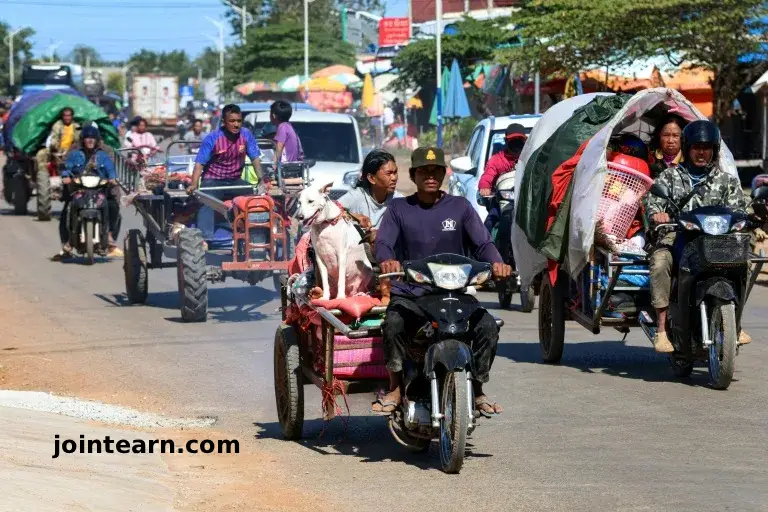
The bombing forced hundreds of displaced families to flee evacuation sites, raising humanitarian concerns and further straining resources already stretched by ongoing conflict.
Impact on Cambodia’s Tourism Sector
Tourism plays a critical role in Cambodia’s economy, with foreign visitor arrivals reaching 6.7 million last year, marking a record high. However, tourism has yet to fully recover from the COVID-19 pandemic, and recent border tensions are exacerbating the situation.
From July to September 2025, tourist arrivals fell by about a third compared to 2019, while ticket sales at Angkor Archaeological Park dropped by at least 17% year-on-year between June and November. Chhay Sivlin, president of the Cambodia Association of Travel Agents, noted that reports of bombing in Siem Reap have caused widespread concern among tourists, with some altering travel routes through Vietnam or Laos, and others canceling or delaying trips entirely.
International Response and Ceasefire Disputes
US President Donald Trump, who previously intervened in the conflict, announced last week that both countries had agreed to a ceasefire beginning Saturday night. However, fighting reportedly continued over the weekend and into Monday, with Bangkok denying the claim.
Thai Prime Minister Anutin Charnvirakul, who recently dissolved parliament ahead of elections next year, posted on social media that the government would continue military operations. Both Cambodian and Thai military officials reported ongoing clashes and border strikes, indicating a fragile and tense situation.
Regional Implications
The escalation of hostilities near Siem Reap province has not only humanitarian consequences but also threatens Southeast Asia’s regional stability. Analysts warn that continued fighting near Cambodia’s cultural and historical landmarks could undermine international confidence in tourism, regional security, and bilateral cooperation between the neighboring countries.
As the situation unfolds, the international community is closely monitoring developments, emphasizing the need for a lasting ceasefire and dialogue to prevent further civilian casualties and economic disruption.


Leave a Reply