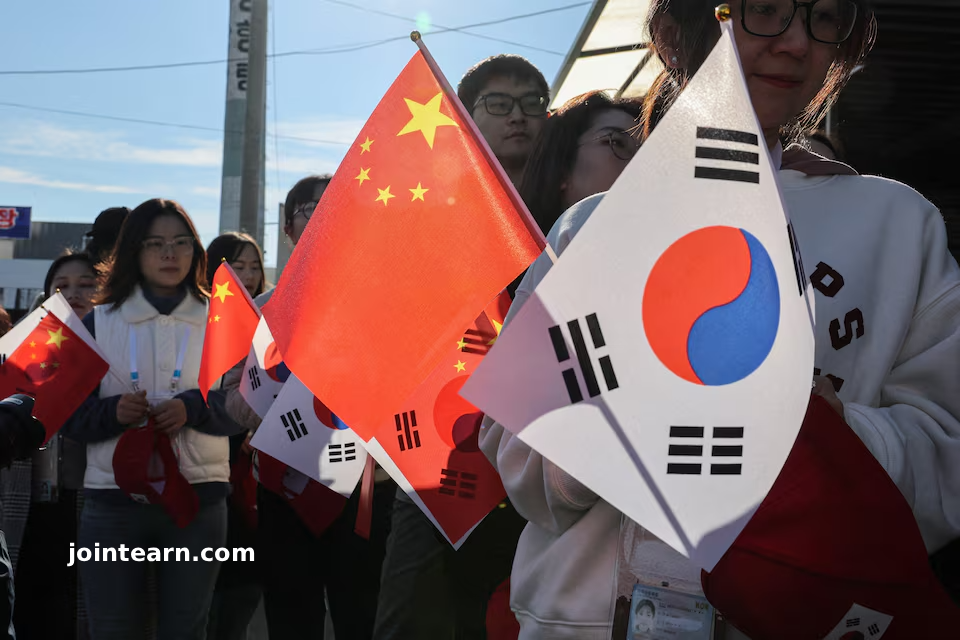
China and South Korea have agreed to strengthen cultural exchanges in an orderly and gradual manner, following a high-level summit in Beijing aimed at restoring and enhancing bilateral relations between the neighboring countries.
Leaders Meet to Revive Bilateral Ties
South Korean President Lee Jae Myung met with Chinese President Xi Jinping on Monday in Beijing, marking a key step toward improving relations after periods of tension. The meeting focused on a wide range of issues, including trade, security, and cultural cooperation, signaling a shared commitment to fostering closer ties between China and South Korea.
During the summit, the two leaders emphasized the importance of cultural exchange as a bridge between nations, paving the way for more systematic collaboration in areas such as film, television, music, and other creative industries.
Cultural Exchanges to be Implemented Gradually
According to Wi Sung-lac, Lee’s security adviser, the two countries plan to gradually increase exchanges of cultural content. They also intend to conduct working-level discussions on movies, dramas, and other entertainment content, ensuring that cultural collaboration aligns with both countries’ policies and strategic priorities.
The approach is designed to promote mutual understanding while maintaining a structured framework for cooperation, preventing disputes and fostering long-term cultural ties.
Boosting South Korean Cultural Presence in China
The agreement comes at a time when South Korean culture, including K-pop, films, and dramas (Hallyu wave), continues to enjoy significant popularity globally. Beijing’s willingness to expand orderly exchanges may provide a boost to South Korean entertainment exports, while also giving China greater access to Korean cultural content.
Experts suggest that this initiative could strengthen soft power ties between the two nations, promote tourism, and encourage collaboration in creative industries. By facilitating working-level talks, both governments aim to ensure that cultural cooperation is mutually beneficial, sustainable, and respectful of local regulations.
Context: China–South Korea Relations
Relations between China and South Korea have experienced fluctuations in recent years due to geopolitical tensions, trade disputes, and regional security concerns. This latest summit represents an effort to restore trust and improve diplomatic communication.
The focus on culture highlights a softer dimension of diplomacy, demonstrating that cultural exchange can complement economic and political dialogue. By creating structured channels for collaboration, China and South Korea aim to foster long-term cooperation that benefits both societies.
Looking Ahead: The Future of Cultural Cooperation
Both governments have signaled that additional discussions at the working level will take place, particularly in the fields of film, television, and digital media content. Analysts predict that these exchanges could pave the way for co-productions, joint ventures, and shared cultural festivals, enhancing the profile of both nations’ creative industries on the global stage.
As China and South Korea gradually implement these cultural initiatives, they may serve as a model for other countries seeking structured, mutually beneficial cultural collaboration, demonstrating how diplomacy and the arts can work hand in hand.


Leave a Reply