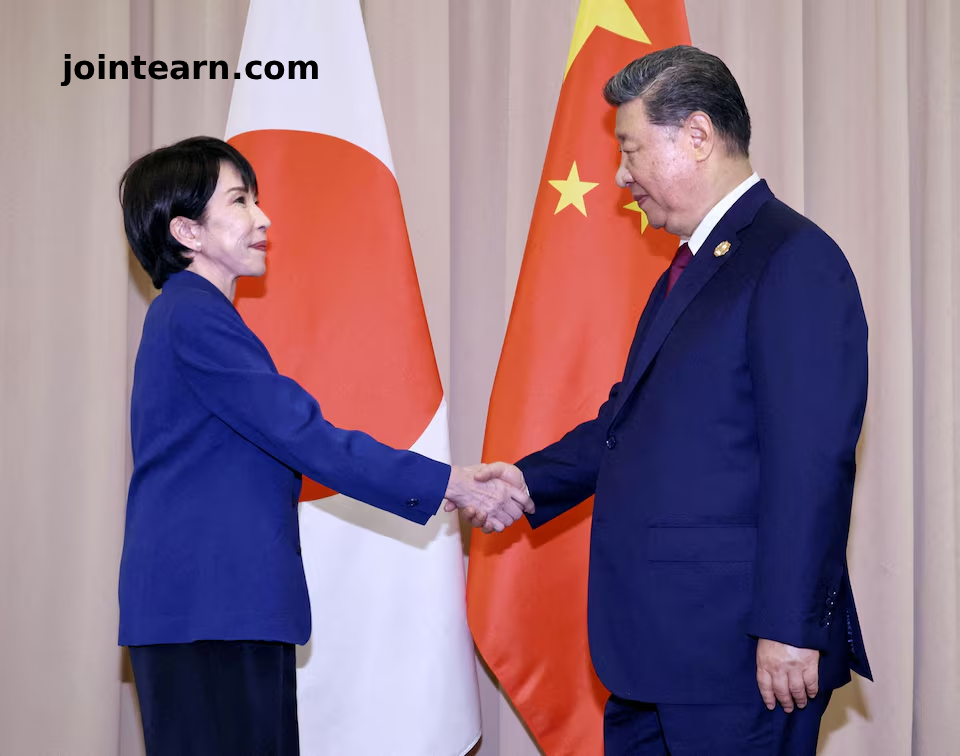
Beijing, China – November 22, 2025 – China has formally taken its escalating dispute with Japan over Taiwan to the United Nations, accusing Tokyo of threatening “an armed intervention” and pledging to defend its sovereignty in the strongest terms yet. The move marks a significant intensification in tensions between the two nations, which are already facing their most serious bilateral crisis in years.
Chinese U.N. Ambassador Fu Cong sent a letter to U.N. Secretary-General Antonio Guterres on Friday, criticizing Japanese Prime Minister Sanae Takaichi for comments suggesting that a hypothetical Chinese attack on Taiwan could trigger a military response from Japan. Fu described Takaichi’s remarks as “a grave violation of international law” and a challenge to China’s territorial integrity.
“If Japan dares to attempt an armed intervention in the cross-Strait situation, it would be an act of aggression,” Fu wrote. “China will resolutely exercise its right of self-defence under the U.N. Charter and international law and firmly defend its sovereignty and territorial integrity.”
Background of the Dispute
China claims Taiwan as part of its territory and has not ruled out the use of force to assert control over the island. Taiwan, a democratically governed entity, rejects Beijing’s claims, asserting that its people alone have the right to determine their future.
Takaichi, a conservative nationalist who assumed office last month, made her remarks in the Japanese parliament on November 7, stating that a Chinese attack on Taiwan — located just over 100 km (60 miles) from Japanese territory — could constitute “a situation threatening Japan’s survival”. Under Japanese law, this designation allows the prime minister to deploy military forces in response to imminent threats.
China’s reaction has extended beyond diplomatic protests. Beijing cited Takaichi’s comments as having “severely damaged” trade cooperation between the countries, while cultural exchanges, including concerts by Japanese musicians in China, were abruptly canceled.
Historical and Legal Context
China has increasingly invoked Japan’s wartime atrocities and its postwar role in establishing the U.N. to support its claims. Chinese officials reference the Potsdam and Cairo Declarations, which envision Taiwan and other territories formerly occupied by Japan being returned to Chinese rule. While these declarations form the basis for Beijing’s sovereignty claims, most governments consider them statements of intent rather than legally binding treaties.
China’s U.N. position also recalls historical context: the Republic of China government, which signed the declarations, relocated to Taiwan in 1949 after losing the civil war to Mao Zedong’s communists. Taiwan retained China’s U.N. seat until 1971, when it was transferred to the People’s Republic of China.
Japan’s Response
The Japanese Foreign Ministry dismissed China’s claims as “entirely unacceptable”, reaffirming Japan’s commitment to peace while rejecting any suggestion that Tokyo intends military intervention. Analysts warn that the dispute could escalate tensions in the East Asia region, affecting trade, security, and diplomatic relations between two of the world’s largest economies.
As China and Japan continue this diplomatic tit-for-tat, the situation over Taiwan remains a flashpoint with potential implications for regional stability, international law, and U.S.-Japan-China strategic dynamics.


Leave a Reply