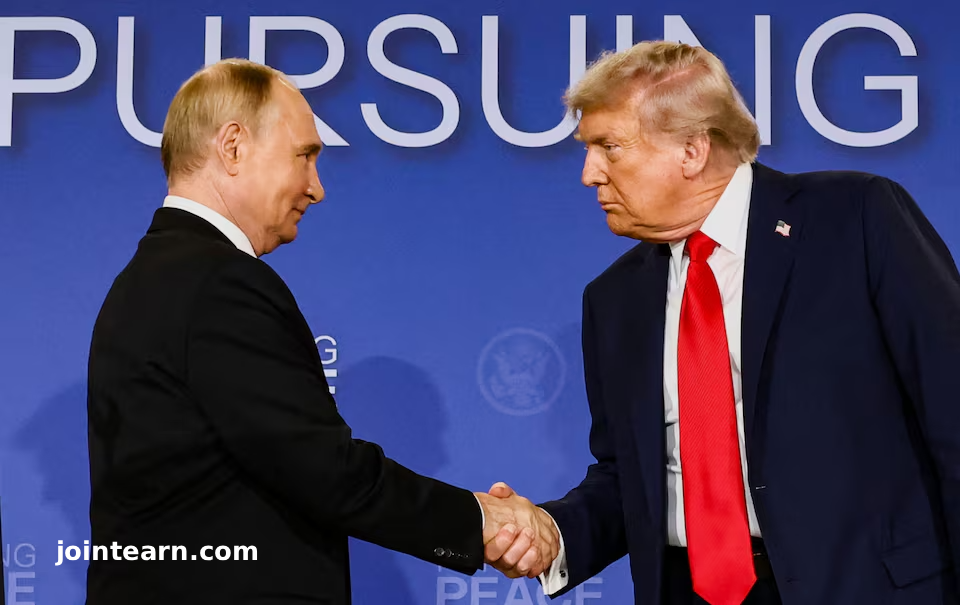
Moscow, Russia – November 22, 2025 – The prospect of another high-level meeting between Russian President Vladimir Putin and U.S. President Donald Trump remains on the table, according to senior Russian diplomat Deputy Foreign Minister Sergei Ryabkov. In an interview published Saturday by the state-owned International Affairs magazine, Ryabkov emphasized that dialogue between Moscow and Washington continues despite previous talks failing to produce a breakthrough on the war in Ukraine.
“I wouldn’t rule anything out,” Ryabkov said. “The search for a way forward continues.”
Continuing Russia-U.S. Dialogue
Ryabkov stressed that channels of communication between Russia and the United States remain fully operational. While not all discussions are public, ongoing diplomatic engagement is “impressive,” he noted, underscoring Russia’s commitment to maintain structured dialogue.
Trump and Putin last met in Alaska in August 2025, but their discussions did not result in an agreement to resolve or pause Moscow’s ongoing military campaign in Ukraine. Plans for a subsequent summit in Budapest were suspended indefinitely, leaving both sides exploring alternative avenues for negotiation.
Nuclear Stability Talks and China’s Role
Ryabkov also addressed the possibility of a trilateral meeting with China and the United States on nuclear stability, clarifying that Russia has no intention of pressuring Beijing into such discussions. “We have no questions for China on the subject of arms control and strategic stability,” he said, adding that Russia has yet to receive any formal proposals from the U.S. regarding a trilateral summit.
President Trump has expressed interest in including China in future nuclear arms reduction efforts alongside Russia and the United States. Last month, he mentioned that Putin had suggested the possibility of a bilateral nuclear de-escalation framework, with China potentially joining at a later stage.
Strategic Implications
The potential for a renewed Putin-Trump summit carries significant geopolitical implications, particularly regarding arms control, nuclear stability, and conflict resolution in Ukraine. Analysts highlight that ongoing diplomatic engagement, even without immediate agreements, helps maintain channels for negotiation and reduces the risk of escalatory misunderstandings between two nuclear powers.
Ryabkov’s comments reinforce Moscow’s position that bilateral communication with the U.S. is intact and that both sides continue to explore mechanisms for addressing pressing global security issues.


Leave a Reply