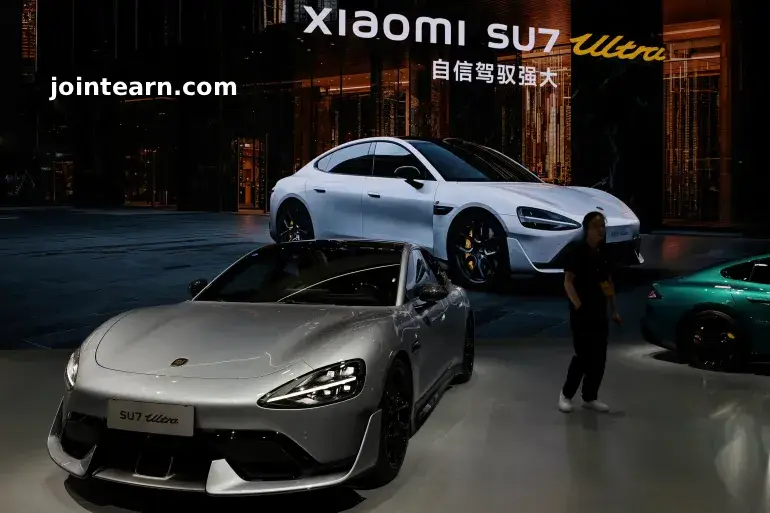
Beijing, China – China’s trade surplus has reached an unprecedented $1 trillion for the first time, marking a historic milestone in its role as the world’s leading exporter. The latest data from China’s General Administration of Customs shows that in the first 11 months of 2025, the country’s exports totaled $3.4 trillion, while imports slightly declined to $2.3 trillion, widening the trade gap to $1 trillion.
The record comes despite US trade tariffs and a global backdrop of protectionist policies, highlighting China’s resilience and dominance in global manufacturing and exports.
Exports Surge Across Multiple Sectors
Chinese exports rebounded in November, rising 5.9% year-on-year after a slight dip in October, significantly outpacing a 1.9% growth in imports. The surge was fueled by several key sectors:
- High-tech goods: Exports rose 5.4% faster than overall shipments, reflecting China’s growing global leadership in technology.
- Electric vehicles: Shipments reached 6.5 million units, with Chinese EVs taking market share from Japanese and German automakers.
- Semiconductors: Exports jumped 24.7%, reinforcing China’s growing role in chip production.
- Shipbuilding: Exports increased 26.8%, cementing China’s competitive position in global maritime industries.
How China Overcame US Tariffs
Despite Washington maintaining average tariffs of 37% on Chinese imports, China adapted through strategic rerouting and market diversification:
- Shifting production abroad: Many Chinese companies moved facilities to Southeast Asia, Mexico, and Africa to bypass tariffs.
- Diversifying trade partners: Exports to the EU surged 15%, while shipments to Southeast Asia grew by 8.2%.
- Weaker currency: A relatively undervalued renminbi has made Chinese goods cheaper internationally, supporting global competitiveness.
Economists note that trade rerouting via hubs such as Vietnam and Indonesia has significantly offset the impact of US tariffs.
China’s Long-Term Export Strategy
China’s $1 trillion trade surplus reflects decades of industrial policy and export-oriented growth:
- From low-cost manufactured goods like textiles and shoes in the 1980s to high-tech exports today, China has climbed the value chain rapidly.
- It controls 60–70% of global rare-earth metal production and processes 90% of these metals, crucial for electronics, EVs, and defense industries.
- Electronics remain China’s largest export sector, with more than $1 trillion in goods shipped globally in 2024 alone.
Global Response
Other major economies are responding cautiously to China’s growing dominance:
- European Union: Imposes tariffs on Chinese EVs ranging from 17% to 35.3%, in addition to the standard 10% import duty.
- Diplomatic engagement: French President Emmanuel Macron and Germany’s Foreign Minister Johann Wadephul have visited China to discuss tariffs, industrial overcapacity, and rare-earth exports.
These measures aim to protect domestic industries and balance trade with China, particularly in strategic sectors.
Future Outlook
Despite trade tensions and attempts to diversify supply chains away from China, economists predict that China’s export growth will remain strong. Morgan Stanley forecasts that China’s share of global goods exports could reach 16.5% by 2030, up from 15% today.
In the near term, the robust trade surplus positions China to meet its annual growth target of 5%, supporting broader economic stability and reinforcing its status as a central hub in global supply chains.


Leave a Reply