New Delhi, India – India plans to keep buying discounted Russian crude oil, despite sanctions imposed by the United States and Europe targeting major Russian oil companies like Rosneft and Lukoil.
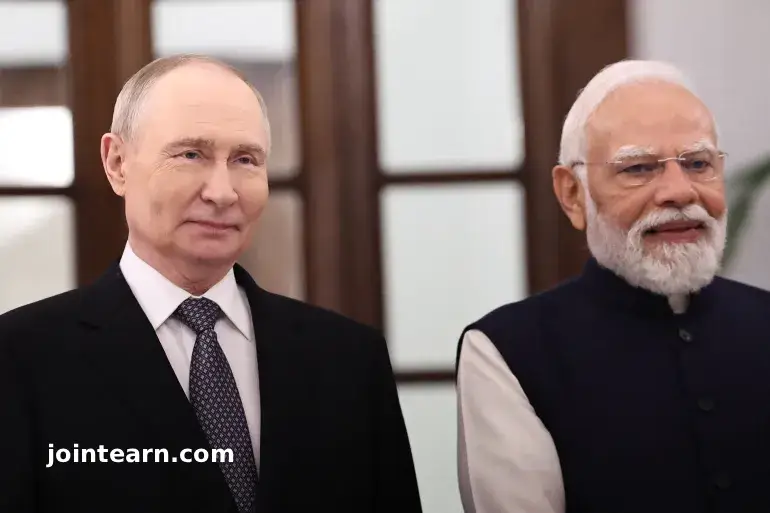
Indian Prime Minister Narendra Modi met Russian President Vladimir Putin at the Russia-India annual bilateral summit on December 5, 2025. Putin assured India of “uninterrupted shipments of fuel,” reinforcing Russia’s commitment to continue supplying oil to India.
India’s Growing Russian Oil Imports
- Before the Ukraine war in 2022, Russia accounted for 2.5% of India’s oil imports.
- Since the war began, discounted Russian oil—as low as $35 per barrel in early 2022—has become attractive compared with Brent crude at $62.50 per barrel.
- India is the second-largest buyer of Russian oil after China.
Recent Import Data
- October 2024: $5.8 billion in Russian oil imports (historic high)
- November 2024: $3.9 billion
- December 2024: $3.2 billion
- January 2025 onward: fluctuating around $3.6 billion
Why India Faces Pressure
- US criticism: Trade adviser Peter Navarro and former President Trump claimed India’s purchases fund Russia’s war in Ukraine.
- Tariffs: The US doubled trade tariffs on Indian goods to 50% to pressure India to reduce Russian oil imports.
- Despite this, India continues buying, arguing it’s a sovereign economic decision.
Sanctions and Workarounds
- G7 and EU price caps on Russian oil ($48–$60/barrel) made it cheaper for India.
- Some Indian refiners, like Nayara Energy, have doubled down on Russian crude despite EU sanctions.
- India has sourced oil from less-sanctioned Russian companies like Surgutneftegaz and Gazprom Neft.
- Shadow fleets of older tankers with non-Western flags and insurance have been used to bypass sanctions.
Between January and September 2025, India imported 5.4 million tonnes of Russian oil via 30 vessels under false flags, according to the Centre for Research on Energy and Clean Air (CREA).
Looking Ahead
India is projected to continue importing ~600,000 barrels per day in January 2025, below previous highs of 1.6–1.8 million barrels per day, but still significant.
Rosneft and Lukoil, which together account for 60% of Russian oil exports to India, are now partially sanctioned, so India will increasingly rely on alternative Russian suppliers and creative shipping methods to maintain supplies.
Key Takeaways
- India prioritizes economic and energy security over US and EU pressure.
- Russian oil remains competitively priced, especially under G7/EU price caps.
- Sanctions have forced India to diversify suppliers and use shadow shipping methods.
- The trade illustrates the challenges of enforcing sanctions on global energy markets.


Leave a Reply