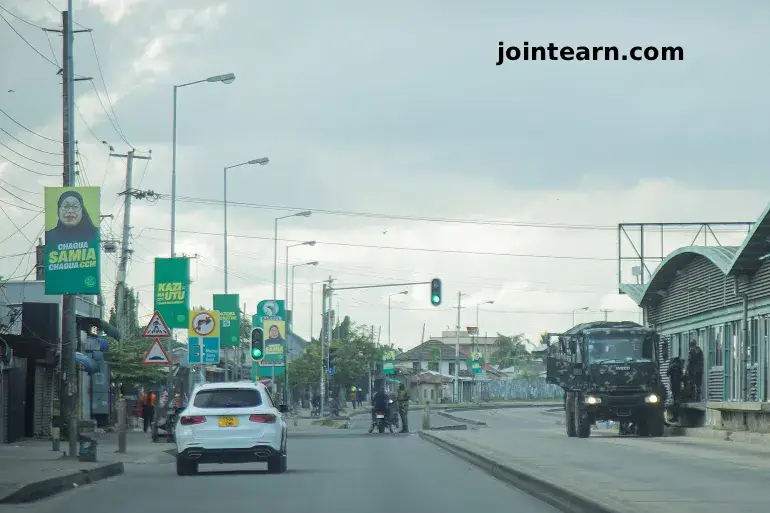
Tensions in Tanzania have escalated sharply after the government imposed strict security measures and declared all planned protests illegal in response to the disputed October elections. Prime Minister Kassim Majaliwa urged all non-essential workers to stay home, and authorities suspended public transportation in anticipation of demonstrations.
Heavy Security in Major Cities
On December 9, 2025—Tanzania’s Independence Day—streets in major cities such as Dar es Salaam, Dodoma, and Arusha were largely deserted. Police and soldiers patrolled the roads, while roadblocks were set up near government offices, including the highly secured offices of President Samia Suluhu Hassan. The government had issued a stern warning that any attempt to protest would be considered illegal and treated as a coup attempt.
Despite the heavy security presence, some residents reported that small-scale protests began in isolated areas, though these reports could not be independently confirmed at the time.
Background: Disputed Election and Crackdown
The unrest stems from the October 29, 2025, election, in which President Hassan secured nearly 98% of the vote. Many opposition leaders were barred from participating, raising allegations of electoral manipulation. Following the announcement of the results, protests erupted across the country, leading to a violent crackdown. Human rights organizations estimate that at least 700 people were extrajudicially killed, and more than 2,000 individuals were detained during the unrest.
The Tanzanian government has acknowledged fatalities but has yet to release an official death toll. President Hassan, who appointed a commission to investigate post-election violence, has consistently denied that security forces used excessive force.
International Reactions
The international community has voiced growing concern over the situation in Tanzania. The United Nations human rights experts called attention to the large-scale extrajudicial killings. Meanwhile, the United States announced that it is reviewing its relationship with Tanzania, citing concerns over violence against civilians, restrictions on free speech, religious freedoms, and barriers to investment.
In the months leading up to the elections, opposition figures and human rights activists accused the government of involvement in the disappearance of dozens of critics. While President Hassan claimed last year that an investigation had been launched into the alleged abductions, the government has not publicly shared the results.
Calm Yet Tense Atmosphere
By late morning on Independence Day, the atmosphere in major urban centers remained tense but largely calm, with no large-scale disturbances reported. Streets in Dar es Salaam appeared deserted, with police trucks and officers patrolling key commercial areas. The government’s strict enforcement of the protest ban has effectively prevented mass demonstrations, although activists continue to call for action against the ruling party’s disputed victory.
The situation in Tanzania remains fragile, with ongoing concerns about human rights violations, political suppression, and potential further unrest as citizens express dissatisfaction with the October election results.


Leave a Reply