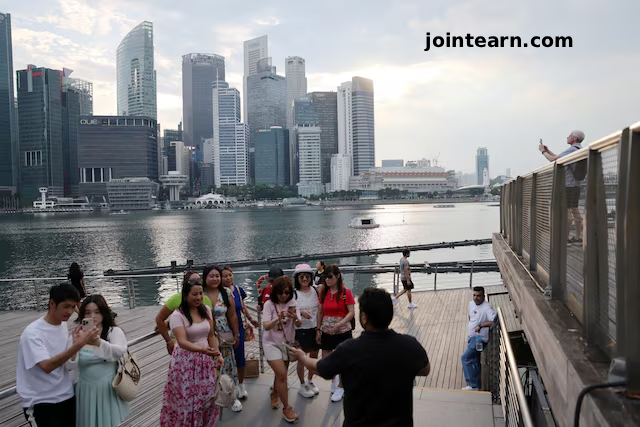
A growing number of Chinese companies are choosing to domicile in Singapore, seeking to reduce exposure to geopolitical tensions between China and the United States. Analysts say this trend, sometimes referred to as “Singapore washing,” is gaining momentum across sectors including technology, biotechnology, and critical minerals, as firms look for a more neutral, trade-focused base.
Rising Demand for Singapore Domiciles
KG Tan, CEO of InCorp Group—which assists companies relocating across nine Asia-Pacific markets—notes that demand is accelerating, with inquiries from Chinese firms up 15-20% year-on-year. While no official data tracks the exact number of Chinese firms in Singapore, notable examples include:
- Terahop – optical products maker backed by China-based Zhongji Innolight, established in Singapore in 2018.
- DayOne – data center operator spun off from GDS Holdings.
- Manus AI – artificial intelligence agent from Butterfly Effect.
- ChemLex – AI-powered chemical synthesis company.
Some companies, like ChemLex, now fully identify as Singaporean entities despite their Chinese origins, reflecting a strategic pivot for regulatory and trade purposes.
Strategic Advantages of Singapore
Singapore offers significant advantages for Chinese firms navigating international trade restrictions:
- Access to U.S. markets: Tariffs on Singaporean goods are only 10%, lower than those applied to China.
- Global credibility: Singapore is widely viewed as neutral, internationally trusted, and culturally adaptable for Chinese companies and expatriates.
- Market expansion: The city-state has 28 free trade agreements, providing access to a broad range of global markets.
According to Maybank China economist Erica Tay, “The Singapore brand is trusted worldwide. Singapore is valued for its international flavour, neutrality, and is culturally easy for Chinese firms and their expats to adapt to.”
Risks and Limitations
While relocation offers strategic benefits, it does not completely shield companies from global scrutiny. High-profile firms like Shein and TikTok have encountered challenges in the U.S. and UK despite being Singapore-based. Shein faced regulatory hurdles for public listings and is reportedly considering returning to China, while TikTok’s Singaporean CEO was questioned in a U.S. Congressional hearing over links to China.
Experts suggest the relocation strategy is more effective for smaller firms such as family offices and trading companies, which attract less attention. Larger firms face continued scrutiny due to their scale and visibility.
Dou Changlin, COO of Shandong Boan Biotechnology, highlights that Singapore subsidiaries can support U.S. operations, but risks remain. “We are very small in the U.S., I don’t think we’re on the radar of the U.S. government yet,” he said.
Conclusion
The trend of Chinese companies moving operations to Singapore reflects a strategic response to global geopolitical pressures, tariffs, and regulatory uncertainty. While Singapore provides a favorable base for market access, trade flexibility, and operational neutrality, larger firms must still navigate scrutiny from U.S. and international authorities. For smaller enterprises, the city-state offers a low-profile, strategically advantageous environment to expand globally.


Leave a Reply