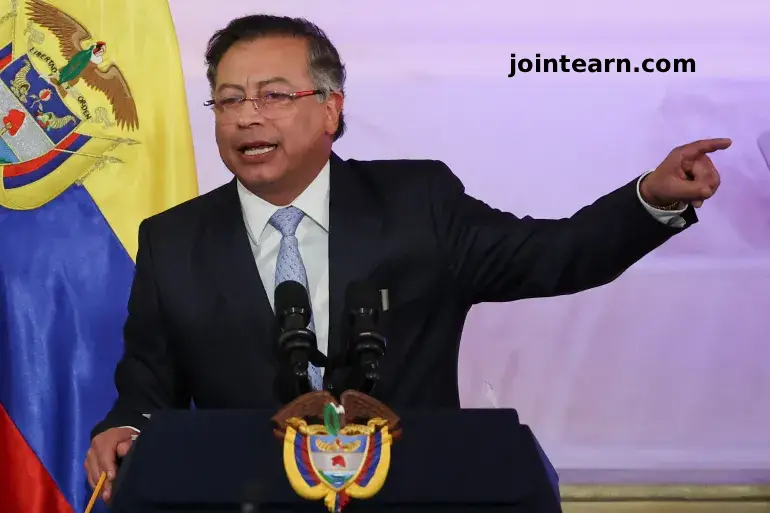
Colombian President Gustavo Petro declared on Monday that he would personally “take up arms” to defend his country if the United States were to carry out a violent intervention similar to the recent operation in Venezuela.
In a post on social media, Petro, a former leftist fighter turned president, denounced U.S. threats as undue interference in Colombia’s internal affairs and reaffirmed his commitment to national sovereignty under international law.
“I swore not to touch a weapon again,” Petro said. “But for the homeland I will take up arms again.”
Escalating Tensions With the United States
The exchange of warnings comes after U.S. President Donald Trump made provocative comments over the weekend, suggesting that a military-style operation against Petro’s government “sounds good to me” in the wake of the U.S.-led capture of Venezuelan leader Nicolas Maduro—a move widely criticized by international law scholars as illegal.
Trump also accused Petro of facilitating cocaine trafficking to the United States, claims the Colombian president strongly denied. Petro emphasized that his government has been working to combat drug production while moving away from a militarized war-on-drugs approach.
“Colombia is very sick, too, run by a sick man, who likes making cocaine and selling it to the United States, and he’s not going to be doing it very long,” Trump said in comments that were publicly condemned by Colombia’s Ministry of Foreign Affairs.
The Ministry described Trump’s statements as “undue interference in the internal affairs of the country”, highlighting that such remarks violate international law norms and threaten diplomatic stability in the region.
Petro Calls for Popular Support
Petro stressed his trust in the Colombian people, urging citizens to stand ready to defend the president against any “illegitimate violent act” or foreign intervention. This statement underscores the growing tension between the U.S. and Colombia amid a volatile Latin American geopolitical landscape.
Analysts note that the rhetoric marks an escalation in U.S.-Colombian tensions, particularly as Trump has also commented on Cuba’s political situation and previous actions in Venezuela, signaling a wider strategy of interventionist threats in Latin America.
Background: U.S. Threats in Latin America
The controversy comes in the aftermath of the high-profile Venezuelan leader abduction, which has drawn sharp international criticism. Petro’s firm stance reflects a broader Colombian effort to maintain sovereignty, enforce anti-drug policies without militarization, and push back against perceived external interference from the United States.
Petro’s remarks also illustrate his longstanding criticism of Trump, who has repeatedly used aggressive language toward Latin American governments. Political commentators have noted that these exchanges heighten the risk of diplomatic tensions and destabilization in the region, particularly when combined with accusations of drug trafficking and threats of U.S. military involvement.
Looking Ahead
As U.S.-Colombian relations face a delicate test, Petro’s statements signal a determined defense of national sovereignty and a willingness to rally citizens in response to foreign threats. Observers in Latin America and international law circles are closely watching developments, emphasizing the potential consequences for regional stability, U.S. foreign policy, and Colombia’s domestic politics.


Leave a Reply