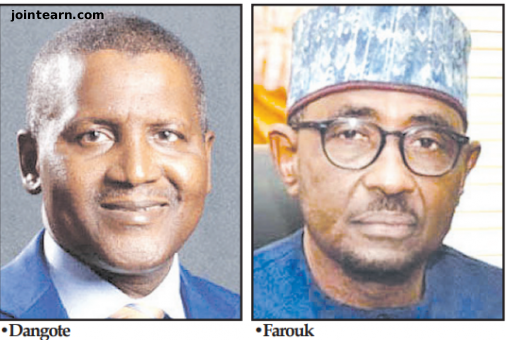
The recent public clash between billionaire industrialist Alhaji Aliko Dangote and former Nigerian Midstream and Downstream Petroleum Regulatory Authority (NMDPRA) CEO Engr. Farouk Ahmed has reignited debates about power, regulation, and corruption in Nigeria’s oil sector.
Ahmed, a highly respected engineer and former Apple Computer professional, has served in sensitive roles across PPMC, PPPRA, and NNPC without scandal. Yet Dangote recently accused him of spending $5–$7 million on his children’s education abroad, triggering legal and anti-corruption investigations and coinciding with Ahmed’s exit from office.
What stands out is Ahmed’s silence. Despite previously challenging Dangote’s refinery operations in 2024, he has refrained from public rebuttals, reportedly trusting that investigative institutions would clear his name. While silence can be dignified, in Nigeria, it often appears as surrender in the court of public opinion, potentially undermining both personal reputation and institutional credibility.
The broader issue is less about individuals and more about who controls Nigeria’s energy future, the balance between regulation and private capital, and how the state manages monopolistic tendencies in critical sectors.
Shuaib argues that in a country where corruption allegations function as both weapon and verdict, silence rarely protects the innocent—especially when careers and public trust are at stake.
The saga of Dangote vs. Ahmed is far from just a personal dispute; it reflects the ongoing struggle over industrial dominance, regulatory authority, and market fairness in Nigeria.
Keywords for SEO: Farouk Ahmed, Dangote corruption allegation, NMDPRA, Nigerian oil sector, regulatory dispute, Nigeria energy future


Leave a Reply