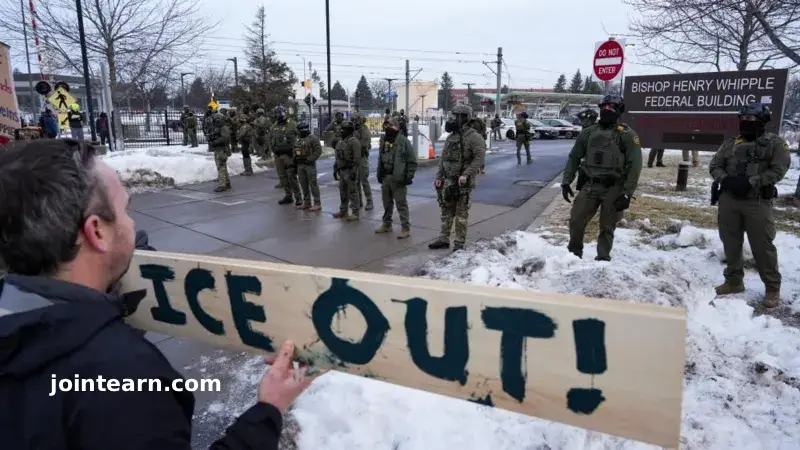
Minneapolis Shooting Sparks National Controversy
A federal immigration enforcement operation in Minneapolis turned deadly, highlighting stark divisions in U.S. politics and reigniting the debate over immigration enforcement and federal authority.
The incident occurred in broad daylight when a 37-year-old woman, Renee Nicole Good, was shot and killed by an ICE agent. Multiple videos captured by bystanders circulated online, yet even basic facts remain disputed, reflecting the polarized nature of the political discourse surrounding immigration.
Conflicting Accounts: Federal vs Local Officials
Almost immediately after the shooting, two starkly different narratives emerged. Federal officials and local Minnesota authorities sharply disagreed on what happened.
Federal Perspective: Homeland Security Secretary Kristi Noem described Good as responsible, claiming she “weaponized her car” in what she called a “domestic terror attack.” President Donald Trump echoed this sentiment, blaming a “professional agitator” and “radical left movement of violence and hate.”
Local Perspective: Democratic leaders in Minnesota painted a contrasting picture. Mayor Jacob Frey called the shooting “reckless” and demanded that federal immigration officials leave the city. Governor Tim Walz described it as “totally predictable” and “totally avoidable,” linking the incident to a recent surge in federal immigration operations targeting the state.
Protests and Public Unrest
The shooting has triggered protests across Minneapolis and other U.S. cities, with demonstrators demanding accountability and justice. Minnesota’s National Guard has been placed on standby, while officials caution protesters against violence.
The situation echoes past controversies in Minneapolis, notably the 2020 killing of George Floyd, which also sparked nationwide protests and highlighted longstanding tensions between local communities and law enforcement.
Background: Immigration Enforcement in Minnesota
The recent surge in immigration operations comes amid broader political tensions in Minnesota. The Trump administration has repeatedly criticized certain communities, particularly the Somali immigrant population, claiming widespread fraud in federal aid programs.
Governor Walz, who recently abandoned his re-election bid amid corruption allegations in state social services, has emerged as a key critic of the federal operations. He warns that the surge in immigration enforcement threatens public safety and undermines trust in law enforcement.
Broader Implications for U.S. Immigration Policy
The Minneapolis incident is part of a larger pattern: it is at least the ninth immigration-related shooting since September 2025, many involving individuals targeted while in vehicles. The federal government argues that these operations are part of a lawful mandate to curb undocumented immigration, citing reduced border crossings as evidence of success.
However, critics, including Democratic officials and civil rights groups, call for greater oversight, accountability, and restraint in the use of force by federal immigration agents. The political chasm in interpreting such incidents remains as wide and contentious as ever.
Video Evidence and Public Perception
Even video footage has not resolved disputes. Different angles and screenshots have been used by various parties to support opposing narratives. This divergence reinforces preexisting political beliefs, making consensus on the facts difficult.
Governor Walz emphasized that officials, from the president to the vice-president, have prematurely judged Good’s character without full knowledge of the events, underscoring the challenges of ensuring fair and impartial assessments in highly politicized incidents.
Conclusion: A Nation Divided
The deadly ICE shooting in Minneapolis exposes the deep political and social divides in the U.S., particularly regarding immigration enforcement, federal authority, and the use of lethal force. It has reignited debates over public safety, civil rights, and the proper limits of law enforcement, illustrating the enduring polarization in American politics.
As investigations continue and public demonstrations unfold, the nation remains sharply divided over how to balance enforcement, accountability, and community trust.


Leave a Reply