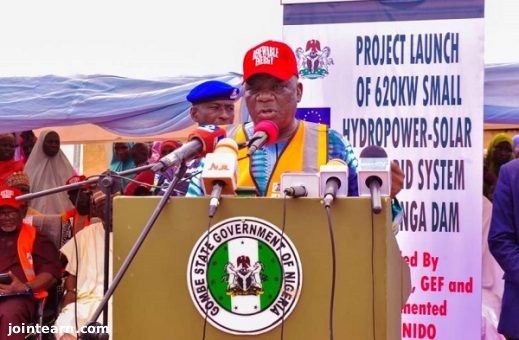
The European Union (EU), in partnership with the United Nations Industrial Development Organization (UNIDO) and the Gombe State government, is upgrading Balanga Dam to generate a total of 620 kilowatts (kW) of renewable energy—320 kW from hydropower and 300 kW from solar PV. The project is slated for commissioning in March 2026.
Originally constructed between 1979 and 1984 for irrigation, the dam is now being transformed into a multi-purpose hub combining renewable energy, agriculture, and job creation.
Key benefits highlighted:
- Energy for agro-processing: Electricity will power a proposed agro-processing zone 3 km from the dam, enabling farmers to convert crops like rice into finished products.
- Expanded irrigation: Cultivable land will increase from 2,200 hectares to nearly 11,000 hectares, boosting agricultural productivity.
- Job creation and community empowerment: Youth and local communities will gain employment opportunities through energy and agriculture-related initiatives.
- Economic growth: Reliable electricity will power homes, businesses, and schools, transforming Balanga into a hub of energy and opportunity.
Officials’ remarks:
- EU Green and Digital Economy Head Inga Stefanowicz called it a blueprint for sustainable development, emphasizing partnerships and socio-economic impact.
- Gombe State Commissioner Mohammed Fawu stressed human development, youth empowerment, and strengthened local economies.
- UNIDO Representative Azubike Emechebe noted the project’s role in improving livelihoods and enabling industrial growth.
- Programme Manager Godfrey Ogbemudia highlighted how consistent electricity will enhance daily life and community development.
The project demonstrates a strategic model of international collaboration, integrating energy, agriculture, and socio-economic empowerment for lasting community impact.


Leave a Reply