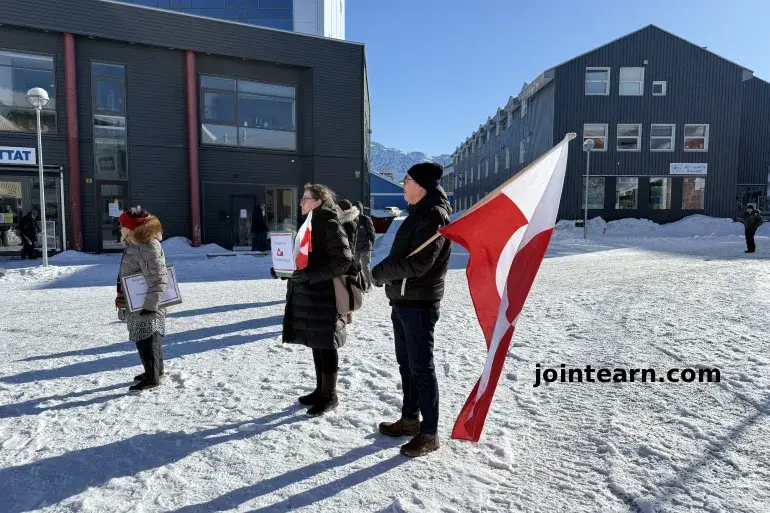
France is set to open a consulate in Greenland on February 6, 2026, in a move described as a political signal supporting the island’s continued ties to Denmark and the European Union. The announcement comes amid rising tensions caused by repeated threats from U.S. President Donald Trump to seize control of the strategically important Arctic territory.
French Foreign Minister Highlights Political and Scientific Presence
Speaking to RTL on Wednesday, French Foreign Minister Jean-Noel Barrot emphasized that the consulate reflects Greenland’s desire for autonomy from U.S. control and France’s intention to strengthen its presence on the island, particularly in the scientific and strategic sectors.
“Greenland does not want to be owned, governed, or integrated into the United States. Greenland has made the choice of Denmark, NATO, [and the European] Union,” Barrot said.
“The opening of the consulate is a political signal associated with a desire to be more present in Greenland, including in the scientific field.”
The announcement coincides with a meeting between U.S. Vice President JD Vance and Greenlandic and Danish officials, including Prime Minister Jens-Frederik Nielsen and Danish Foreign Minister Lars Lokke Rasmussen, in Washington, DC, to address the escalating crisis over Greenland’s sovereignty.
Trump’s Threats Spark NATO Concerns
President Trump has repeatedly stated that Greenland will be brought under U.S. control “one way or another,” citing the island’s strategic military location and potential threats from Russia and China. The U.S. already maintains military bases in Greenland, but Trump has criticized Denmark for allegedly neglecting the island’s security.
European allies, including France, have expressed concern that any U.S. takeover would strain relations within NATO and set a dangerous precedent for international disputes.
“We will continue to strengthen our military presence in Greenland, but we will also have an even greater focus within NATO on more exercises and an increased NATO presence in the Arctic,” Danish Defence Minister Troels Lund Poulsen said in a statement.
Greenland’s Leadership Affirms Loyalty to Denmark
Greenlandic Prime Minister Jens-Frederik Nielsen reiterated the island’s preference to remain part of Denmark rather than join the United States.
“We are now facing a geopolitical crisis, and if we have to choose between the United States and Denmark here and now, we choose Denmark,” Nielsen said at a press conference in Copenhagen.
Trump responded dismissively to Nielsen’s remarks, stating:
“I disagree with him. I don’t know who he is. I don’t know anything about him. But that’s going to be a big problem for him.”
Despite Trump’s rhetoric, NATO members continue to support Denmark and Greenland, signaling unity in the face of unilateral U.S. threats.
Strategic and Economic Significance of Greenland
Greenland is geopolitically critical due to its location in the Arctic, which has become increasingly important in global security calculations. It also contains vast mineral resources, including oil, gas, and rare earth elements, which are vital for modern technology and defense industries.
France’s decision to open a consulate, originally discussed during President Emmanuel Macron’s visit to Greenland last summer, is intended to reinforce diplomatic, economic, and scientific ties while sending a clear signal to the U.S. that Greenland’s sovereignty is respected by the European Union.
Barrot personally visited Greenland in August 2025 to finalize plans for the consulate and strengthen bilateral cooperation.
Implications for NATO and International Relations
The Greenland consulate reflects broader geopolitical dynamics, including:
- European unity in the face of U.S. unilateralism.
- Strengthening Arctic security coordination within NATO.
- Protection of strategic resources and territorial sovereignty.
- Sending a diplomatic message to both the U.S. and other Arctic powers, including Russia and China.
Analysts argue that France’s move could set a precedent for other European countries to bolster their diplomatic and scientific presence in regions facing external pressures.


Leave a Reply