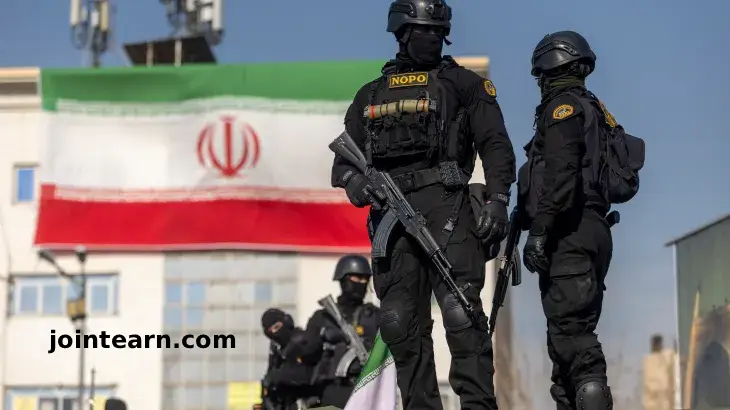
Iran’s judiciary has announced plans to accelerate trials for individuals arrested during the nationwide protests that erupted in late December, as international human rights organizations warn that authorities may extensively apply capital punishment. The protests, sparked by economic hardships, have turned into one of the most serious challenges to the Iranian government since the 1979 Islamic Revolution.
Supreme Court Pledge to Speed Up Trials
Supreme Court Chief Justice Gholam-Hossein Mohseni-Ejei told state television on Wednesday that individuals responsible for killing or harming others in the streets should be tried and punished as quickly as possible.
“Those who beheaded people or burned people in the streets should be tried and punished as soon as possible,” Mohseni-Ejei stated.
He further said he spent five hours visiting a prison in Tehran to review cases and emphasized that trials would be held in public. The judiciary’s focus appears to be on those authorities label as “rioters and saboteurs,” distinguishing them from peaceful demonstrators.
Capital Charges for “Waging War Against God”
Prosecutors in Tehran have said they will press capital charges of “moharebeh”, or “waging war against God,” against those accused of participating in violent demonstrations. These charges carry the possibility of execution under Iran’s penal code.
While Iranian authorities have not released an official death toll for the unrest, they reported that over 100 members of the security forces have been killed. Opposition activists estimate that more than 1,000 protesters have died. According to the US-based Human Rights Activists News Agency, the death toll has climbed to at least 2,571, although Al Jazeera cannot independently verify this figure.
State television reported mass funerals in Tehran including 300 bodies of both security personnel and civilians, highlighting the scale of the unrest.
Government Narrative: Rioters vs. Peaceful Protesters
Iranian officials, including Supreme Leader Ali Khamenei, have sought to draw a line between peaceful protesters and violent rioters. State media emphasizes that the judiciary will target only those responsible for killing, carrying weapons, or destabilizing the country, leaving ordinary demonstrators unmentioned.
“The judicial system says it will rapidly conduct trials for those who killed people, carried weapons, or destabilized the country,” said Al Jazeera’s Tohid Asadi, reporting from Tehran.
“When it comes to peaceful protesters, there is no such statement from Iranian officials.”
Execution of Protesters Draws International Concern
Human rights groups have already expressed concern about the potential for imminent executions. Iranian Kurdish rights group Hengaw reported that a 26-year-old protester, Erfan Soltani, arrested in Karaj, was scheduled for execution on Wednesday. Amnesty International has called for an immediate halt to all executions, urging Iran to respect the rights of detainees.
Protests Sparked by Economic Grievances
The protests began on December 28, 2025, driven by soaring inflation and a plummeting rial currency, affecting ordinary Iranians across social and economic classes. President Masoud Pezeshkian acknowledged the legitimacy of citizens’ economic grievances:
“Before we hear the voice of merchants, bazaaris, and different strata of society on the streets, we must be following up on their demands and concerns so as to find solutions for them,” he said.
Despite this, authorities continue to blame foreign influence for inciting violence. Foreign Minister Abbas Araghchi described the unrest as instigated by external actors, specifically Israel and the United States.
U.S. Response and Escalation Warnings
In recent days, US President Donald Trump has repeatedly signaled potential military action if Iranian security forces continue killing protesters. He urged the Iranian public to document abuses and take action:
“Remember the names of killers and abusers so they can be brought to justice. Keep protesting and take over state institutions because help is on the way,” Trump stated on Tuesday.
This has fueled concerns about heightened geopolitical tension as Iran faces both internal unrest and external pressure.
Human Rights Implications
The fast-tracking of trials, combined with capital charges and public executions, has drawn sharp criticism from international human rights organizations. Observers warn that such measures could further inflame unrest, undermine prospects for peaceful resolution, and violate international human rights standards.
The ongoing crisis highlights the volatile intersection of political suppression, economic hardship, and foreign intervention, making Iran one of the most closely watched flashpoints for human rights and global diplomacy.


Leave a Reply