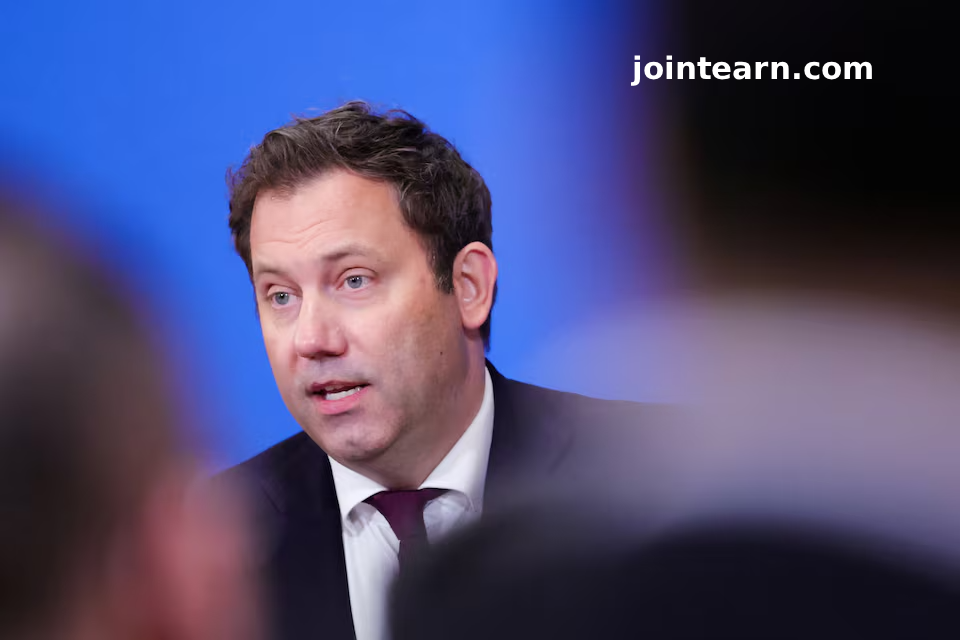
Germany and Singapore are set to strengthen cooperation on supply chain issues amid a rapidly shifting global trade environment, German Finance Minister Lars Klingbeil announced on Thursday after high-level talks in Singapore. The discussions come as both nations face increasing pressures from trade disruptions, including U.S. tariffs and Chinese export restrictions, highlighting the need for diversified and resilient supply chains.
Klingbeil met with key Singaporean leaders, including President Tharman Shanmugaratnam, Prime Minister Lawrence Wong, and Deputy Prime Minister and Trade Minister Gan Kim Yong, as part of the celebrations marking 60 years of diplomatic relations between Germany and Singapore.
Focus on Supply Chain Diversification
During his visit, Klingbeil emphasized the importance of reducing dependency on single markets and building stronger bilateral economic partnerships. “They want to diversify their positioning, they want to diversify supply chains, they want to get out of dependencies that exist, and it became clear in the conversations that they are seeking close contact with Germany,” Klingbeil said.
Germany, as an export-oriented economy, has been navigating the impacts of U.S. tariffs and China’s strategic export curbs. Similarly, Singapore, which faced a 10% tariff by Washington along with potential sectoral tariffs including pharmaceuticals, is keen to strengthen its trade resilience. Singapore’s U.S. exports dropped 9.9% in September following a 29.1% decline in August.
Business and Financial Sector Engagement
Klingbeil also participated in a session organized by the German-Singaporean Chamber of Industry and Commerce, exchanging insights with representatives from Singapore’s financial sector and fintech industry. These discussions aimed to identify opportunities for collaborative solutions to supply chain bottlenecks, promote innovation in logistics, and explore joint investments in technology-driven trade infrastructure.
Preparing for the G20 Summit
Following his visit to Singapore, Klingbeil will travel to Johannesburg, South Africa, for the Group of 20 (G20) summit, where he plans to further engage in talks on international economic cooperation and new partnership opportunities. The German minister noted that although U.S. officials will not attend, numerous other countries at the summit present potential avenues for strategic trade and supply chain agreements.
Klingbeil highlighted the importance of leveraging these engagements to strengthen Germany’s global economic position and ensure both countries can navigate future trade uncertainties successfully.
Conclusion
The Germany-Singapore collaboration underscores the growing importance of resilient, diversified global supply chains in a world facing tariffs, trade restrictions, and geopolitical tensions. By forging closer economic and technological partnerships, both countries aim to enhance trade stability, support innovation, and secure long-term competitiveness in international markets.


Leave a Reply