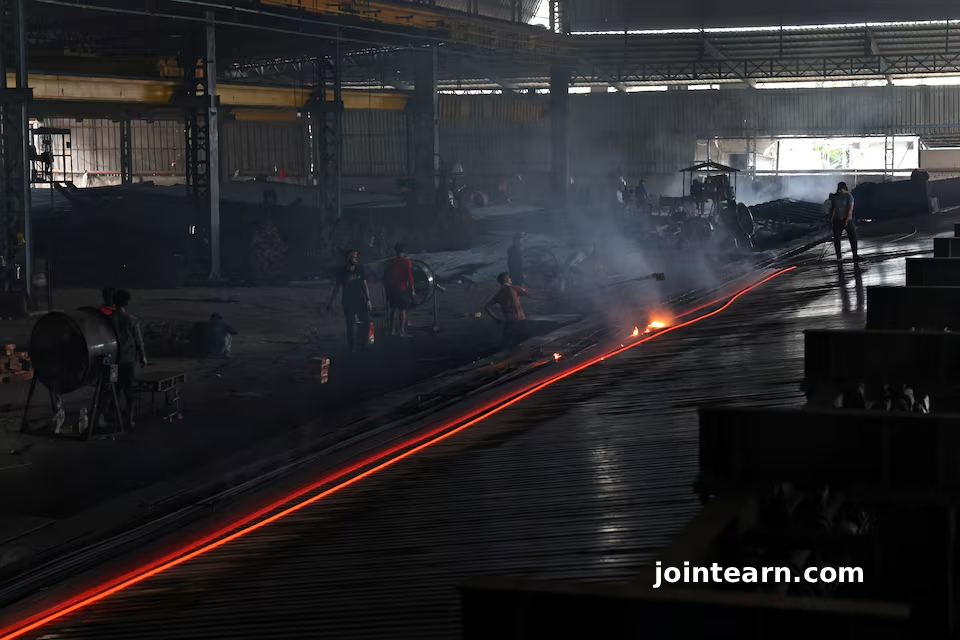
India is reportedly considering extending import tariffs, also known as safeguard duties, on select steel products to protect domestic manufacturers from cheaper imports, particularly from China. A source with direct knowledge of the matter told Reuters that the government is reviewing measures to shield the local steel industry amid global price fluctuations and rising import competition.
Background: India’s Steel Industry and Previous Tariffs
India is the world’s second-largest crude steel producer, with a robust domestic industry supplying construction, automotive, and manufacturing sectors.
- In August 2025, India recommended a three-year safeguard duty of 11%–12% on select steel products following a review by the Directorate General of Trade Remedies under the federal trade ministry.
- Earlier this year, in April, India imposed a temporary 12% tariff for 200 days, which recently lapsed.
The source noted:
“It (tariff) is under consideration,” highlighting that the government is evaluating measures to protect local manufacturers from the influx of cheaper steel imports.
Import Trends and Market Dynamics
During the first seven months of the financial year, India’s finished steel imports fell by 34.1% year-on-year, reflecting both domestic production growth and existing trade measures.
- South Korea was the largest exporter to India, shipping 1.4 million metric tons, followed by China, Japan, and Russia.
- Cheaper Chinese steel exports continue to pose a challenge, making India “vulnerable” to market fluctuations, according to the source.
China, meanwhile, is on track to reduce steel production below 1 billion tons this year for the first time in six years, in line with government pledges to curb output. Beijing also proposed a more stringent steel capacity swap plan in October to rebalance supply and demand amid global overcapacity.
Strategic Implications for India
Extending steel import tariffs could provide several benefits for India:
- Protect domestic steel producers from low-cost imports
- Stabilize local steel prices and ensure profitability for domestic manufacturers
- Encourage investment in the Indian steel sector by reducing external competition
However, tariff extensions may also influence trade relations, particularly with China, which remains a major steel exporter.
Outlook: Safeguard Duties and Industry Response
Industry analysts anticipate that any extension of safeguard duties will be carefully calibrated to avoid significant trade disputes while ensuring domestic steel competitiveness.
The Ministry of Finance has not yet commented on the decision. Observers note that the government’s approach reflects a broader strategy to support India’s steel industry amid global overcapacity and evolving trade dynamics.


Leave a Reply