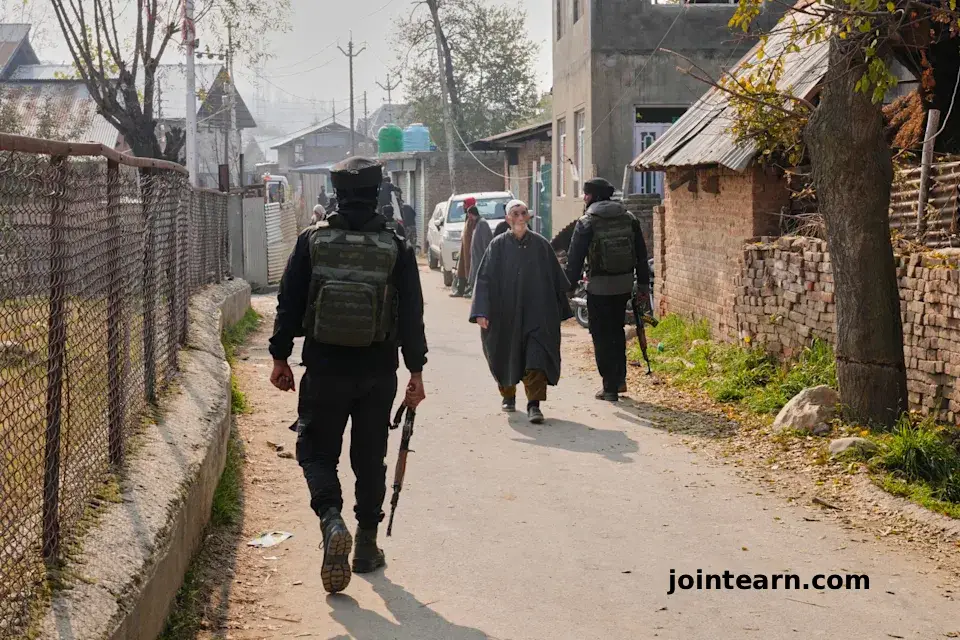
New Delhi, India – In the wake of a deadly car bombing near New Delhi’s historic Red Fort on November 10, 2025, Indian authorities have launched an intensified security crackdown in Indian-controlled Kashmir, prompting widespread fear and anxiety across the region.
The explosion killed at least 10 people and wounded 32 others, triggering sweeping raids, mass interrogations, and numerous arrests targeting suspected militant networks and individuals linked to the attack.
Tragic Death Sparks Outrage
Hours after being briefly detained in connection with the blast, 55-year-old shopkeeper Bilal Ahmed Wani set himself on fire at his home in Kashmir. He died a day later after being treated at three different hospitals.
Relatives, speaking anonymously due to fear of reprisals, said Wani’s self-immolation was driven by stress and humiliation from the detentions of his family members, including his son, Jasir Bilal Wani, who remains in custody. Police confirmed that Wani died from “self-inflicted burn injuries.”
Investigation Focuses on Kashmir
Indian investigators quickly centered their probe on Kashmir, launching raids and questioning thousands of residents in search of links to what authorities describe as a “heinous terror incident.”
Authorities arrested at least seven suspects, including two Kashmiri doctors, seizing a large quantity of explosives in Faridabad, a city near New Delhi. A secondary explosion occurred on November 14 at a Srinagar police station while handling some of the seized materials, killing nine people. Officials attribute the blast to mishandling of explosives, rather than sabotage.
Crackdown Targets Families and Professionals
The government has demolished homes of alleged suspects in Pulwama district and detained family members of those linked to the bombing. Wani’s younger son and brother, a physics lecturer, were briefly detained and later released.
Authorities allege Wani’s son assisted the identified suicide bomber, Umar Un Nabi, a doctor, by providing technical support such as modifying drones and attempting to construct rockets. The son remains in custody.
Police have expanded scrutiny to what they term a “white-collar terror ecosystem” among Kashmiri professionals, particularly doctors, reportedly maintaining links with foreign handlers. This heightened surveillance has sparked fear among medical professionals, with some reporting intrusive questioning about their personal and professional networks.
Underlying Political Tensions
Experts say the intensified crackdown reflects longstanding political grievances in Kashmir, which have been exacerbated since India revoked the region’s special autonomy in 2019. Militants in Indian-administered Kashmir have been fighting New Delhi’s rule since 1989, and many locals view their struggle as a legitimate freedom movement, while India labels it Pakistan-sponsored terrorism.
According to analysts, the combination of political disenfranchisement, restricted civil liberties, and heavy-handed security operations is fueling widespread anger and resentment in the region.
Praveen Donthi, senior analyst at the International Crisis Group, warned:
“The crackdown following the New Delhi blast is adding to the existing sense of pervasive insecurity and vulnerability, which is unlikely to reduce anger and militancy, but may instead exacerbate them.”
Experts suggest that moderate and targeted approaches, rather than sweeping crackdowns, may be more effective in preventing further cycles of violence.
Key Takeaways
- Deadly car blast in New Delhi on November 10, 2025 killed 10 and injured 32.
- Indian authorities launched a massive security crackdown in Kashmir, detaining hundreds of suspects.
- Bilal Ahmed Wani died by self-immolation after family detentions, highlighting distress caused by the crackdown.
- Investigations point to Kashmiri professionals, including doctors, allegedly involved in terror activities linked to the bombing.
- Analysts warn that heavy-handed measures risk fueling resentment and militancy in Indian-controlled Kashmir.


Leave a Reply