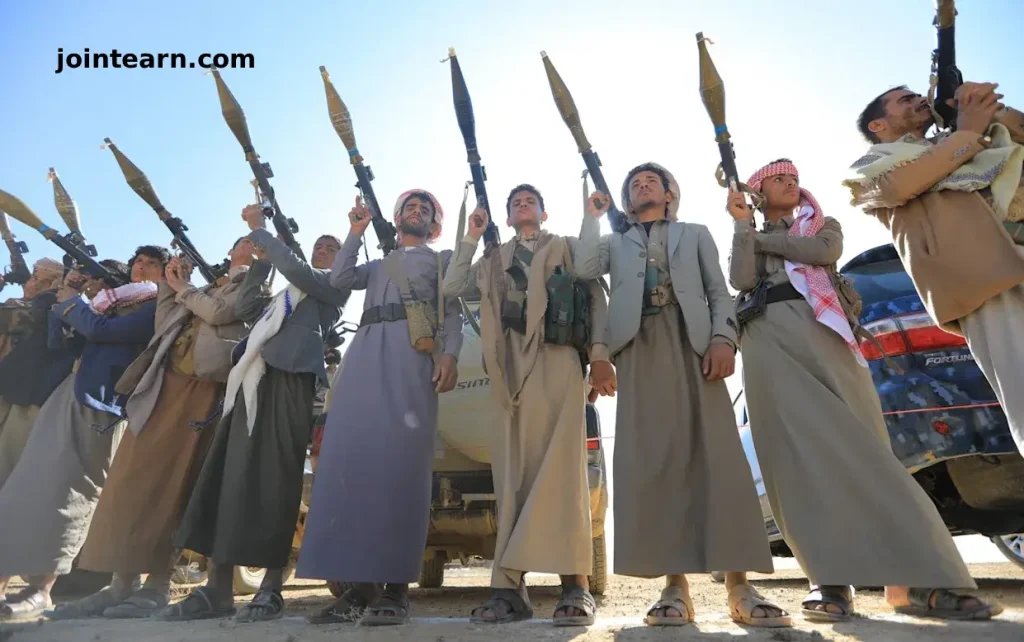
Tehran, Iran / Sanaa, Yemen – Iranian officials acknowledge a significant setback: the Houthis in Yemen are no longer fully under Tehran’s control, signaling cracks in Iran’s regional strategy of leveraging proxy forces to project power.
A senior Iranian official told The Telegraph:
“The Houthis have gone rogue for a while and are now really rebels. They do not listen to Tehran as much as they used to.”
The rift extends beyond Yemen, with some militias in Iraq reportedly ignoring Iran’s directives, highlighting a broader erosion of Tehran’s influence across its “axis of resistance.”
Houthis Gain Independence
The Houthis, who control Yemen’s capital Sanaa and multiple provinces, have survived years of air strikes from Saudi-led forces and a two-year American-led campaign that cost roughly $7 billion.
During recent months, the group has:
- Broadened alliances and supply lines, reducing dependence on Iran
- Improved missile capabilities and tactics since the 2023 Hamas-led attacks on Israel
- Strengthened economic control by collecting taxes, printing money, smuggling drugs, and selling weapons
- Used Yemen’s mountainous terrain to hide weapons and drones, enabling mobile hit-and-run attacks
Mahmoud Shehrah, former Yemeni diplomat, emphasized:
“The Houthis don’t need someone to encourage them. This is about their beliefs and their narratives.”
Iranian Response
The Islamic Revolutionary Guard Corps (IRGC) dispatched Quds Force commander Abdolreza Shahlaei back to Sanaa to restore influence. Shahlaei, wanted by the US with a $15 million reward, is attempting to stabilize coordination with the Houthis and strengthen Iran’s remaining proxies.
However, analysts say the IRGC’s efforts cannot fully compensate for the Houthis’ growing autonomy. Tehran is now increasingly reliant on limited regional assets, including select militias in Iraq and the Houthis in Yemen, after losses of Hezbollah’s leadership and Gaza-based Hamas weakening under siege.
Dr. Bader Al-Saif, University of Kuwait, described the relationship as a “franchise”:
“There is benefit for both Iran and Houthis to work together, but they also have divergent interests, and they’ll act on them as they see fit.”
Implications for the Middle East
- Red Sea shipping lanes remain at risk from independent Houthi operations
- Iran’s axis of resistance faces strategic collapse, weakening its regional influence
- Yemen’s Houthis are increasingly self-reliant, capable of sustaining military and economic operations without direct Iranian support
This marks a major geopolitical shift, forcing Tehran to reassess a four-decade strategy that relied heavily on proxy militias rather than direct engagement.


Leave a Reply