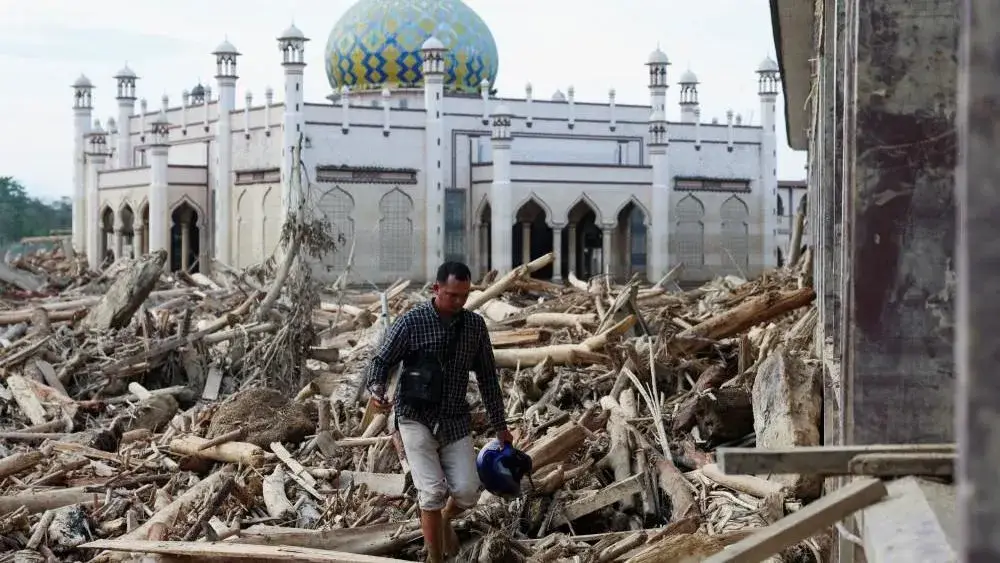
Aceh, Indonesia – The death toll from catastrophic flooding in Indonesia has exceeded 900, with hundreds more reported missing, as authorities struggle to reach isolated communities cut off by torrential rains and landslides. The floods follow a rare and powerful cyclone over the Malacca Strait, which triggered widespread destruction across parts of the country.
The disaster has compounded a series of extreme weather events sweeping Southeast and South Asia, with Sri Lanka, Thailand, Malaysia, and Vietnam also experiencing floods, landslides, and cyclones. Collectively, these disasters have resulted in nearly 2,000 deaths across the region over the past weeks.
Cyclone-Induced Flooding and Destruction
The recent cyclone brought intense rainfall and flash floods, destroying over 100,000 homes and inundating entire villages. In Aceh Tamiang, one of the hardest-hit areas, survivors reported that villages were swept away by fast-moving waters, leaving families stranded on rooftops for days without food or drinking water.
Fitriana, a resident of Lintang Bawah Village, told BBC Indonesian:
“People survived on the roofs of their houses with their children for three days without eating or drinking. Around 90% of homes in our village were destroyed, leaving 300 families with nowhere to go.”
In other areas, residents had to evacuate multiple times as floodwaters rose to engulf second-story homes. Officials described the ongoing challenge of rescuing people amid waist-deep mud and damaged infrastructure.
Aid and Emergency Response
Authorities are deploying air and sea transport to deliver emergency aid to areas inaccessible by road. Helicopters and boats are supplying food, clean water, and medical assistance to survivors in remote regions.
The regional governor highlighted the urgent humanitarian needs, stating:
“Many people need basic necessities. People are not dying directly from the flood, but from starvation.”
In one instance, inmates were temporarily released from a prison when floodwaters threatened to submerge the facility, as no alternate location was available.
Infrastructure and Community Impact
Entire villages have been destroyed, leaving thousands homeless. Roads and bridges are heavily damaged, and some towns, such as Sibolga City and Central Tapanuli, remain cut off, with aid only accessible by air and sea. Reports of looting at supermarkets indicate the severity of the humanitarian crisis and the urgent need for coordinated relief efforts.
Authorities continue searching for bodies and providing aid while managing widespread displacement. The disaster underscores the vulnerability of Indonesia to cyclone- and monsoon-related flooding, particularly in low-lying and coastal regions.
Regional Implications
Indonesia’s flooding is part of a wider pattern of severe weather affecting Southeast and South Asia. Over the past two weeks, similar disasters have struck Sri Lanka, Malaysia, Thailand, and Vietnam, collectively claiming thousands of lives and displacing millions. Governments and international agencies are coordinating relief efforts, but the scale of destruction poses enormous challenges.
Key Takeaways
- Location: Aceh, Indonesia, and surrounding regions
- Deaths: Over 900 confirmed, hundreds missing
- Homes Destroyed: More than 100,000
- Affected Population: Tens of thousands displaced
- Response: Air and sea emergency aid; temporary prison evacuations
- Regional Impact: Part of Southeast Asia’s recent extreme weather events
Authorities urge residents to remain vigilant as torrential rains and landslides continue, and emphasize the critical need for food, clean water, and medical supplies.


Leave a Reply