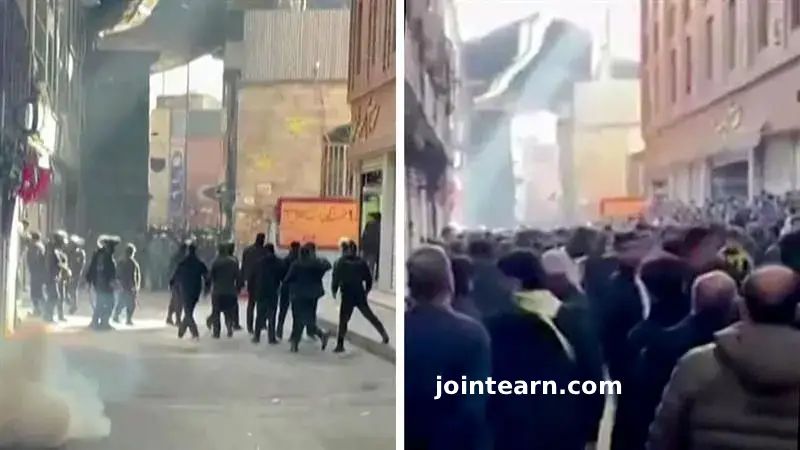
At least 36 people have been killed during the latest wave of protests across Iran, according to the foreign-based Human Rights Activists News Agency (HRANA). The unrest, which has unfolded over the last ten days, marks one of the most widespread anti-government demonstrations in the country in recent years.
HRANA confirmed that 34 of the deceased were protesters, while two were affiliated with Iranian security forces. While Iranian authorities have not released an official death toll, semi-official sources reported that three security personnel have lost their lives during the clashes. BBC Persian has independently verified the deaths of 20 individuals so far.
Protests Spread Across Iran Amid Economic Crisis
The protests erupted on 28 December 2025, initially led by shopkeepers in Tehran’s Grand Bazaar. Citizens expressed outrage at the sharp depreciation of the Iranian rial against the US dollar, which has triggered a surge in inflation and economic hardship. Over the past year, the rial has hit historic lows, while inflation has soared to 40%, a consequence of US sanctions targeting Iran’s nuclear program, combined with systemic economic mismanagement and corruption.
Soon after, university students and citizens from multiple cities joined the demonstrations. By now, the protests have spread to 27 of Iran’s 31 provinces, signaling the growing public discontent over economic and political issues.
Escalation of Violence: Security Forces Respond
Videos obtained by BBC Persian show Iranian riot police firing tear gas to disperse protesters in Tehran’s Grand Bazaar. Demonstrators chanted slogans against the ruling clerics, including cries of “Death to the dictator,” targeting Supreme Leader Ayatollah Ali Khamenei. Footage also shows crowds fleeing tear gas clouds while security forces moved in to control the demonstrations.
In the western province of Ilam, particularly in Malekshahi County, semi-official media reported that a policeman was shot dead during clashes with protesters. Footage also captured banks and buildings set on fire, as well as individuals throwing rice and debris into the air, illustrating the intensity of the unrest.
Arrests and Injuries
HRANA reported that over 2,000 people have been arrested during the unrest, with more than 60 protesters injured. Authorities have indicated that while they will address legitimate grievances, they will show no leniency toward those deemed “rioters”. Judiciary chief Gholamhossein Mohseni Ejei stated that authorities will balance listening to economic concerns with cracking down on violent protests.
International Reactions
The global response has been swift. UN Secretary-General Antonio Guterres expressed deep concern over the loss of life and injuries, emphasizing the need for peaceful protests and the protection of civilians. Meanwhile, former US President Donald Trump issued warnings of possible intervention should security forces continue to target peaceful protesters, stating, “We are locked and loaded and ready to go.”
Controversial Hospital Raid in Ilam
Widespread outrage erupted after footage surfaced of Iranian security forces storming Imam Khomeini Hospital in Ilam, where injured protesters were reportedly seeking shelter. Amnesty International condemned the raid, stating that Revolutionary Guards and special police forces violated international law by using shotguns, tear gas, and physical assault against medical staff and patients.
Kurdish human rights group Hengaw reported that at least five protesters were killed during the Malekshahi incident, including a retired brigadier-general. Reports also indicate that at least 27 people, including five children, have been killed in total, highlighting the scale of the crackdown.
Historical Context and Growing Tensions
These protests are the largest since the 2022 uprising triggered by the death of Mahsa Amini, a young Kurdish woman who died while in the custody of Iran’s morality police. During the 2022 protests, over 550 people were killed, and more than 20,000 detained. Human rights groups have warned that the current unrest could escalate further, as the Iranian regime faces unprecedented instability.
Mahmood Amiry-Moghaddam, director of Iran Human Rights, warned that the government’s response could be more violent and widespread than ever before, as authorities attempt to suppress dissent amid growing fears for their survival.
Protests Continue Amid Political Uncertainty
As Iran faces a combination of economic collapse, political repression, and public anger, the situation remains tense. Demonstrations continue to erupt in major cities, including Tehran, Abdanan, and Ilam, with both protesters and security forces preparing for further confrontations.
The ongoing unrest in Iran highlights the complex intersection of economic hardship, human rights violations, and political dissent, drawing international attention to one of the most serious crises in the Middle East in recent years.


Leave a Reply