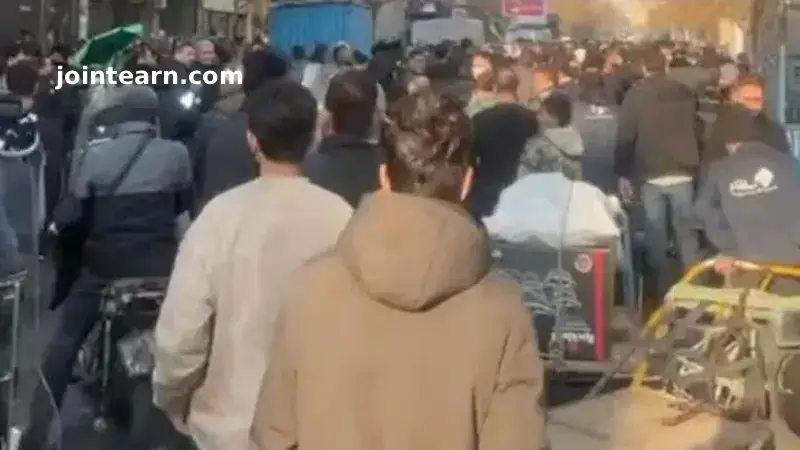
A wave of protests across Iran has entered its ninth day, with at least 36 people killed and thousands more arrested, as citizens express outrage over the country’s worsening economic situation. The unrest, described by human rights groups as the most widespread since the 2022 uprising, has drawn international attention, including warnings of potential US intervention from former President Donald Trump.
The foreign-based Human Rights Activists News Agency (HRANA) reported that 34 of those killed were protesters and two were affiliated with security forces. Iranian authorities have not released an official death toll but confirmed that three security personnel have been killed.
Protests Across Iran: Scope and Scale
The demonstrations began on 28 December 2025 in Tehran’s Grand Bazaar, where shopkeepers protested a sharp fall in the value of the Iranian rial. Over the past year, the rial has reached record lows, while inflation has soared to 40%, exacerbating the effects of sanctions imposed over Iran’s nuclear program.
University students soon joined the demonstrations, and the protests rapidly spread to at least 26 of Iran’s 31 provinces, including major cities such as Tehran, Yasuj, Sari, Abdanan, Ilam, Arak, Hamedan, Amol, Lahijan, Kermanshah, Semnan, and Noorabad.
Casualties, Arrests, and Injuries
According to HRANA, 36 people have died, including protesters and security personnel. Kurdish human rights group Hengaw confirmed the deaths of at least 27 individuals, including five children. In Ilam province, reports indicate that four protesters, including a retired Revolutionary Guards brigadier-general, were killed when security forces opened fire during a demonstration outside a government compound.
Authorities have arrested over 2,000 people, and more than 60 protesters have been injured by birdshot, plastic bullets, and tear gas. Security forces have conducted violent crackdowns, including a controversial raid on Imam Khomeini Hospital in Ilam, where wounded protesters were reportedly seeking shelter. Amnesty International condemned the attack, calling it a violation of international law.
Escalating Clashes with Security Forces
Videos obtained by BBC Persian show riot police firing tear gas in Tehran’s Grand Bazaar and protesters chanting slogans such as “Death to the dictator” and “Freedom, freedom, freedom.” In northern Iran, in Sari, demonstrators were seen marching and chanting support for Reza Pahlavi, the exiled son of the late Shah of Iran.
In Malekshahi County, Ilam province, security forces reportedly opened fire on protesters attempting to enter a government facility, resulting in multiple deaths. Footage also showed banks and buildings on fire and civilians fleeing amid gunfire.
Economic Crisis: Fueling Public Anger
The Iranian economy is a central driver of the protests. Sharp depreciation of the Iranian rial, coupled with rising inflation, unemployment, and sanctions, has created widespread public dissatisfaction. Shopkeepers, students, and ordinary citizens have all joined the demonstrations, demanding both economic relief and political reform.
Political Reactions: Domestic and International
Iranian authorities have taken a hardline stance. Judiciary chief Gholamhossein Mohseni Ejei stated that authorities would address legitimate concerns but promised a firm response to rioters, echoing comments from Supreme Leader Ayatollah Ali Khamenei, who said, “Rioters should be put in their place.”
The Iranian foreign ministry accused Israel of attempting to undermine national unity, following supportive statements from Israeli Prime Minister Benjamin Netanyahu. Iranian officials also criticized statements from US officials, including Trump, calling them incitement to violence.
US Warnings and Threats of Intervention
Former US President Donald Trump renewed threats of intervention if protesters continue to be killed. He warned that Iranian authorities would be “hit very hard” should they escalate violence against demonstrators. These warnings have drawn criticism from Iranian officials, who labeled them as reckless interference.
UN Secretary-General Antonio Guterres also expressed concern over the loss of life and urged authorities to allow peaceful protests and prevent further casualties.
Historical Context: 2022 Uprising
The current unrest is the largest since the 2022 uprising, which followed the death of Mahsa Amini, a young Kurdish woman who died in morality police custody. That movement resulted in over 550 deaths and the detention of 20,000 people, highlighting the Iranian government’s long-standing record of suppressing dissent.
Mahmood Amiry-Moghaddam, director of Iran Human Rights, warned that the current protests could provoke even more violent repression, as the regime faces unprecedented instability.
Continuing Unrest and Outlook
As protests persist, Iranians continue to demonstrate in major cities and towns across the country. Videos show citizens chanting for freedom, human rights, and regime change, while authorities maintain a heavy security presence.
The crisis reflects a combination of economic hardship, political oppression, and growing public frustration, with the potential for the situation to escalate further. International observers remain concerned about human rights violations and the potential for further casualties.


Leave a Reply