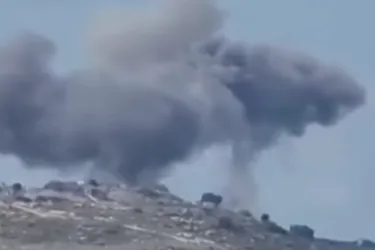
Israeli military operations in southern Lebanon have intensified, raising international concern over repeated ceasefire violations and civilian safety. According to reports, Israeli warplanes carried out at least a dozen strikes targeting areas believed to house Hezbollah training facilities, continuing a pattern of near-daily bombardments that undermine the year-old truce.
Israeli Airstrikes Target Hezbollah Facilities
The latest Israeli airstrikes focused on hills and valleys in southern Lebanon, particularly in the Jezzine and Zahrani regions. Specific locations hit include al-Aaichiyeh, between al-Zrariyeh and Ansar, Jabal al-Rafie, and the outskirts of several towns, according to Lebanon’s state news agency.
The Israeli military claimed the attacks targeted Hezbollah’s elite Radwan Force, used for weapons training and planning potential attacks against Israeli civilians and military personnel. Additional strikes reportedly hit rocket-launching sites and other infrastructure, all described as necessary measures to prevent violations of agreements between Israel and Lebanon.
Al Jazeera correspondent Zeina Khodr, reporting from Beirut, described the ceasefire as “a one-sided truce,” noting that Israel’s airstrikes avoid densely populated areas but maintain constant military pressure.
“The locations were in hills and valleys, not population centers. This is a repeated pattern, similar to previous near-nightly attacks,” Khodr explained.
Rising Tensions and Humanitarian Concerns
Since the ceasefire took effect in late 2024, at least 127 civilians, including children, have been killed in southern Lebanon due to Israeli strikes, according to United Nations reports. UN officials have warned that some of these attacks could constitute war crimes, drawing sharp international criticism.
Israel maintains that the strikes are intended to compel Hezbollah to disarm and surrender its strategic weapons, including long-range missiles, precision-guided missiles, and drones, believed to be stored in the Bekaa Valley and other inland areas. However, Hezbollah refuses to relinquish its arsenal while Israel continues bombardments and maintains a military presence in parts of Lebanon.
Recent Escalations and Diplomatic Efforts
Tensions escalated two weeks ago when Israel targeted southern Beirut suburbs, killing Hezbollah’s top military commander, Haytham Ali Tabatabai. While Hezbollah has yet to retaliate directly, the group has warned it will respond at an opportune time.
Amid these hostilities, Lebanon and Israel recently dispatched civilian envoys to a ceasefire-monitoring committee, marking the first such diplomatic engagement in decades. The move aims to expand dialogue and prevent escalation into full-scale conflict.
However, Hezbollah leader Naim Qassem criticized Lebanon’s decision to send former Ambassador Simon Karam, calling it a “free concession” to Israel. Lebanese President Joseph Aoun emphasized that negotiations are intended to halt ongoing attacks, while Prime Minister Nawaf Salam called for a more robust mechanism to verify both Israeli violations and Lebanese efforts to dismantle Hezbollah infrastructure.
“Even though Lebanon is engaging in talks with Israel, it does not mean the attacks will automatically stop,” Khodr noted, quoting the US ambassador to Lebanon.
The Strategic Implications
The repeated Israeli airstrikes underscore the fragile nature of the ceasefire and the challenges of diplomatic resolution in the region. Israel’s continued air superiority, coupled with Hezbollah’s refusal to disarm, has left Lebanon in a delicate position—seeking to avoid war while defending national sovereignty and civilian safety.
As diplomatic channels remain open, analysts emphasize the importance of international monitoring and verification to prevent further civilian casualties and stabilize the southern Lebanon region.


Leave a Reply