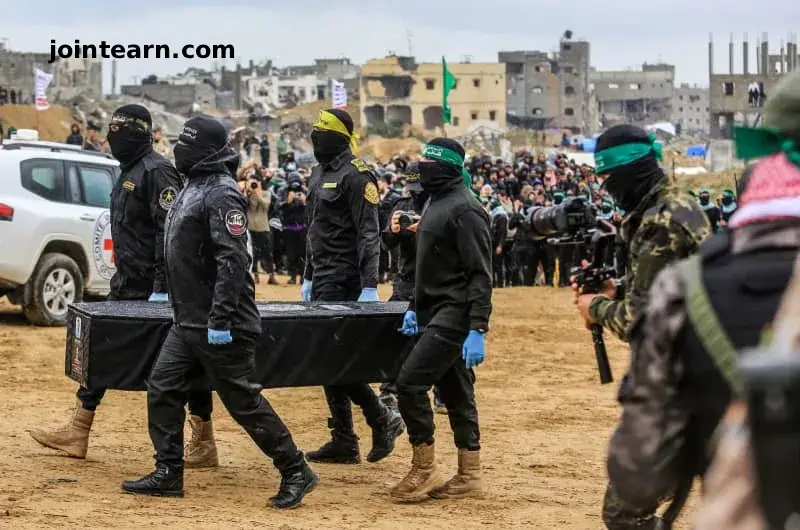
Israel mourns the loss of Dror Or, whose remains were recently returned from the Gaza Strip. The 48-year-old Israeli hostage was identified by a forensic institute in Tel Aviv, according to a statement from Prime Minister Benjamin Netanyahu’s office on Wednesday. Or’s tragic death comes as the first phase of the Israel-Hamas ceasefire, established in October 2025, nears completion.
The identification leaves only two hostages’ remains—one Israeli and one Thai national—still in Gaza. Israel has expressed its determination to secure their return as part of ongoing negotiations.
Tragic Fate of Dror Or and Family
Dror Or and his wife, Yonat, were killed during the October 7, 2023 attacks in Kibbutz Be’eri, a massacre that marked the beginning of Israel’s ongoing conflict with Hamas and other militant groups in Gaza. During the attack, two of the couple’s children, Alma and Noam, were abducted to Gaza but were later released as part of a hostage deal with Hamas.
Or, a devoted father and skilled cheesemaker, also worked as a chef and yoga teacher, leaving behind a legacy remembered fondly by his family and community. The Palestinian Islamic Jihad group reported that his body was found in central Gaza.
Hostage Exchange and Ceasefire Agreement
The return of Dror Or’s remains comes as part of a broader ceasefire deal brokered in October 2025. Under the agreement, Israel has committed to returning the bodies of 15 deceased Palestinians for every Israeli hostage or remains repatriated.
This phased approach to the ceasefire aims to reduce violence while establishing frameworks for longer-term peace, reconstruction, and international oversight of Gaza.
Humanitarian Crisis and Reconstruction Challenges
Despite the ceasefire, the humanitarian situation in Gaza remains dire. Thousands of Palestinians have been killed or injured during the conflict, and nearly all are dependent on humanitarian aid. Hamas continues to control significant portions of Gaza, complicating reconstruction and governance efforts.
The next phase of the ceasefire focuses on establishing an international governing body to oversee reconstruction and development under a U.N. mandate. An armed stabilization force is planned to maintain security and ensure the disarmament of Hamas, with countries such as Indonesia, Qatar, and Egypt contributing personnel and resources. Indonesia has committed to deploying up to 20,000 peacekeepers, including health, engineering, and mechanized units, supported by hospital ships and military aircraft.
International Mediation Efforts
Turkish, Qatari, and Egyptian officials have met in Cairo to discuss the next phase of the Gaza ceasefire. The talks also include coordination with the United States to reinforce the truce and minimize violations. A Civil-Military Coordination Center (CMCC) will help monitor compliance and facilitate humanitarian access.
The international community’s involvement is seen as crucial to ensuring both the stability of Gaza and the safety of hostages and civilians affected by the conflict.
Looking Ahead
With Dror Or’s remains returned, Israel is focused on securing the final two hostages still in Gaza. The ceasefire provides a temporary respite from violence, but long-term peace depends on addressing humanitarian needs, rebuilding infrastructure, and establishing effective governance in Gaza.
The loss of Dror Or is a stark reminder of the human cost of the conflict, emphasizing the urgent need for diplomacy, international cooperation, and reconstruction efforts in one of the world’s most volatile regions.


Leave a Reply