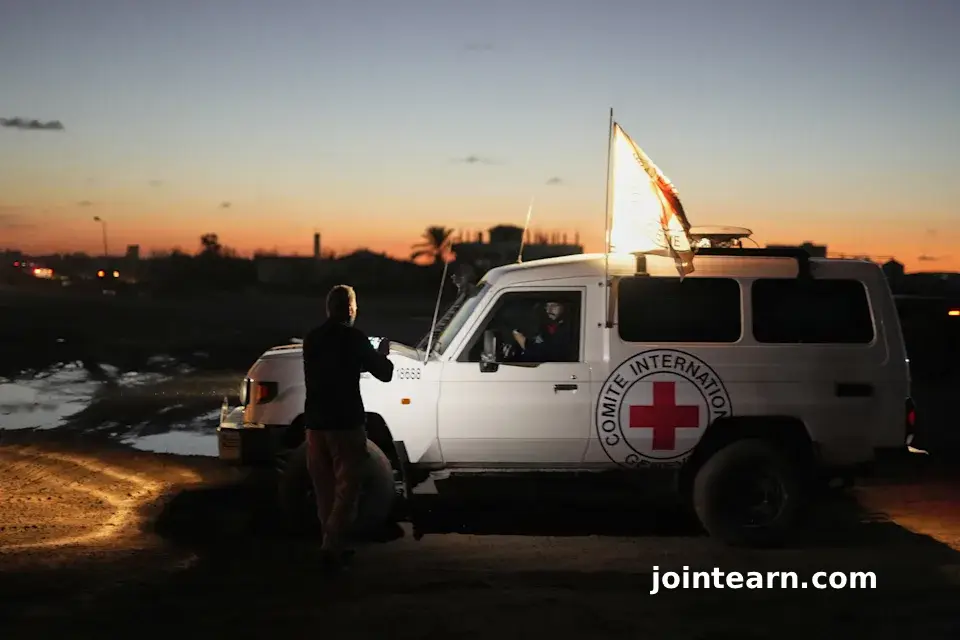
Israel is mourning the latest tragic loss from Gaza, as the remains of hostage Dror Or were returned to Israeli authorities. This event comes as the first phase of the Israel-Hamas ceasefire, initiated in October 2025, draws to a close. The identification of Or’s remains leaves only two hostages’ remains still in Gaza, underscoring the complex and fragile state of the ceasefire agreement.
Return of Dror Or’s Remains
On Tuesday, a Red Cross convoy transported the remains of Dror Or from Gaza to Israel. Israeli Prime Minister Benjamin Netanyahu confirmed the identification, marking a somber moment for the nation. Or, along with his wife Yonat Or, had been abducted by Palestinian militants during the violent attack on Kibbutz Beeri on October 7, 2023. Both were tragically killed, while their two children, Alma and Noam, survived after being evacuated from their home during the attack.
The Hostages and Missing Families Forum remembered Or as a devoted father, skilled cheesemaker, chef, and yoga teacher, highlighting the personal and cultural loss caused by the conflict.
The October 7, 2023 attacks resulted in the deaths of approximately 1,200 people in southern Israel and the abduction of 251 hostages to Gaza. The conflict has escalated into one of the deadliest periods in the region in recent years.
Gaza Ceasefire and International Mediation
As Israel deals with the return of Or’s remains, Turkish, Qatari, and Egyptian officials convened in Cairo to discuss the second phase of the Gaza ceasefire. Initiated in October, the ceasefire has largely held despite accusations of violations by both sides.
The upcoming phase involves the establishment of an international governing body to oversee Gaza’s reconstruction and administration under a two-year, renewable U.N. mandate. A central feature of the plan is the deployment of an armed international stabilization force tasked with ensuring security and the disarmament of Hamas—a key demand of Israel. Indonesia has expressed readiness to contribute up to 20,000 peacekeepers to this mission, highlighting the scale and international scope of the stabilization effort.
Humanitarian Challenges in Gaza
Despite ceasefire efforts, the humanitarian crisis in Gaza remains severe. According to Gaza’s Health Ministry, over 69,000 Palestinians have been killed, and more than 170,000 injured during Israel’s offensive. The region’s infrastructure is severely damaged, leaving the majority of Palestinians displaced and reliant on humanitarian aid. Hamas continues to maintain control over nearly half of Gaza, complicating reconstruction efforts and international intervention.
The ceasefire and hostage exchanges have led to the release of many hostages, though the remains of two individuals—one Israeli and one Thai—remain in Gaza. Israel has agreed to release 15 Palestinian bodies in exchange for each returned hostage, demonstrating the delicate nature of negotiations between the two sides.
International Peacekeeping and Reconstruction Plans
Indonesia, along with other countries such as Azerbaijan, Egypt, and Qatar, has been discussed as part of the international stabilization force. Indonesian officials confirmed that troops are being trained for mission-specific operations, including the deployment of hospital warships, military transport aircraft, and helicopters to support peacekeeping efforts.
The U.N. has recognized Indonesia as one of the largest contributors to peacekeeping operations globally, emphasizing the country’s capacity to provide both personnel and resources for a comprehensive stabilization mission in Gaza.
Looking Ahead
As discussions continue in Cairo and international forces prepare for deployment, the Middle East faces a critical juncture. The next phases of the ceasefire aim not only to stabilize Gaza but also to rebuild lives and infrastructure in a region long plagued by conflict. However, the path forward remains uncertain, with ongoing humanitarian needs and the challenge of securing long-term peace.
The return of Dror Or’s remains is a poignant reminder of the human cost of the conflict and the urgency of diplomatic and humanitarian efforts to restore stability in Gaza.


Leave a Reply