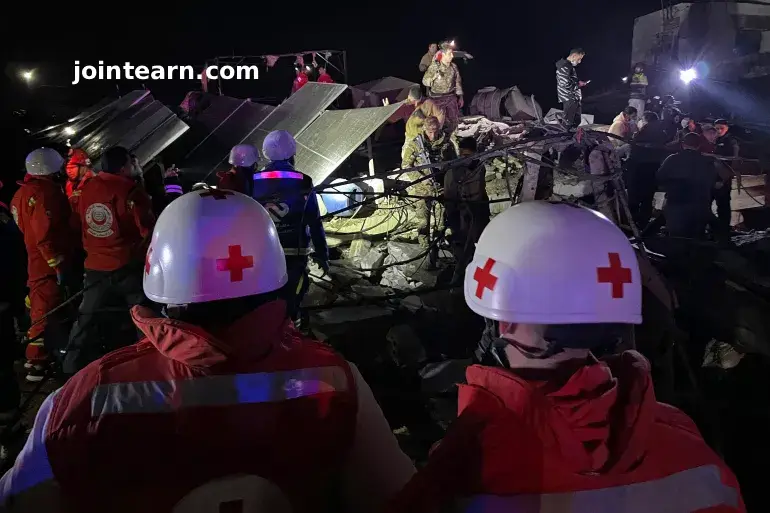
Lebanon – January 7, 2026 – Israeli forces killed two people in southern Lebanon on Tuesday, just a day before an international committee was scheduled to meet to monitor a yearlong ceasefire between Israel and Hezbollah. The incident underscores ongoing tensions in the region and raises concerns about the fragility of the November 2024 truce.
Israeli Strike Targets Hezbollah Operatives
Lebanon’s National News Agency (NNA) reported that the two individuals were killed in an Israeli airstrike on a house in Kfar Dunin, a village in the Bint Jbeil district of southern Lebanon.
The Israeli military stated that the attack targeted two Hezbollah operatives, including “an engineering terrorist in a structure that facilitated the organization’s reestablishment efforts.” The strikes are part of a broader campaign Israel says is aimed at preventing Hezbollah from rebuilding military infrastructure in southern Lebanon.
Since the November 2024 ceasefire, Israeli strikes have killed over 300 people in Lebanon, including at least 127 civilians. Earlier this week, Israeli attacks also forced the evacuation of at least four villages in southern and eastern Lebanon and reduced a multi-story building to rubble in the industrial area of Ghaziyeh near the coastal city of Sidon.
International Ceasefire Monitoring Efforts
The attacks occurred ahead of a scheduled meeting of the ceasefire committee, which includes representatives from France, Israel, Lebanon, the United States, and the United Nations Interim Force in Lebanon (UNIFIL). The committee is tasked with tracking compliance with the ceasefire and preventing further escalation between Israel and Hezbollah.
“Israel’s continued attacks aim to thwart all efforts made locally, regionally, and internationally to stop the ongoing Israeli escalation, despite the response shown by Lebanon to these efforts at various levels,” said Lebanese President Joseph Aoun.
Beirut-based security analyst Ali Rizk suggested that the Israeli escalation follows last week’s meeting between U.S. President Donald Trump and Israeli Prime Minister Benjamin Netanyahu at Mar-a-Lago, Florida.
“There had been reports that Israel got a green light to escalate against Hezbollah,” Rizk told Al Jazeera.
UN Peacekeepers Operate in Increasingly Dangerous Conditions
UNIFIL peacekeepers, deployed along the Blue Line that separates Israel, Lebanon, and the occupied Golan Heights, have reported increased Israeli military activity. UN spokesperson Stéphane Dujarric noted multiple airstrikes in southern Lebanon, fighter aircraft activity above UNIFIL positions, and direct fire incidents from Israeli army positions near UN patrol areas.
“Our peacekeepers are carrying out their mandated tasks under increasingly difficult and dangerous conditions,” said UN Undersecretary-General for Peace Operations Jean-Pierre Lacroix, currently visiting Lebanon.
Lacroix is scheduled to meet with Lebanese officials on Wednesday to discuss the security situation.
Lebanese Government Moves to Disarm Hezbollah
Amid the escalation, Lebanon’s cabinet is set to review the army’s progress in disarming Hezbollah, a plan initiated under strong U.S. pressure. The army aims to extend its authority south of the Litani River—roughly 30 kilometers from the Israeli border—before addressing Hezbollah’s presence in the rest of the country.
President Aoun emphasized the army’s professionalism and commitment in implementing the disarmament plan:
“The government’s plan to extend its authority over the south of the Litani has been implemented by the Lebanese army with professionalism, commitment, and precision.”
Regional Implications
The attacks in southern Lebanon come amid growing regional tensions, with the potential to destabilize an already volatile situation. International observers warn that continued Israeli strikes and Hezbollah’s military activity could undermine the ceasefire and escalate into a broader conflict affecting Israel, Lebanon, and neighboring countries.


Leave a Reply