Massive Protests Erupt Over Netanyahu’s Pardon Request
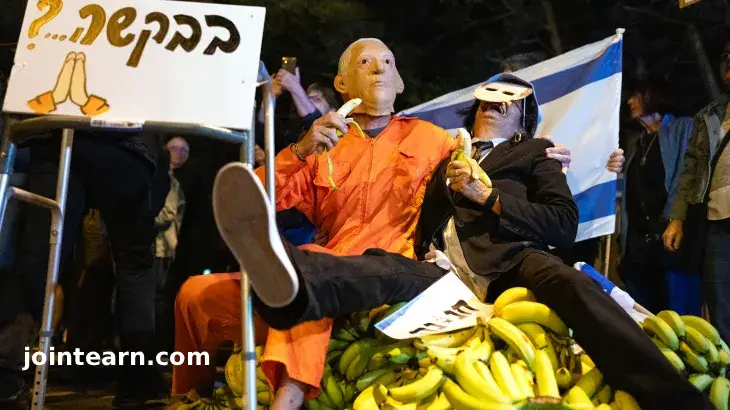
Tens of thousands of Israelis have taken to the streets in Tel Aviv, protesting against Prime Minister Benjamin Netanyahu’s request for a presidential pardon from his ongoing corruption trials. Demonstrators gathered outside President Isaac Herzog’s residence, holding signs and staging symbolic acts, including a mock courtroom scene and piles of bananas labeled “Pardon = Banana Republic.”
The protests erupted hours after Netanyahu, 76, formally petitioned for a full pardon, without admitting guilt or expressing remorse, in what critics have called an unprecedented move in Israel’s modern political history.
Background: Netanyahu’s Corruption Cases
Netanyahu, Israel’s longest-serving prime minister, has faced five years of legal proceedings across three major corruption cases. The charges include bribery, fraud, and breach of trust.
In one case, Netanyahu and his wife, Sara Netanyahu, are accused of accepting over $260,000 in luxury goods, including cigars, jewelry, and champagne, from wealthy donors in exchange for political favors. Additional cases involve allegations that he tried to influence media coverage to secure favorable reporting.
Despite the charges, Netanyahu and his lawyers argue that the trial would result in a complete acquittal. In a brief video statement, Netanyahu cited national security and political stability as reasons for seeking a pardon, claiming that continuing the trial “is tearing us apart from within, arousing fierce divisions, intensifying rifts.”
Public and Political Backlash
Opposition leaders and civil society groups have strongly condemned the pardon request. Protesters, including prominent activist Shikma Bressler, argued that Netanyahu is attempting to cancel legal proceedings without taking responsibility for his actions. Opposition figures such as Yair Lapid and Yair Golan have called for Netanyahu to admit guilt, step down from politics, and be denied the pardon.
The Movement for Quality Government in Israel warned that granting a pardon to a sitting prime minister accused of serious crimes would send a dangerous signal that some citizens are above the law.
International Dimension: ICC Charges
Beyond domestic corruption charges, Netanyahu is also wanted by the International Criminal Court (ICC) in The Hague. In November 2024, the ICC issued arrest warrants for Netanyahu and former Defense Minister Yoav Gallant, citing war crimes and crimes against humanity related to Israel’s military operations in Gaza, which have killed more than 70,000 people and wounded nearly 171,000.
Netanyahu’s pardon request comes weeks after US President Donald Trump publicly urged Israel to grant him clemency, calling the corruption case “political” and “unjustified.”
Division Within Israel
The pardon request has deeply polarized Israeli society. Coalition allies, including National Security Minister Itamar Ben-Gvir and Finance Minister Bezalel Smotrich, have voiced support, arguing that Netanyahu has been persecuted by a biased judicial system. Defense Minister Israel Katz also backed the pardon, claiming it could help heal divisions within society.
Conversely, political analysts, including Al Jazeera’s Marwan Bishara, have described Netanyahu as a “liability for Israel,” citing his challenges to the judiciary, ongoing war crimes investigations, and the destabilizing effect on Israel’s democracy and economy. Bishara warned that Netanyahu’s continued leadership threatens social cohesion, Israel’s international standing, and the prospects for peace.
Legal and Constitutional Implications
In Israel, pardons are typically granted only after legal proceedings conclude and the accused is convicted. Netanyahu’s request has raised unprecedented questions about the rule of law, presidential authority, and separation of powers in Israel. President Herzog has acknowledged receiving the petition, stating that it is “an extraordinary request, which carries significant implications,” and will be considered carefully.
Looking Ahead
As protests continue and political tension escalates, Israel faces a pivotal moment in its democratic institutions. The outcome of Netanyahu’s pardon request could set a historic precedent for how political leaders are held accountable in the country, and influence public trust in the judiciary for years to come.


Leave a Reply