Continued Israeli Attacks Jeopardize Lebanon’s Stability
Beirut, Lebanon – Israel’s persistent airstrikes and military operations in Lebanon are creating significant obstacles to the country’s efforts to disarm Hezbollah, analysts warn. The attacks come despite a United States-brokered ceasefire in November 2024, which was intended to reduce hostilities along the Israel-Lebanon border.
The United Nations Interim Force in Lebanon (UNIFIL) has documented over 10,000 violations of the ceasefire by Israeli forces, including 7,500 airspace incursions and 2,500 ground violations. In addition, Israel continues to occupy five strategic locations in southern Lebanon, despite earlier commitments to fully withdraw its troops.
Recent Escalations in Southern Lebanon
In early January 2026, Israel issued forced evacuation orders for four villages in southern Lebanon and the Bekaa Valley before launching targeted airstrikes. According to the Israeli military, these strikes targeted locations linked to Hezbollah and Palestinian factions such as Hamas.
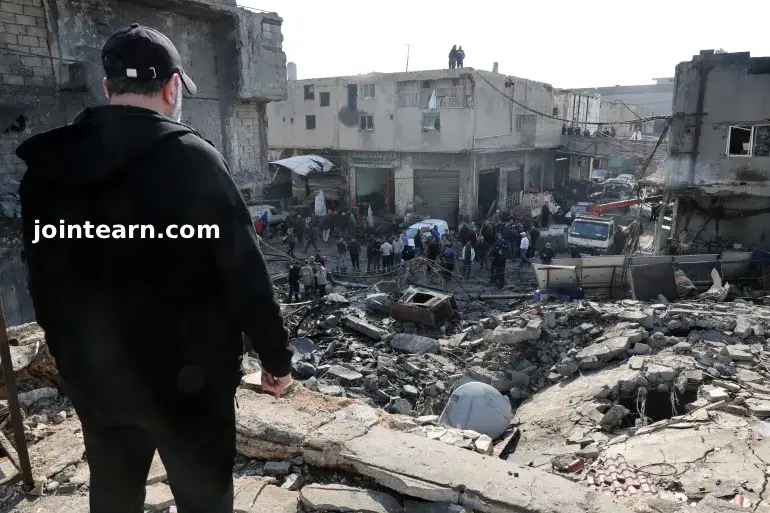
The following day, Israeli forces conducted additional attacks in southern Lebanon, claiming to target Hezbollah operatives. Images and reports from the region, including Ghaziyeh in the Sidon District, show extensive destruction of civilian and industrial infrastructure.
The Human and Economic Toll of Conflict
Since October 2023, Israel’s operations in Lebanon have killed over 4,000 people, with the heaviest casualties occurring between September and November 2024. These strikes displaced more than 1.2 million residents, according to humanitarian reports.
The World Bank estimates reconstruction and recovery costs at approximately $11 billion, highlighting the immense economic toll on Lebanon.
Hezbollah’s Position on Disarmament
Although Hezbollah’s military strength was weakened during the 2024 escalation—with the death of key leaders, including longtime commander Hassan Nasrallah—the group has resisted calls for disarmament. Hezbollah asserts that Israel’s continued attacks violate the ceasefire and compromise Lebanon’s security.
Naim Qassem, Nasrallah’s successor, stated on January 3, 2026:
“To demand exclusive arms control while Israel is committing aggression…means you are not working in Lebanon’s interest but rather in the interest of what Israel wants.”
He emphasized that Lebanon’s military should be strengthened to protect the nation against external threats while maintaining domestic security.
Phase Two of Disarmament at Risk
In August 2025, the Lebanese government approved a plan to have the Lebanese Armed Forces (LAF) disarm Hezbollah. While largely supported by the public outside Hezbollah’s base, the plan faced significant pushback from the group itself.
Phase one of the plan focused on Hezbollah’s holdings south of the Litani River and has largely been completed. However, phase two—which involves disarming Hezbollah and Palestinian militias between the Litani and Awali Rivers—remains contentious. This region is about 40 km (25 miles) long and strategically important, lying near the Israeli border.
Lebanese Prime Minister Nawaf Salam emphasized the government’s focus on halting Israeli strikes, removing troops from the five occupied points, and securing the return of detainees held by Israel.
Challenges for the Lebanese Government
Political analysts argue that Lebanon’s government has limited leverage. Diplomatic appeals to international actors can help restrain Israeli military activity, but these efforts are insufficient without clear security guarantees and tangible disarmament progress.
Imad Salamey, a political scientist at Lebanese American University, notes:
“International actors often pressure Lebanon more than Israel, which reduces the effectiveness of diplomatic efforts unless tied to measurable Israeli de-escalation.”
Risks of Moving Forward Amid Conflict
Experts warn that if the Lebanese Army proceeds with phase two of the disarmament plan while Israel continues military operations, Hezbollah could feel threatened and respond aggressively. Such a scenario risks wider instability in southern Lebanon, potentially escalating into a larger conflict.
Qassem Kassir, a political analyst close to Hezbollah, stressed that any discussion about disarmament must first address Israeli attacks, prisoner releases, and reconstruction efforts. Failure to do so, he warned, could spark internal confrontation and undermine national cohesion.
Hezbollah: Weakened but Resilient
Despite significant losses during the 2024 conflict, Hezbollah remains a potent political and military force. Analysts suggest that while the group may avoid direct confrontation with the Lebanese Army, it could obstruct disarmament through political maneuvers or limited escalation with Israel.
Salamey explains:
“Phase two risks evolving from a technical security measure into a broader political confrontation over sequencing, guarantees, and internal stability in Lebanon.”
The Path Ahead
The Lebanese government finds itself in a delicate position, balancing pressure from the US and Israel with Hezbollah’s refusal to disarm under ongoing attacks. The success of the second phase of disarmament depends on multiple factors: halting Israeli strikes, securing international guarantees, and rebuilding damaged infrastructure.
Until these conditions are met, analysts believe Hezbollah’s weapons will remain a key issue, and the stability of southern Lebanon will continue to be threatened.


Leave a Reply