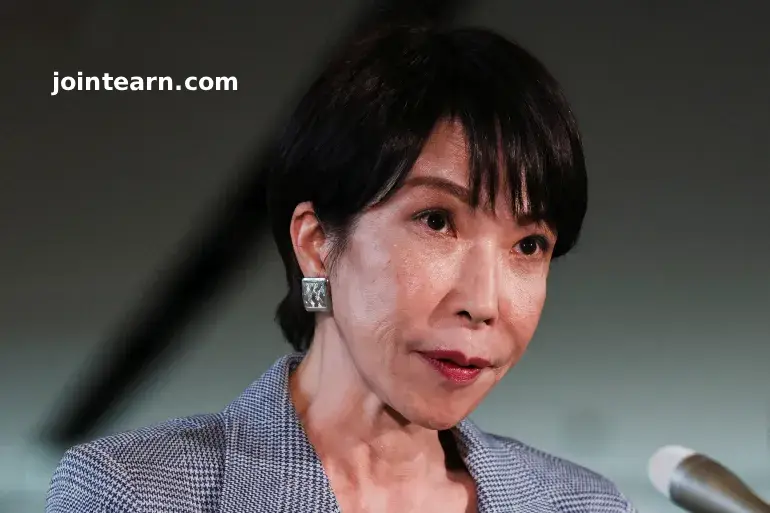
Tensions between Japan and China have intensified at the United Nations following controversial remarks by Japanese Prime Minister Sanae Takaichi regarding Tokyo’s potential response to a conflict involving Taiwan. The dispute marks one of the most high-profile clashes between the two nations at the UN in recent years.
Japan Defends Prime Minister Takaichi’s Remarks
Japan’s UN ambassador, Kazuyuki Yamazaki, wrote to UN Secretary-General Antonio Guterres on Thursday, rejecting Beijing’s allegations that Takaichi violated “the basic norms governing international relations” during her speech to the Japanese Diet last month.
“The assertions contained therein are inconsistent with the facts, unsubstantiated, and are categorically unacceptable,” Yamazaki said in the letter.
This is the second time in two months that Japan has formally addressed the UN over Takaichi’s statements, each time responding to separate letters from China.
Background: Takaichi’s Controversial Statement
The controversy originated in November when Takaichi told Japanese legislators that any use of force by China against Taiwan would represent a “survival-threatening situation” for Japan, according to Japanese media.
Although Japan and Taiwan do not maintain formal diplomatic relations, the two countries are close neighbors and maintain unofficial alliances. Party-to-party meetings between legislators of both countries are common, reflecting ongoing political and economic collaboration.
Experts say Takaichi’s remarks represent a significant departure from Japan’s traditionally cautious approach to Taiwan issues.
“This has been the unofficial position of Japan for many years, but prime ministers just don’t say it out loud,” said Jeffrey Hall, a lecturer in Japanese studies at Kanda University of International Studies.
China’s Response
Beijing has responded strongly. Chinese diplomat Fu Cong, China’s permanent representative to the United Nations, criticized Takaichi’s statements in a letter to the UN, describing them as “erroneous”. Fu added that the remarks:
- Openly challenge the outcomes of World War II.
- Contradict the post-war international order.
- Constitute a serious violation of the UN Charter.
In addition, Chinese state media have published articles questioning Japan’s territorial claims to Okinawa and the Ryukyu Islands, in what analysts describe as “geopolitical trolling.” A now-deleted social media post by a Chinese diplomat in Osaka even included a personal threat toward Takaichi, according to Reuters.
Taiwan Context
Taiwan, a self-ruled democracy, is claimed by Beijing, which has repeatedly pledged to reunify the island with mainland China either peacefully or by force. The Chinese government frames Taiwan as an internal affair, leaving Tokyo’s public statements highly sensitive.
Takaichi’s remarks underscore a broader debate in Japan about national security and military readiness. Like her late mentor, former Prime Minister Shinzo Abe, Takaichi has advocated for:
- A stronger Japanese Self-Defense Force.
- Revising Japan’s post-war pacifist constitution.
Despite controversy, her recent statements have reportedly boosted her domestic popularity, as Japanese citizens increasingly reject Beijing’s attempts to link contemporary Japan with its World War II legacy in East and Southeast Asia.
Implications for Japan-China Relations
The dispute at the UN reflects broader geopolitical tensions in East Asia, highlighting:
- The delicate balance Japan must maintain in its relations with China and Taiwan.
- The growing role of historical narratives in modern diplomatic disputes.
- The potential impact on regional security, trade, and military cooperation.
Analysts suggest that Japan’s firm defense of Takaichi’s comments signals a more assertive diplomatic posture and may influence future UN debates and resolutions involving Taiwan and regional security.


Leave a Reply